
Ah, that famous gurgling sound that echoes as soon as you empty the sink or start the dishwasher! Hard to avoid when the plumbing acts up. Between strange noises, slow drainage, and suspicious backflow, these situations are common in our homes. And I promise you, after spending a few weekends dismantling traps and pipes, I’ve gathered a good dose of tips and experiences on the subject. Let’s tackle the problem: why this noise in the pipes and especially what to do to regain a quiet and functional kitchen?
Understanding: The “gurgling” noise in a sink or dishwasher is a sign of a drainage or ventilation problem in the pipes. It appears when air circulates poorly in the pipes, often due to a partial clog, a dirty trap, or poor drainage. This noise is not trivial and can signal a more serious blockage if nothing is done.
Why do we hear a gurgling sound in the sink or dishwasher?
You’re probably wondering where this dull noise comes from, sometimes followed by a slight backflow in your sink after the dishwasher has finished its cycle. This kind of noise in the pipes never happens by chance. It often betrays a drainage problem or an air imbalance related to your plumbing.
One piece of advice: don’t ignore this symptom, even if the water still drains without overflowing. A simple gurgling can announce the beginning of a clogged pipe or poor system ventilation. The longer you wait, the more complicated the repairs may become to do yourself.
🗣️ My experience: In March 2025, during a repair at a friend’s house, his sink started to gurgle loudly as soon as the dishwasher’s drain pump activated. When dismantling the piping, we extracted a compact plug of congealed grease just after the tee fitting. The lesson I took from this situation is that a monthly preventive cleaning with boiling water avoids the accumulation of table residues.
| Possible Cause | Equipment Concerned | Severity | Recommended Solution |
|---|---|---|---|
| Partially clogged trap | Sink | Low | Manual cleaning |
| Clog in the pipe | Sink / dishwasher | Medium | Plunger or drain snake |
| Poor ventilation (absence of air admittance valve) | Installation | Medium | Installation of an air admittance valve |
| Drain hose improperly positioned | Dishwasher | Low | Repositioning |
| Blocked drainage column | Building | High | Professional intervention |
🌍 Did you know? A modern dishwasher drain pump expels water at an average flow rate of 15 to 20 liters per minute. If the inner diameter of the 40 mm PVC pipe is reduced by grease deposits, the pipe fills instantly and creates a syringe effect that de-primes the surrounding traps.
The role of food residues and grease
When I talk with my handy neighbors, it’s always the same: behind every suspicious noise hide food residues or grease. The dishwasher, despite its powerful cycles, doesn’t dissolve everything. Little by little, it accumulates in the drain hose, the trap, then sometimes rises back up to the sink.
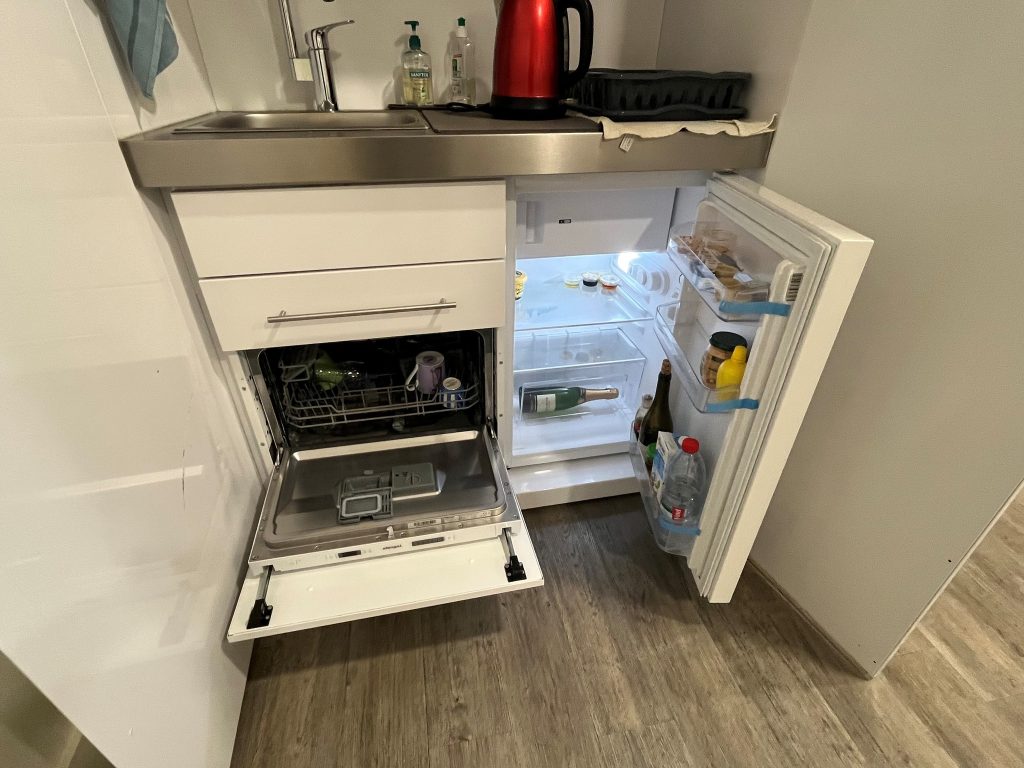
This deposit eventually creates a sort of padded clog that limits the flow of water. The air, trapped behind this barrier, finds its way as best it can… hence the famous “glug glug.” At my place, a drop of oil poured directly into the sink resulted, two months later, in a nice surprise in the form of a regular noise with every wash.
The importance of an air vent and ventilation
Behind this aquatic concert, there is sometimes simply a story of poorly managed air. If the ventilation of the pipes is faulty — absence of a vent valve, blocked air column, poor slope — you can be sure that the water will flow backwards. Result: air imbalance and suction noise as soon as it drains too quickly.
I’ve come across installations where, lacking a valve or good ventilation, the sinks sucked in air creating a vacuum. Naturally, at the moment of drainage, this is accompanied by a nice background noise that will test your nerves.
Identifying a drainage problem in the kitchen
✅ Advantages
• Quick resolution of unpleasant air noises.
• Immediate improvement of drainage flow.
• Avoids the risk of complete kitchen clogging.
⚡ Weak points
• Diagnosis sometimes complex without specific tools.
• Risk of leaks if seals are poorly repositioned.
• Temporary solution if the main stack is affected.
Too often, people wait for a complete overflow before recognizing a real problem. Yet, some warning signs should put you on the track of a drainage problem or a clogged pipe.
To avoid ending up with your nose in the dirty water basin, it’s better to spot the early signs and know how to quickly inspect the installation. It will save you a lot of trouble, believe me.
Recurring noises and slow drainage
If the glug glug regularly returns when you use the sink or the dishwasher, it’s rarely trivial. Add to that a slow or irregular drainage, and you probably have the winning combination of an early clog.
Take the example of the trap that starts to get clogged: not only does the water drain with difficulty but also the noise in the pipes becomes systematic. It’s a sign that you’ll have to roll up your sleeves to avoid a total blockage.
Bad odors and water backflow
If your nose stings near the sink, or if you notice a slight water backflow in the basin, no doubt there is a problem with drainage or ventilation. Sometimes even, the dishwasher can emit unpleasant odors during its draining.
It cannot be repeated enough: these symptoms are often linked to the accumulation of fats and food residues, coupled with a lack of ventilation in the drainage system. A classic combo that ends up tiring the entire wastewater network.
⚠️ Common mistake: The classic trap is to push the dishwasher’s flexible drain hose too deep into the rigid PVC pipe or to remove its original curve. If the hose plunges directly below the siphon’s water level, it will continuously suck wastewater or cause constant air noises.
Implement unclogging and maintenance solutions
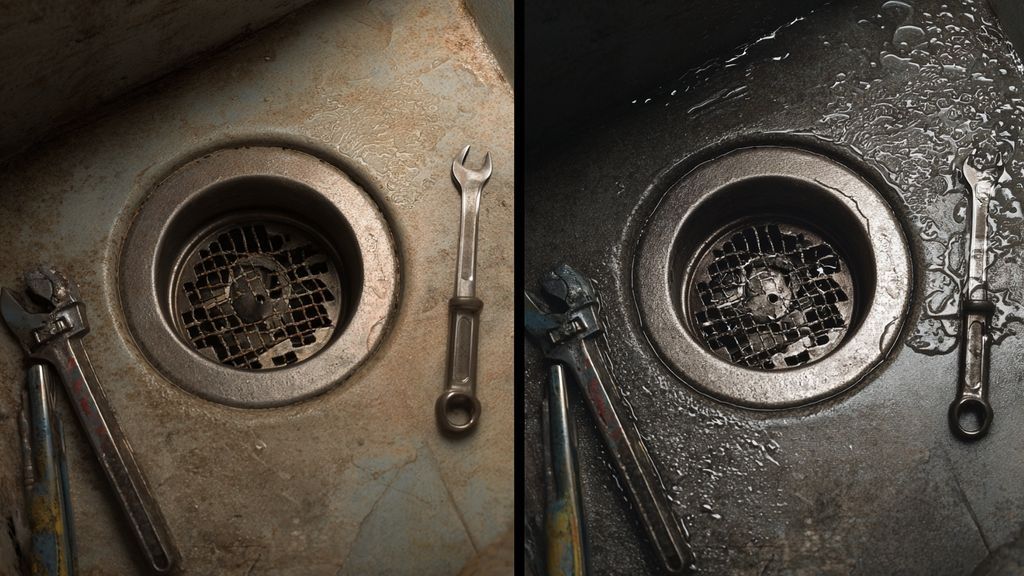
No need to wait until the kitchen is flooded: several tips exist to fix a drainage problem before it turns into a domestic nightmare. Whether you are a weekend DIYer or a screwdriver pro, there is always a solution suited for every situation.
Be careful to check each step thoroughly though. You think you can do everything without disassembling, and in the end, you find yourself also fixing the drawer that was just below…
- Unscrew and clean the sink siphon: a simple action that often removes a first localized clog.
- Use a plunger or a drain snake: effective on a partially blocked drain hose, especially if the clog is located between the sink and the main connection.
- Use a homemade mixture: baking soda, white vinegar, and boiling water sometimes work wonders to loosen a grease film on the pipe walls.
- Check ventilation and the presence of an air admittance valve: essential to manage the air intake and avoid air imbalances that cause annoying noises.
- Be careful with waste: avoid letting food residues, coffee grounds, and other greasy substances pass into the sink and the dishwasher.
Regularly maintain your installation
💡 Practical tip: For regular maintenance, pour 1 glass of baking soda followed by 2 glasses of white vinegar directly into the drain. Let it act for 30 minutes before rinsing with 1 liter of boiling water to dissolve soap grease residues.
A key word that saved me many friendly gatherings: consistency. A simple and frequent maintenance avoids many inconveniences. Disassemble the siphon every two or three months to remove what accumulates there, periodically check the water flow, and watch out for any unexpected gurgling.
Also check the condition of the dishwasher drain hose: kinks, crushes, or poor positioning can cause slowdowns in the flow and generate that famous noise in the pipes. By adjusting their inclination, you greatly improve the overall fluidity.
Before any major intervention, it is useful to identify the origin of the problem thanks to this guide on the causes of clogged pipes. You can also consult methods to unclog a dishwasher or check the general condition of the plumbing to avoid recurring breakdowns.
Some additional DIY tips
Some use a homemade hook (made from an unfolded hanger) to retrieve hairs, food scraps, and other impurities stuck around the trap. Others rely on monthly maintenance with hot water, to limit the buildup of hard grease that sticks to the inner walls.
Don’t forget that a noisy drain almost always hides a disorder in the balancing of the installation. Finding the weak point is already ensuring the peace of your next meals… without the “glug-glug” concert in the background.
Dishwasher sink glug-glug: should you worry?
Why does the sink make a glug-glug noise?
This noise is caused by air being sucked into the pipes when water drains poorly. It often indicates a partial blockage or a ventilation defect.
Can the dishwasher cause the glug-glug noise in the sink?
Yes, especially if they share the same drain. The water discharged by the dishwasher disrupts the air balance in the pipes.
When should you call a plumber?
If the noise persists despite cleaning the trap or if water backs up, it is better to call a professional before the pipe becomes completely clogged.