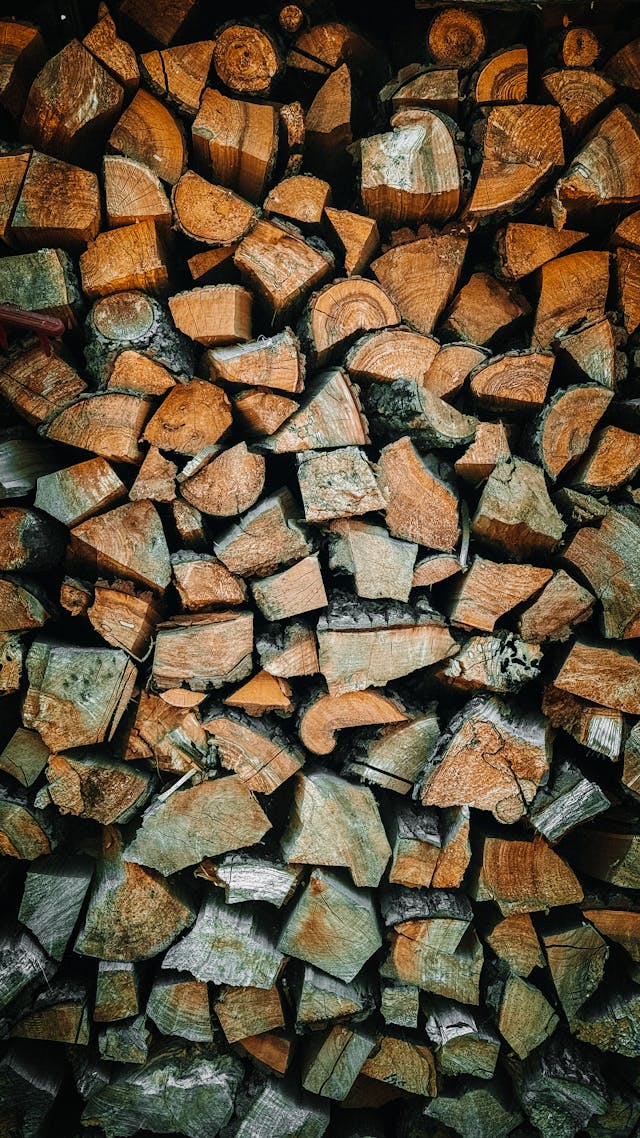
Every winter, the same question comes up around the stove or in front of the fireplace: where to find firewood at a reasonable price without sacrificing quality? When you see ads that say “firewood 40 euros per stere,” you think it’s a great deal… but there are some pitfalls to avoid and plenty of tips to help you navigate. In this article, I share what you really encounter on the ground, the real good deals, and how not to fall for scams. We will talk about wood species, log lengths, moisture content, delivery conditions, and of course, decode that famous price of wood listed at 40 euros per stere.
📋 **📋 Key points:** Personally, I consider that such a low price often hides a complex reality, like a moisture content above 35% or softwood species. In my opinion, buying your kindling or logs at this price remains an excellent deal if you know how to anticipate storage. Be vigilant during delivery to check the length of the logs and the quality of the species offered.
Decoding the price of a stere of firewood
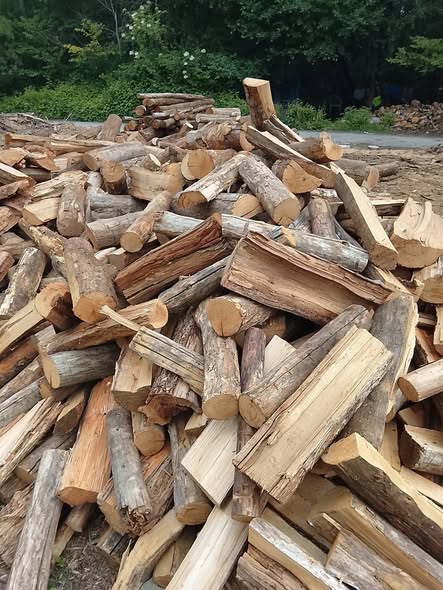
When you come across an ad promising a stere at 40 euros, you first need to lay everything out clearly. The stere is appealing because you think you’ll have enough to heat your whole season for less than a month’s electricity bill. However, this price often hides several subtleties that are better to know to avoid unpleasant surprises when you see the pile delivered in your garden.
📍 **📍 My experience:** In October 2025, I bought a batch of five steres cut into 33-centimeter logs from a local forest operator. I spent exactly 200 euros for this order delivered loose in front of my home. The lesson learned is that cheap wood requires at least 12 additional months of drying under shelter before it can be burned without clogging the chimney.
Real good deals exist, but beware of offers that are too good to be true. Advertising firewood at 40 euros per stere can hide differences in species, log length, or even moisture content of the delivered wood. To avoid wasting more time (and money) than you intended to save, taking a few minutes to check certain details makes all the difference.
For further reading, I recommend checking out our guide on the wood cart which complements this topic well. Our tutorial on how to what to do with wood logs also offers useful recycling ideas. And to go further, the analysis on using the fireplace insert damper provides interesting insight.
Why the displayed price is sometimes not the price paid?
In classified ads or during occasional offers, many play on the notion of stere. A stere, on paper, is a stack of wood cut into one-meter-long logs, forming a cube one meter by one meter by one meter. But in reality, as soon as you go down to different log lengths – 33 cm, 40 cm, or 50 cm – the actual volume decreases, because the stacked pieces take up less space.
Many sellers talk about a « stère » but deliver reconstituted cubic meters in shorter logs. As a result, for an apparent volume identical to 1 stère (roughly 1m³), you sometimes only get 0.7 or 0.8 m³ if the logs are 33 cm long! Hence the importance of always asking for the number of actual cubic meters delivered according to the cut. Don’t hesitate to have the exact quantity specified, otherwise you might quickly see your stockpile shrink faster than expected.
🌍 **Did you know?** Affouage is a medieval practice still in effect in many municipalities in France. It allows residents of a municipality to collect their own firewood from the communal forest for a nominal price, often less than 15 euros per stère.
How to calculate the true volume of wood according to log size?
| Wood group | Hardwood varieties | Calorific value | Burning speed |
|---|---|---|---|
| G1 (Hard hardwoods) | Oak, beech, hornbeam, ash | Excellent / High | Slow and steady |
| G2 (Soft hardwoods) | Chestnut, acacia, maple | Medium | Medium |
| G3 (Soft woods) | Poplar, birch, plane tree | Low | Very fast |
| Conifers | Pine, fir, spruce | Medium (Sparks) | Fast / Crackling |
To properly understand the price of wood listed at 40 euros per stère, you need to look into the details of the cut. A 1-meter log indeed yields 1m³ stacked (this is the baseline). If you go down to 50 cm, count on about 0.8m³ actual volume, the rest is adjustment. With 33 cm, you drop to around 0.7m³. So, a seller can announce “a stère” but only deliver you the “equivalent,” which is less material than you thought… This is a common trick to show low prices.
Always remember to convert the quantity sold into actual cubic meters according to the log size received. By the way, this also helps you anticipate your storage space. There is nothing worse than ending up with an overflowing shelter because you poorly anticipated the usable volume of the wood piles.
⚠️ **Common mistake:** Thinking you can buy dry, split firewood online by paying via money order or prepaid card before delivery is a classic trap. Abnormally low prices very often hide scams. Never pay before you have seen the truck in front of your home.
Additional costs to watch out for when buying at 40 euros per stère
An attractive price naturally draws attention, but be sure to ask the seller what is included: is delivery included or not? Some offer an unbeatable rate… then charge delivery by kilometer once the order is placed. Depending on the distance, the bill can quickly rise.
Make sure to clarify whether the firewood is delivered stacked (rare!) or simply dumped in front of your home. Sometimes, they ask for an extra fee to pass the gate or to place it directly under shelter. These additional fees can unexpectedly inflate the invoice, so it’s best to ask all questions before pulling out your checkbook.
💡 **Practical tip:** Never cover your woodpile entirely with a waterproof plastic tarp down to the ground. This traps moisture from the earth and causes the logs at the bottom to rot. Protect only the top and leave the sides well ventilated so air can circulate.
Wood species at 40 euros per stere: which ones are actually found?
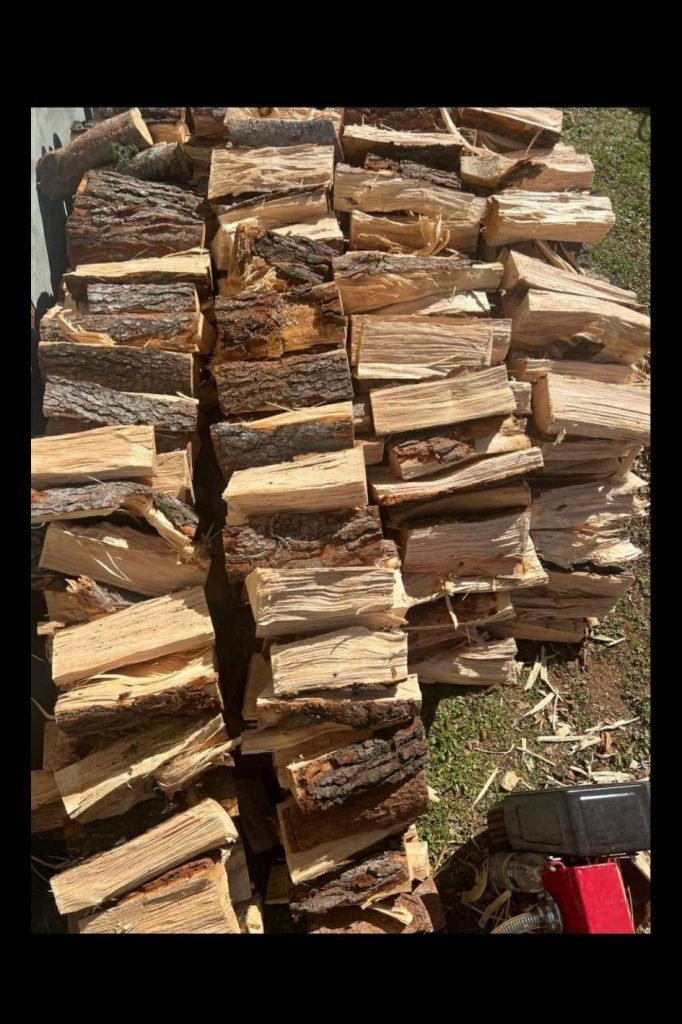
The choice of wood species directly affects the quality of heating, the burning duration, and even the soiling of the stove or fireplace. At this price, you rarely risk getting top quality oak. Sellers who cut prices often rely on less prized species or mixes from various forestry cuts.
To give you an idea, here is a brief overview of the species encountered in the “cheap” firewood segment.
- Oak: sought after for its high density and persistent embers, it rarely sells at 40 euros per dry stere. It will more likely be green wood or sawmill leftovers.
- Beech: good combustion, good heat; sometimes offered at this price but as freshly cut wood, so it needs to be stored for a long time before use.
- Hornbeam and ash: similar to beech, interesting for their yield and calorific value. Can be good deals if well dried.
- Acacia: very good calorific power, appreciated for its low ash production. Rare below 50 euros per well-dried stere, often only available in certain regions.
- Mixed hardwood: many ads use this generic term to designate an unexplained mix, sometimes including softwood.
Caution is still advised: if the wood offered is only poplar, birch, willow, or other soft species, their combustion will be fast and produce much less heat. This generally explains the floor price, but requires more generosity in loading the firebox and quickly increases consumption over the season.
Do not hesitate to ask about the origin of the lot sold, or even to ask which species precisely make up the so-called “mixed hardwood” panel. Some lots are real bargains, especially off-season when resellers need to clear their stocks.
Wood quality at this price: dry or freshly cut?
At this price level, the seller’s temptation is to pass off freshly cut wood, in other words, too wet. The difference between dry wood and green wood heavily impacts heating performance and the health of your installation. You often hear: “Cheap, but you have to wait to burn it”… And here, timing becomes crucial.
Dry wood (with a moisture content below 20%) heats better, soils less, and guarantees an efficient blaze in the stove or fireplace. Green wood, meaning wood with a lot of naturally contained water, wastes energy evaporating moisture during combustion, which significantly reduces its calorific power.
🍀 Good sides
- Major financial savings if you have a large storage space.
- Certainty of the local origin of the product when buying directly in the forest.
- Ease of recutting and splitting when the fibers are still green.
⚡ Weak points
- Impossible to use the fuel for the current winter.
- Heavy handling and space monopolized in the garden for 2 years.
How to recognize truly dry wood?
There are some practical techniques to judge for yourself: dry firewood will seem lighter, crack when split, show radial cracks (small fissures at the ends of the logs), and produce a ringing sound if you strike two logs together. Conversely, a trunk too heavy for its size or with bark that holds firmly is likely just out of the forest…
Some DIY enthusiasts invest in a simple hygrometer to test the moisture content: it costs little but really protects you from a bad surprise. The ideal rate is below 20%. Below that, you’re safe. Above, let the wood rest a few more months under a well-ventilated shelter.
How to store and dry wood that is too wet yourself?
If you bought in bulk at 40 euros per stere, you will probably have to accept waiting to get real combustion quality. Drying is almost half the work. Store your wood in an airy place, elevated (never directly on the ground), sheltered from rain but exposed to wind. Ideally, allow air circulation on all sides.
Favor quick splitting of large logs to speed up the process. The more the wood is broken into small pieces, the faster it dries. Remember to turn the stacks from time to time to even out the moisture content and avoid mold. This step can vary from six months to two years depending on the chosen species.
Where and when to find firewood at 40 euros per stere?
Firewood volume & cost calculator
Estimate total firewood expenditure based on house size and log length.
Finding wood at this price often requires moving around a bit and broadening your search. Direct sales from the woodcutter, at a local sawmill, or through specialized classifieds can offer good surprises, especially outside the winter peak.
Some forest associations or local groups organize group sales allowing to pool delivery and obtain better prices, especially in rural areas. Also watch out for special offers in summer, a period when demand drops and leads to occasional decreases in the price of wood.
Delivery to watch, key budget item
Even for a price listed at 40 euros per stere, delivery remains the main variable that can affect the overall bill. Many offer free delivery within a short area around their location but quickly add a margin as soon as they have to travel further. Check the conditions, ask about the mode of drop-off (loose or stacked), and verify the accessibility to your home.
Sometimes, organizing transport yourself with a hitched trailer can be worthwhile, provided you are careful about the load carried and road safety. Think about the maneuver to load/unload: with two people, it already goes better, and every cubic meter saved represents several less tired arms.
Ideal periods to buy cheaper wood
Those who anticipate the purchase almost always find better prices. Buying between April and September allows you to benefit from softer rates and often a wider choice of species and log lengths. Bonus: you gain natural drying time under good conditions, to be perfectly ready when the cold returns.
Get to know small local producers: sometimes a private plot cutting generates a temporary surplus sold at rock-bottom prices (the famous ads limited to a few days). By chatting around you, you even end up spotting real trustworthy local supply chains!
Practical tips for smartly buying your firewood
Beyond the displayed wood price, keep in mind all the essential parameters to make your investment last.
First of all, anticipate your real need: consumption varies greatly depending on the efficiency of your appliance, the area to heat, the quality of insulation, and the initial moisture of the wood received on pallets, loose or in bundles.
- Systematically check the composition of the batch (wood species, maturity level).
- Ask about the log length to adapt to your equipment (stove, insert, or open fireplace).
- Measure or have the moisture measured if you doubt the accuracy of commercial claims.
- Calculate the exact volume received according to the cut to properly compare with other offers.
- Negotiate delivery when ordering collectively or during the low season.
- Plan to always receive a bit in advance: one year of home drying goes by quickly when the wood arrives green.
By this game of patience and observation, firewood at 40 euros per cubic meter can become a real bargain… while ensuring comfort, autonomy, and conviviality around beautiful fires.