Acquiring one’s first home often represents a lifetime project, but also a source of many questions. Since 2025, DPE fraud (Energy Performance Diagnosis) has become one of the major concerns for new owners and tenants. This diagnosis, supposed to guarantee transparency on a property’s energy consumption, is now subject to manipulations and falsifications that can distort the real value of a property. The consequences are severe: financial risks, inability to rent, unexpected repairs…
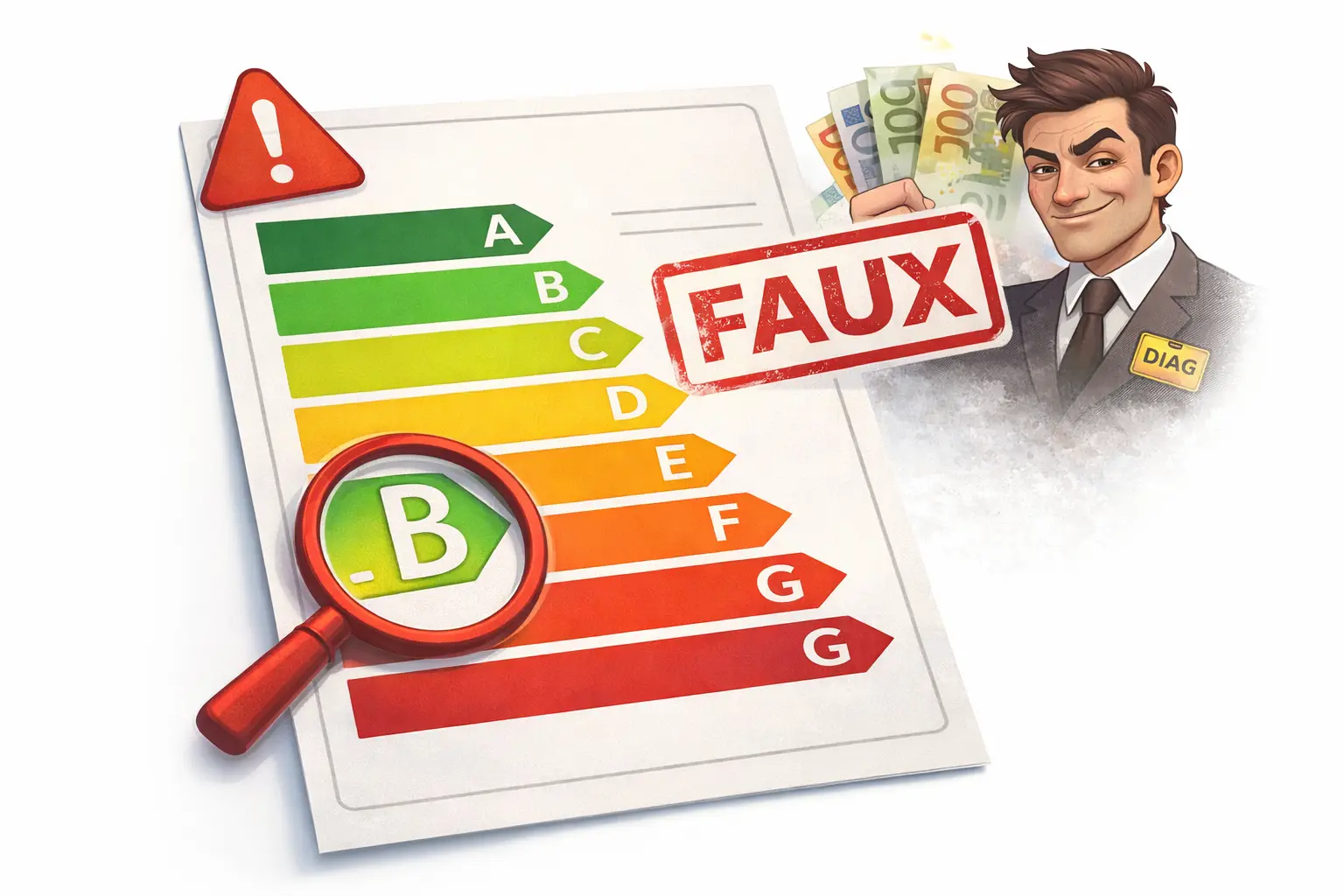
Alert: DPE fraud involves intentionally inaccurate or lenient energy performance diagnostics carried out to artificially enhance a property’s value. Poor energy rating, falsified surface area, overestimated equipment: these practices deceive buyers and tenants, with significant financial, legal, and sometimes environmental consequences. With stricter regulations, this type of fraud is increasingly monitored.
Faced with the rise of lenient DPEs, it becomes crucial to detect anomalies and understand the mechanisms of this fraud to secure your investment. Thanks to recent measures, such as the implementation of a QR code on each diagnosis and strengthened controls, it is possible to limit risks, provided you remain vigilant and informed.

This article helps you better understand the issues, spot dubious practices, and adopt the right reflexes to protect your real estate project.
🛠️ My experience: Last March, a client purchased an apartment listed as Class C for $220,000, only to discover after winter heating bills that the actual rating was Class F. After hiring an independent expert to re-audit the site, we discovered fake insulation records, teaching me that ordering a counter-assessment before closing avoids disastrous financial surprises.
What is DPE fraud and how does it manifest?
DPE fraud consists of manipulating, falsifying, or inventing all or part of the energy performance diagnosis of a property. This fraud can take several forms: impersonation of the diagnostician, fabrication of data, absence of a real visit to the property, or deliberate errors in assessing energy performance.
| Type of fraud | Method used | Impact on buyer | Legal risk |
|---|---|---|---|
| Overvalued energy rating | Deliberately biased calculation | Overpayment at purchase | High |
| Incorrect surface area | False data | Poor classification | High |
| Exaggerated equipment | Poorly described heating | Underestimated charges | Medium |
| Lenient diagnosis | No real visit | Deception | Very high |
| Fake DPE | Non-official document | Contract nullity | Very high |
In some cases, unscrupulous owners or landlords may present a falsified DPE to obtain a better energy rating. This allows, for example, selling a property at a higher price or circumventing rental bans for properties classified F or G. The fraud can also serve to hide significant defects, such as poor insulation or an outdated heating system.
💡 Do you know? Recent audits show that over 20% of energy performance certificates issued by unaccredited technicians contain major calculation errors, artificially jumping energy classes by at least one tier.
What are the risks for buyers and tenants facing a falsified DPE?
For a buyer or tenant, an incorrect diagnosis represents a considerable financial risk. Believing you are buying or renting an energy-efficient home, you may later discover high bills, essential insulation work, or equipment that needs replacing.
A fraudulent DPE can also lead to difficulties reselling the property, especially if a new assessment reveals a lower energy rating. In some cases, renting may be prohibited if the property does not meet regulatory thresholds, resulting in loss of income and complex administrative procedures.
⚠️ Common mistake: Accepting a PDF diagnostic report without validating its official registration number on the national ADEME database. Scammers often falsify class letters on paper without updating official public registries. Always scan the QR code or verify the 13-digit certificate ID online before making an offer.
How to recognize a complacent DPE during a real estate transaction?
💡 Practical tip: Ask for the last 24 months of actual energy bills (electricity/gas) during visits to compare real energy usage against the theoretical diagnostic score.
Several clues can help spot a complacent DPE. The absence of a visit by the diagnostician, inconsistent information about the surface area or equipment, or a report lacking an official QR code should raise alarms. Also beware of diagnostics carried out by non-certified professionals or whose certification number does not appear on the document.

Always verify the DPE data by consulting the national diagnostics register via the QR code. Do not hesitate to ask the seller or landlord for the name and contact details of the diagnostician, as well as proof of their on-site visit. A diagnosis that seems too favorable compared to the apparent condition of the property should prompt caution.
How to identify them easily?
1️⃣ Check the validity of the DPE
- DPEs carried out after July 1, 2021, are valid for 10 years.
- Those established between 2013 and 2017 have not been valid since January 1, 2023.
- DPEs performed between January 1, 2018, and June 30, 2021, expired on December 31, 2024.
2️⃣ Check the diagnostician
- A valid DPE must imperatively display an identification number. Without it, the document has no value.
- Verify the diagnostician’s certification via the official directory.
- Also ensure that the DPE is properly registered on the ADEME website.
3️⃣ Examine the content of the DPE
- The report must detail the characteristics of the property, the energy consumption of each equipment, and an estimate of the costs.
- Absent or vague information should immediately raise suspicion.
What penalties do perpetrators of DPE fraud face?
Owners or lessors who present a forged DPE face significant administrative and financial penalties. In 2026, fines can reach several thousand euros, depending on the severity of the facts and their impact on the transaction.
Diagnosticians involved in fraud risk suspension or revocation of their certification, as well as criminal prosecution. Authorities have strengthened controls and no longer hesitate to severely punish fraudulent behavior in order to restore trust in the real estate market.
What measures have been implemented to combat DPE fraud?
In response to the increase in complacent DPEs (4.3% of diagnostics carried out in the first half of 2025), public authorities have adopted several measures to strengthen the reliability of the system. The first is the introduction of a mandatory QR code on each DPE, allowing real-time verification of the validity and authenticity of the diagnosis.
Furthermore, the certification of diagnosticians has been tightened, with regular checks and automatic suspension in case of exceeding certain thresholds of suspicious activity. Awareness campaigns also target individuals to encourage them to verify diagnostics before any transaction.
Estimate realistic energy ratings based on property size and consumption.
How to protect yourself effectively when buying or renting a property in 2026?
🍀 Advantages
Mandatory standardized testing protects buyers against thermal sieve traps.
Higher certified ratings boost long-term property resale value.
Clear roadmap for targeted energy renovation investment.
🔻 Weaknesses
Calculation methodology variations between different diagnostic software tools.
Risk of fraudulent certifications from unverified rogue auditors.
To avoid unpleasant surprises, it is advisable to adopt some simple habits. Always demand a recent DPE bearing the official QR code, and verify the diagnostician’s certification with the competent organizations. Consult the national register to compare the diagnostic information with that of the visited property.
If you have any doubts, have a counter-diagnosis carried out by an independent professional. Do not hesitate to question the seller about the work carried out, the actual energy consumption of the property, and to ask for energy bills from recent years. These precautions will help you secure your purchase or rental and avoid traps related to DPE fraud.
To better understand the issues, it is useful to consult the developments of the new DPE or to check solutions for selling an energy-consuming property. Before a real estate project, accurately estimating your property also helps avoid unpleasant surprises.
Perspectives and advice for investing confidently in real estate in 2026
The energy performance diagnosis remains an essential tool to assess the quality of a property and anticipate its energy expenses. However, its reliability depends on the vigilance of each market participant. As a first-time buyer, take the time to carefully analyze each document, ask precise questions, and seek the opinion of recognized professionals.
The evolution of regulations and the strengthening of controls demonstrate the public authorities’ desire to protect buyers and tenants. Stay alert to warning signs during your visits, and prioritize transparency in all your procedures. By adopting these good practices, you will maximize your chances of successfully completing your real estate project and fully enjoying your new home, without fearing the inconveniences of DPE fraud.
DPE fraud: how to spot it and react
What is DPE fraud?
It is a deliberately erroneous or falsified diagnosis aimed at artificially improving the energy rating of a property.
How to spot a fraudulent DPE?
Inconsistencies between actual consumption, the condition of the property, and the displayed rating are often warning signs. The absence of a physical visit is also suspicious.
What are the risks for the seller or the diagnostician?
They face financial penalties, cancellation of the sale, and criminal prosecution in case of proven fraud.
What to do if you have doubts about a DPE?
It is possible to request a new independent diagnosis or to report to the competent authorities for verification.