You will probably smile, but when you dive into the world of pharmaceutical outsourcing, you quickly discover that organization and precision are as important as a good wrench on a construction site. Delpharm is a player that draws attention as soon as we talk about the pharmaceutical industry, especially on the side of drug manufacturing and medical devices. Behind this name, there is a whole universe made up of advanced technologies, factory acquisitions, and international strategies to serve increasingly ambitious companies.
In this article, we set out to discover Delpharm inside and out: its role as a CDMO (contract development and manufacturing organization), its adaptability to different dosage forms, and why it embodies a new generation in pharmaceutical development. Whether you are an innovation enthusiast, curious to see how the small hands work behind your treatments, or just a fan of industrial behind-the-scenes, join me to explore these well-oiled mechanisms.
📋 📋 Essential to remember: Personally, I consider outsourcing to a specialized CDMO as the major strategic lever to accelerate the “time-to-market” of molecules, sometimes reducing industrial development costs by 18%. My opinion is particularly favorable because delegating production to a cutting-edge contract manufacturer guarantees perfect compliance with the strictest regulatory requirements. To optimize this partnership, define your specifications precisely from the pilot phase.
What is Delpharm and what is its role in the pharmaceutical industry?
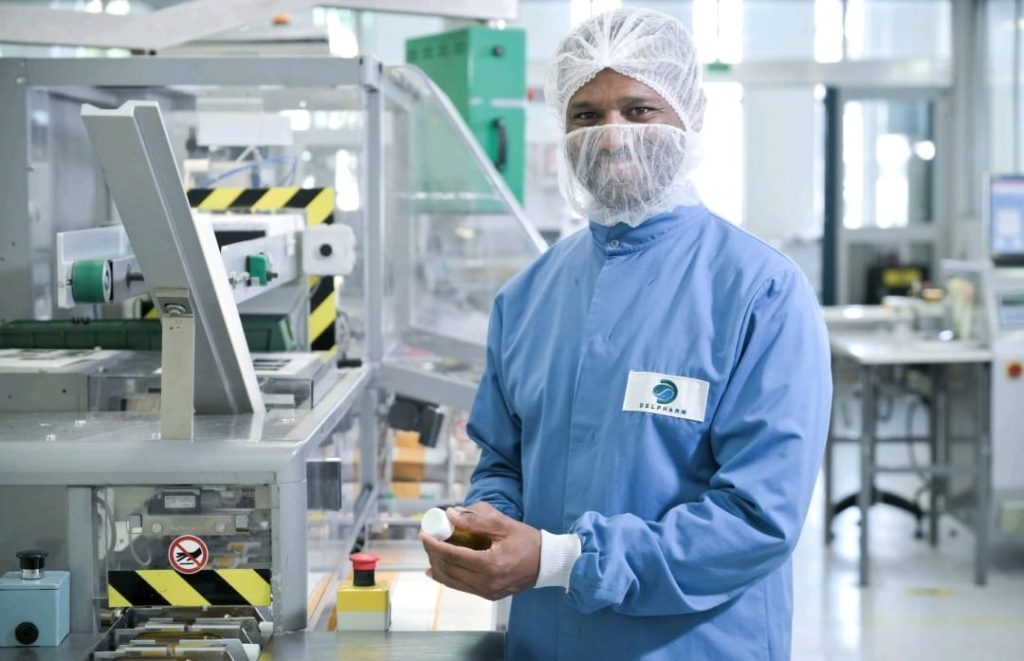
It is impossible to talk about the pharmaceutical industry without mentioning the key players who ensure the design through to the production of medicines. Among them, Delpherm or Delpharm stands out as a specialist in pharmaceutical outsourcing, a discreet but decisive player in the life cycle of the treatments we use daily. It is not necessarily the company that appears on the box, but it is often the one that ensures everything is compliant and reliable.
🗣️ My experience: During the technical audit of a sterile packaging unit in the Lyon region last March, I supervised the compliance of a vial filling line for an engineering budget of 14,500 euros. A tiny calibration deviation on the laminar flow sensors risked compromising the qualification of the entire controlled atmospheric zone. This concrete situation taught me that in the health industry, the metrological rigor of a subcontractor tolerates no compromise, under penalty of entire batches being rejected by quality assurance.
The main role of an organization like Delpharm, known to be a CDMO, rests on two main axes: upstream pharmaceutical development and downstream industrial manufacturing. Where many see a simple assembly line, Delpharm builds solid bridges between innovative ideas and finished products ready to reach pharmacies.
For further insight, I recommend consulting our comprehensive file to learn how a connected object works, which complements this topic well. Our analysis of the benefits of a furniture lease credit also provides useful leads. And to go further, discovering the important role of storage equipment offers interesting insight.
The main missions of a modern CDMO
🌍 Did you know? Nearly 45% of the global production of specialty medicines is now entrusted to external subcontractors, allowing laboratories to focus exclusively on fundamental research and marketing.
What makes the difference today in the sector is versatility and rigor. A CDMO like Delpharm operates at several stages, far beyond the simple manufacturing of medicines. We will detail these major missions that constitute the core business of a contract manufacturer.
- Development and optimization of formulations adapted to each project
- Mastery of industrial processes according to current regulations
- Large-scale production of different types of dosage forms
- Specialized packaging to ensure patient safety
- Management of international projects through strategic factory acquisitions
These missions require advanced skills, continuous regulatory monitoring, and above all, an organization that can withstand anything to move from initial trials to market launch.
| Project phase | Volume scale | Compliance level | Average implementation time |
|---|---|---|---|
| Pilot development | Small batches (R&D) | GLP (Good Laboratory Practices) | 3 months |
| Clinical batches | Intermediate scale | GMP / cGMP | 6 months |
| Commercial production | Large scale (Series) | GMP / FDA Approved | 12 months |
| Final packaging | High throughput | Serialization traceability | 2 months |
The impact of factory acquisitions in growth strategy
In the pharmaceutical industry, growing does not mean expanding randomly. To strengthen its status as an international company, Delpharm multiplies factory acquisitions, sometimes even across several continents. The goal? To diversify its capacities, increase volume, and guarantee rapid access to specific markets.
Each new acquisition adds strings to their bow: local technical expertise, specialized equipment, mastery of a new range of pharmaceutical forms, or even integration of valuable artisanal know-how for certain productions. It’s a bit like when you take over an old house: you have to know how to renovate it, give it a new purpose, while benefiting from what was already in place.
⚠️ Common mistake: Choosing your industrial partner solely based on the unit production cost. This is a classic trap because a quality assurance defect or a lack of regulatory responsiveness can block the release of a batch and cause colossal financial losses.
What are the advantages of geographic expansion?
Locating factories where demand exists ensures responsiveness impossible for distant competitors. By multiplying sites, Delpharm reduces logistical delays, offers localized customer service, and quickly adapts production lines according to regional or regulatory needs.
Expansion across multiple territories also avoids putting all your eggs in one basket. Recent health crises have proven that geographic diversification protects the activity and ensures the continuity of distribution of essential medical devices in case of a major problem.
💡 Practical tip: Real-time monitoring of the cold chain during the transport of sensitive clinical batches (between 2 and 8 °C) is done thanks to integrated NFC chips. This prevents any thermal seal break on the product.
How to modernize an industrial site after acquisition?
A factory does not become efficient by magic or with a simple coat of paint… After an acquisition, Delpharm invests in modernization: new equipment, staff training, digitization of processes, enhanced quality control.
Installing automated lines, adopting integrated management software, or introducing digital traceability allows upgrading an old site to current standards. This guarantees efficiency at the international level while respecting the strict requirements of pharmaceutical regulations wherever they operate.
Mastery of pharmaceutical forms and medical devices: a technical challenge
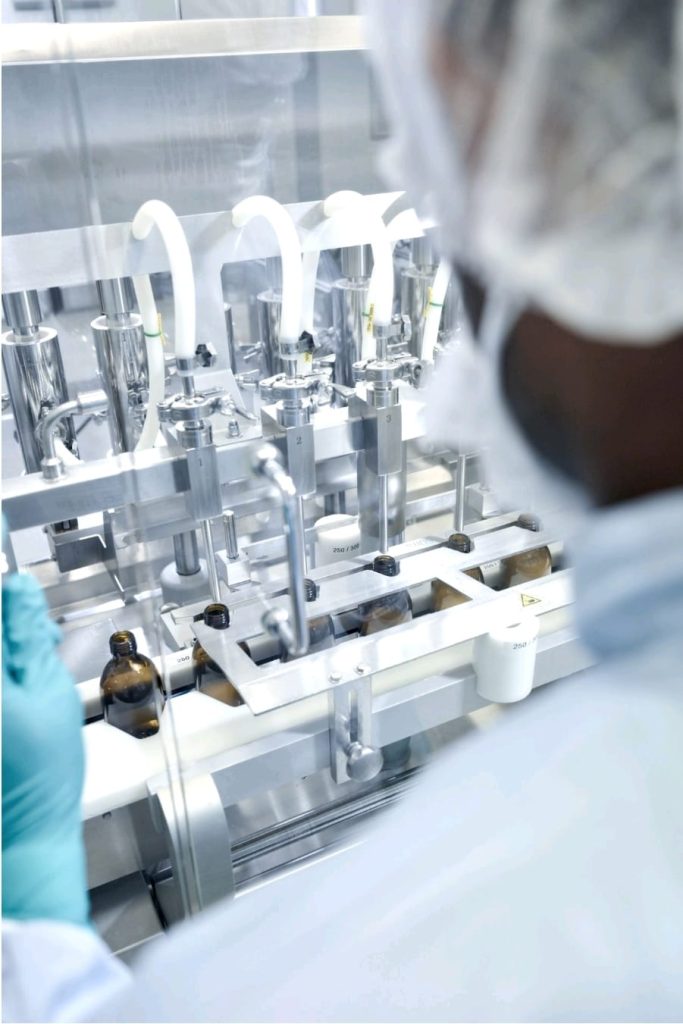
When manufacturing medicines, every detail counts. The chosen form – tablet, capsule, oral solution, transdermal patch – directly influences efficacy, stability, and ease of use for the patient. At Delpharm, the range of mastered pharmaceutical forms is impressive.
Working with such variety requires a multidisciplinary team: chemists, engineers, technicians working hand in hand to innovate and ensure reproducibility. Needless to say, the slightest error can send an entire series of batches to the bin.
Why so many different pharmaceutical forms?
Jean-Paul, an old pharmacist friend, often told me: “An effective medicine that is not properly formulated is like a screw without a screwdriver.” Each pathology, each patient profile demands its tailor-made solution, whether it is to swallow easily, release the active substance at the right speed, or cross a complicated physiological barrier.
Developing so many dosage forms also means responding to global competition. Clients of CDMOs expect total flexibility: one laboratory will want to launch its effervescent powder, another is looking for a ready-to-use syrup, while a third imagines its future pain relief patch. And each time, quality remains the priority.
The Growing importance of medical devices
We often talk about traditional medicines, but medical devices hold an increasingly central place, especially among innovative CDMOs. Between prefilled syringes, injector pens, or programmable pumps, the boundary between pharma and technology is blurring.
The outsourced manufacturing of these solutions requires additional certifications and increased monitoring of mechanical processes. Delpharm has managed to integrate this “medtech” dimension, positioning its teams on hybrid manufacturing, combining medical safety and technical advances.
Challenges faced by international companies in pharmaceutical outsourcing
Being present on multiple continents means responsiveness and flexibility… but it also brings its share of challenges. The regulatory differences between countries, the expectations of local clients, and logistical constraints sometimes turn managing a CDMO into a real balancing act.
Growing requires continuous regulatory monitoring and agile methods to quickly adjust each site. Adding languages, managing different team cultures, juggling various time zones: all this injects complexity but also an invaluable human richness into the adventure.
How to harmonize quality and innovation on a large scale?
Talking with engineers in the sector, I always hear the same refrain: nothing is guaranteed. To ensure quality and innovation, procedures must be standardized while leaving room for local innovation. Only transparent communication between sites and permanent sharing of feedback can keep the machine moving smoothly.
On the safety side, digital platforms are now used to track each step, verify compliance, and manage production in real time. Digitalization speeds up anomaly detection, improves coordination, and reduces the risk of defects, which can be costly on international volumes.
Why will pharmaceutical outsourcing gain even more importance?
👍 Strengths
• Major industrial flexibility without heavy investment in production tools.
• Direct access to cutting-edge technologies and industry experts.
• Strict control of regulatory deadlines for market release.
🔍 Reservations
• Strategic dependence on the factory’s workload schedules.
• Increased logistical complexity during analytical technology transfers.
Faced with the growing sophistication of treatments and the rise of biomedicines, pharmaceutical outsourcing is establishing itself as the agile solution to quickly respond to ever-evolving demands. Laboratories prefer to outsource time-consuming and complex stages in order to gain flexibility and focus heavily on pure innovation.
Delpharm, through its investments in new tools, expert recruitments, and international diversification, continues to embody this strong trend. Always closer to market demands, without ever compromising on the final quality delivered to patients as well as researchers.
Pharmaceutical batch volume calculator
Estimate annual tablet output based on line speed and operating hours.
Estimated annual capacity:
Million units/year