Equipping oneself with a video surveillance system in the workplace is increasingly appealing to managers. The reasons given are multiple: theft prevention, equipment protection, and access control. But beyond security aspects, this choice involves skillfully juggling several legal and ethical obligations. Managing the security of property and people without infringing on employees’ privacy is a major challenge for any organization. Let’s discover what the installation of cameras in the workplace really entails.
📋 The essentials at a glance: Personally, I believe that installing cameras in a company must meet a strict security objective without ever turning into permanent and disproportionate employee surveillance. My observation is simple: non-compliance with CNIL rules exposes the employer to heavy financial penalties that can reach 4% of global turnover. It is enough to define a transparent framework and inform staff beforehand to establish a perfectly legal and peaceful system.
Why implement video surveillance in the workplace?
The professional environment is not immune to risks related to thefts, break-ins, or various incidents. For many, video surveillance in the workplace primarily responds to the need to protect premises, equipment, and employee integrity. Thus, it is a measure aimed at both material security and the safety of people operating in these spaces.
🍀 Pros
- Strong deterrence against intrusion attempts and external thefts
- Irrefutable evidence available during insurance investigations
- Enhanced sense of security for staff working alone during off-hours
🔻 Cons
- Risk of social climate deterioration in case of poor communication
- Heavy legal formalities and rigorous technical maintenance of storage
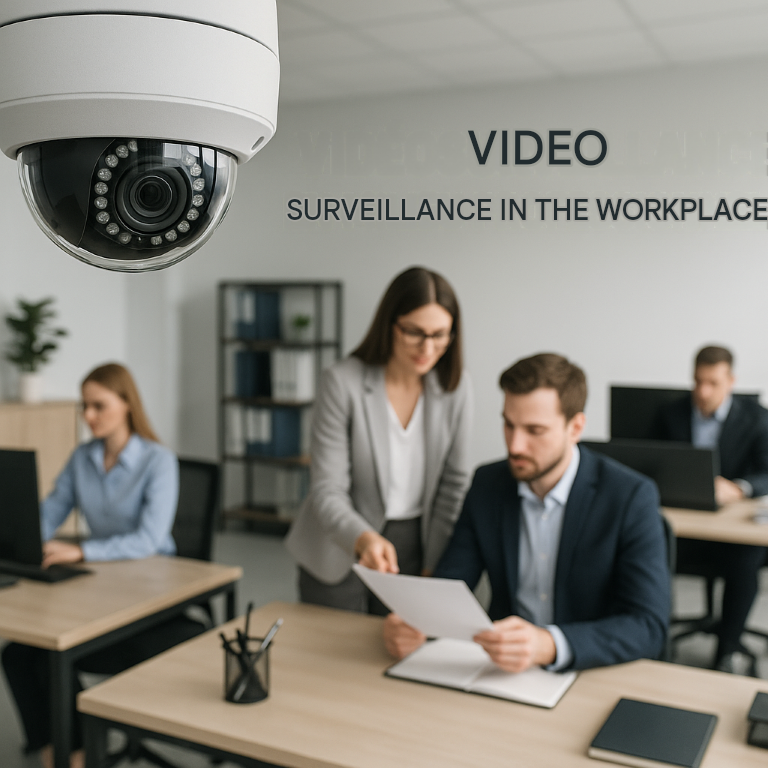
Over time, this technology has also become a valuable tool to control access and ensure better management of traffic flow, especially in large organizations. Equipped with multiple features, it allows, for example, monitoring sensitive areas or securing warehouses where valuable assets are stored with connected cameras.
🗣️ My experience: In March 2026, I audited the protection system of an electronic equipment storage warehouse where the manager had just installed eight high-definition cameras. Two of these devices filmed directly and continuously the fixed workstations of order preparers to monitor their productivity. The real lesson I took from this intervention is that by refocusing the objectives solely on emergency exits and unloading areas, the company came back into compliance while restoring the teams’ trust.
What are the purposes authorized by the regulations?
Legitimizing the use of a video surveillance device at work requires clear and objective justification. According to French regulations and legislation, image collection can only be done for the purpose of protecting property, preventing malicious acts, or ensuring employee safety. It is therefore not a question of using these devices to control productivity or to observe someone without their knowledge.
The fundamental principle always rests on the lawful, legitimate, and proportionate nature of the approach. This requirement originates from various sources: the Labor Code, the Data Protection Act, as well as the GDPR. Deploying this equipment without respecting these frameworks exposes the employer to civil and criminal penalties.
For further reading, I recommend our legal analysis concerning the obligations of periodic general verification of equipment, which also provides useful insights. And to go further, our guide on how a connected and secure object works offers interesting perspectives.
Respecting employees’ privacy and individual rights
Employee surveillance must never undermine the respect for their privacy. Installing cameras requires attention to the nature of the images collected. Permanent and indiscriminate capture of every corner of the company is prohibited. Certain areas must be strictly excluded from the camera’s field, such as workstations or break areas.
Each employee benefits from clear rights regarding the use of their personal data. When a video surveillance system is implemented, the individuals concerned must be transparently informed about the purpose and the means used.
| Area of premises | Surveillance status | Accepted legal reason | Maximum retention period |
|---|---|---|---|
| Entrances and exits | Authorized (total) | Access control, theft | Maximum 30 days |
| Storage area | Authorized | Protection of goods | Maximum 30 days |
| Fixed workstation | Prohibited (except exceptions) | Handling of heavy valuables | Maximum 30 days |
| Break / meal room | Strictly prohibited | Respect for privacy | No recording |
Employer obligations during installation
The implementation of video surveillance directly engages the employer’s responsibility. Before any installation, the employer must consult the Social and Economic Committee (CSE) when the workforce justifies it. The employer is also responsible for declaring the system to the CNIL or, in some cases, maintaining a specific register listing all processing activities.

Furthermore, displaying visible signage indicating the presence of cameras and specifying the procedures for recourse is an obligation. This can be done notably with these Dahua surveillance cameras installed in strategic areas to balance visibility and preventive effectiveness.
Authorized areas and restrictions regarding video surveillance
Not all parts of professional premises can host surveillance cameras. Only certain authorized areas meet the criteria imposed by legislation. These mainly correspond to entrances, exits, emergency exits, traffic routes, as well as storage centers where property security is paramount.
The prohibition of filming workstations is among the key rules to respect. Continuously capturing professional activity constitutes abusive surveillance, considered a violation of employees’ rights. However, there are very limited exceptions, such as for professions involving handling funds or high-value goods under strict conditions.
- Main entrances and exits of buildings
- Emergency exits and circulation corridors
- Sensitive storage areas or reserves
- Private parking lots attached to the company
On the other hand, locker rooms, break rooms, restrooms, or union offices remain out of reach of video surveillance unless opposed due to a serious and proven threat.
How to reconcile security and respect for rights on a daily basis?
Ensuring the security of property and people requires scrupulous attention to regulatory framework. A balance must always be found between the need for protection and the fundamental rights of individuals, notably respect for privacy and personal information.
For this, each manager must clearly formalize the legitimate and proportionate purposes pursued, limit the number of cameras, carefully choose their positioning, and limit the retention period of images. Internal training on the issues of employee surveillance also helps prevent abuses.
🌍 Did you know?
The General Data Protection Regulation (GDPR) requires that the standard retention period for video surveillance footage does not exceed a few days. Storage of 30 days remains the maximum legally allowed, except in the case of an ongoing dispute.
Essential steps for installation
Implementing an effective video surveillance project begins with an analysis phase of the specific needs and risks of the establishment. This is followed by consultation with employee representative bodies and detailed information to teams about their rights.
Once the cameras are installed, it is necessary to ensure regular maintenance of the system and periodically review the relevance of the setup based on observed feedback and changes in the legal context.
⚠️ Common mistake
Filming the public road adjacent to the company’s windows or entrance doors without prefectural authorization is a common mistake. Professional cameras must only capture the interior of the private property under penalty of a clear violation of the privacy of passersby.
What controls and remedies are available to employees?
Employees have various means to defend their rights if they feel they are being unfairly monitored. They can address management or contact the CNIL in case of obvious abuse. Furthermore, each staff member has the right to request access to the images in which they appear, in strict compliance with the procedures provided by the regulations.
A continuous dialogue within the organization allows for quick adjustment of practices, or even suspension of any system deemed disproportionate or non-compliant with the principles governing video surveillance in the workplace.
💡 Practical advice
Be sure to register your image capture system in your company’s GDPR processing activities register, and consult the Social and Economic Committee (CSE) before any technical project approval.
Frequently asked questions about video surveillance in the workplace
Can cameras be installed in all areas of the company?
The deployment of cameras is limited to certain strictly defined areas. These mainly include entrances, exits, parking lots, traffic routes, and sensitive storage areas. Filming workstations, changing rooms, toilets, or break areas remains prohibited except in exceptional cases. This measure protects the privacy of employees and ensures regulatory compliance.
- Authorized areas: entrances, exits, emergency exits, stockrooms
- Prohibited areas: individual offices, changing rooms, restrooms, break lounges
What steps must the employer take before installing video surveillance?
Before any installation, the employer consults the CSE if it exists, informs the staff, and declares the system in accordance with applicable legislation (register, CNIL declaration depending on the case). They must also display clear signage on site. These obligations ensure transparency and protect employees’ rights regarding employee monitoring.
- Assessment of security needs
- Consultation of staff representatives
- Administrative declaration of the system
- Information displayed visibly
What is the retention period for recorded images?
The recommended maximum retention period for images generally does not exceed one month, except in exceptional situations or ongoing legal proceedings. At the end of this period, all footage must be securely deleted to preserve the privacy of the individuals filmed.
| Situation | Recommended Duration |
|---|---|
| Common Uses | Maximum 30 days |
| Investigation or Litigation | Only during the procedure |
How to ensure that video surveillance complies with the GDPR?
Complying with the GDPR involves clearly informing employees, limiting image collection to legitimate and proportionate purposes, minimizing access to data, and ensuring their security. Documentation must be kept up to date regarding the processing carried out and the retention periods applied by the company.
- Inform and train staff
- Restrict access to images to authorized personnel only
- Guarantee automatic deletion after the predefined period
- Maintain a processing register