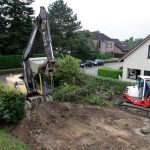
When your company uses lifting accessory devices such as forklifts or construction machinery, it remains essential to check the compliance of work equipment installations.
This inspection is called Periodic General Inspection or periodic inspection VGP. It is very useful in preventing accident risks and preserving employee safety.
It should be noted that equipment maintenance and personnel protection are among the priorities of any company. It is no surprise that VGP labor code constitutes a legal obligation.
📋 Key points: Personally, I consider VGP to be the pillar of workplace safety with a 40% reduction in accidents related to lifting equipment. For me, it is a non-negotiable legal step that ensures the protection of your operators and your legal responsibility. This periodic inspection guarantees that each machine remains operational and compliant with current standards throughout its lifespan.
What is the Periodic General Inspection (VGP) and why is it necessary?
To better clarify the subject, it is appropriate, to begin with, to offer you a definition of VGP periodic inspection.
Simply put, it is a control or audit of public works machinery and lifting devices including forklifts, lifting accessories, or handling carts.
This commissioning periodic inspection can be summarized as an examination of the conservation state of work equipment. The goal is to certify their compliance with current standards. It optimizes maintenance operations, reducing the risk of accidents.
Some people confuse it with routine maintenance like with a simple robotic ride-on mower, for example.
However, it is a commissioning inspection of equipment that is part of the applicable regulations. It allows detecting possible deteriorations or anomalies.
These have an impact not only on the equipment but especially on the user. To ensure their safety, VGP periodic inspection is required.
📍 My experience: In March 2026, during a site audit in Bordeaux, an inspector refused the use of an aerial work platform whose VGP was over 6 months old. The company had to pay 180 euros urgently for an immediate inspection to avoid blocking the site. The lesson learned is clear: rigorous planning of your inspection dates costs much less than a forced shutdown day.
VGP labor code is addressed to establishment managers and encourages them to carry out the periodic inspection of lifting devices at a determined period. This examination of the conservation state of work equipment is therefore defined as a regulatory obligation.
⚠️ Common mistake: Confusing preventive maintenance with VGP. Maintenance ensures the proper mechanical functioning of the engine or fluids, while VGP is a pure safety audit that validates the machine’s capacity to safely bear its loads.
By the way, if you plan to rent heavy equipment or public works machinery, you can contact the company Kiloutou. It has many agencies throughout the country.
What types of equipment or machinery are subject to the VGP?
Almost all devices require regular maintenance to ensure their performance. By the way, consider consulting our article if you want to learn how to maintain a wastewater lifting pump.
Public works machinery also needs it. But that’s not all; they require periodic VGP inspections. This concerns extraction and earthmoving equipment such as loaders, mini excavators, bulldozers, dumper excavators, and much more.
If your company also uses working at height equipment, you are required to comply with the VGP labor code. You must carry out the commissioning operation periodic general inspection.
This obligation relates to toucan lifts, spider lifts, telescopic scissor lifts, articulated lifts, and of course, aerial work platforms.
Besides that, periodic VGP inspections apply to lifting and handling equipment. If you use forklifts, stackers, handling carts, or pallet trucks, call a professional to take care of the periodic inspection of devices.
This equipment condition conservation examination also applies to construction equipment including ladders, scaffolding, roofing machinery, and more.
Similarly, it applies to lighting equipment, fixed electrical and refrigeration installations, boilers, heat pumps, waste compactors, as well as lifting accessories.
How often must VGP inspections be carried out?
Whether you are performing the commissioning inspection of your waste compactor or forklift, your lifting accessories or handling carts, the frequency of the operation must be respected.
It should be noted that it varies depending on the category of equipment and its use. For public works machinery such as mini excavators, loaders, or graders, these machines must undergo an annual periodic VGP inspection.
The same applies to fixed lifting devices. Remember to carry out a commissioning inspection every 12 months.
This also concerns electrical installations, fall protection devices, respiratory protection, and fire extinguishers or firefighting equipment.
| Type of equipment | Standard frequency | Visual inspection | Load testing |
|---|---|---|---|
| Lifting devices | 12 months | Mandatory | Recommended |
| Forklifts | 6 months | Mandatory | Systematic |
| Earthmoving machinery | 12 months | Mandatory | Depending on use |
| Tail lifts | 6 months | Mandatory | Mandatory |
Regarding mobile lifting devices such as lifts, cranes, and gantries, the law requires you to perform periodic VGP inspections every 6 months. This regulation also applies to scaffolding and aerial work platforms.
That said, some platforms are designed to be operated by human force. They require a periodic VGP inspection every 3 months. If you have a press or a waste compactor, they also require a quarterly periodic VGP inspection.
Who is qualified to carry out a VGP?
Just like the standards explaining the procedures for the periodic VGP inspection, some obligations specify the person responsible for the inspection.
In order for the equipment condition examination to be valid, the person assigned to perform it must be highly qualified and experienced.
Whether or not they belong to an establishment, they must master the provisions set out by the VGP labor code. This clause is addressed in Article R4323-24.
If the company employee meets all these conditions, the company is not required to use an external organization. Otherwise, it must call on a specialist to carry out the periodic VGP inspection.
This profile should not be chosen lightly as they must be included in the list provided by the labor inspection. France Contrôle, Apave, Socotec, Dekra, and Veritas are among the most well-known accredited organizations.
The inspector must demonstrate incredible expertise in the prevention of risks caused by lifting devices, forklifts, or handling trucks.
🌍 Did you know? A study by INRS shows that about 15% of machines inspected during a first VGP present critical anomalies requiring immediate shutdown for repair.
The establishment manager’s role is to ensure the inspector’s qualifications. The person responsible for the commissioning inspection of the machine is asked to list any anomalies or problems detected during the inspection. This allows the business owner to address them in time, avoiding worsening the situation.
What are the main checkpoints during a VGP?

Whether you plan to carry out the periodic VGP inspection of your handling trucks, lifting devices, or lifting accessories, the inspection process is roughly similar.
To start, the examiner records all data helping to identify the equipment, such as the model, brand, or serial number.
They also consult all documents related to the machine, including its user manual, certificate of conformity, and maintenance logbook.
The next step is the static inspection, which serves to perform an equipment condition examination. In short, this involves inspecting their general condition to detect anomalies that could pose dangers.
This phase can be summarized as a check of the safety components of the machine, such as brakes, chocking equipment, load chains, cables, and many others.
With the equipment operator, the inspector checks its proper functioning. They ensure the conformity and condition of the tires and wheels, control devices, cabin condition, electrical equipment, engine, and more. For lifting devices, the inspector encourages the operator to perform a lifting test with a load.
Once done, the dynamic control constitutes the next phase. Its objective is to ensure the efficiency of the machine’s operation. The specialist thus proceeds to test the brakes, movements, and more.
Once completed, he hands over the periodic inspection VGP report to the site manager. It is up to him to make the decision regarding the machine in question. He can withdraw it from the site to carry out the necessary maintenance or leave it in operation according to this report.
How are the results of a VGP documented and communicated?
After the assembly installation inspection and control of the machine, two documents formalizing the periodic inspections VGP can be distinguished.
Each contains essential information creating a complete file for each device. They include all the data necessary for everyone’s safety.
The first document is called the register. It lists the controlled installations, the identity of the person responsible for the inspections, and the date of the periodic inspection VGP.
The site manager has the option to gather all the documents into a single register to simplify their storage.
Regarding the second, it is a report of commissioning periodic inspection including two elements, the detected anomaly and the points of deviation.
This refers to a defect or fault impairing the proper functioning of the machine and compromising its safety of use. As for the points of deviation, these are the differences that the equipment may present compared to the current standards.
For everyone’s safety, it is required to keep all these documents for at least 5 years according to article L 620 of the labor code. However, it is recommended to keep them for the lifespan of the concerned devices.
What are the consequences if equipment fails a VGP?
Public works machines, waste compactors, lifting accessory devices, forklifts, construction equipment is most often used intensively.
Usage conditions prematurely degrade parts. Consequently, handling the machine is extremely risky.
Fortunately, the VGP labor code mandates the periodic inspections VGP of public works machines, agricultural machinery, earthmoving equipment, drilling installations, and more. This control allows timely detection of any failure or wear preventing risks.
If the device fails the commissioning inspection, it must be immediately withdrawn from the site and removed from production. The site manager must ensure its repairs before the machine can be used again.
After its restoration and general improvement, a test is necessary. To do this, the company is invited to call on an expert. All these steps are undeniably useful to ensure the safety of the machine and especially the user.
Does the VGP differ according to sectors of activity (construction, industry, transport, etc.)?
The periodic inspections VGP apply to countless sectors working with specific machines and equipment. The operation serves to check their general condition to know if they remain usand or require repair.
In general, the steps of periodic inspection VGP are similar, regardless of the field of activity. The difference notably lies in the frequency of the inspection.
If electrical installations must undergo annual periodic inspections (VGP), scaffolding requires a semi-annual inspection.
Regarding lifting equipment inspections, this operation must be carried out every year. This applies to fixed machines such as cranes or vehicle lifts.
On the other hand, mobile lifting accessories such as backhoe loaders or forklifts must undergo a semi-annual periodic inspection (VGP).
What is the average cost of a VGP and is it covered by the employer?
The periodic inspection (VGP) is a mandatory check. It allows assessing the proper functioning of lifting accessory devices and public works machinery to ensure the protection of their users.
The cost of this inspection can vary depending on the type of equipment concerned and the organizations responsible for the periodic inspection work.
Generally, the fee ranges between €90 to €180 per machine during a periodic visit. For an equipment condition examination with commissioning verification, expect an amount between €100 to €200 per piece of equipment.
💡 Practical tip: To save time, group the inspector’s visits for your entire fleet into a single day. This helps reduce travel expenses and often secures a discounted rate on the unit cost per machine.
It should be noted that the cost of periodic inspection of equipment is reasonable, although it is worthwhile. The operation guarantees the machine’s functioning and user safety.
In the absence of this inspection, the business owner faces many risks not only financially, due to fines, but also criminally. Especially since defective equipment causing bodily injury can make imprisonment inevitable.
Regarding insurance, the company may refuse to cover the business owner. No compensation will be received.
The absence of periodic inspection (VGP) also impacts the company’s reputation and honorability. Even minor infractions will be published in legal announcement journals. See the analysis of employer responsibilities:
🍀 Advantages:
– Total team safety
– Legal compliance ensured
– Equipment valorization
🔻 Limitations:
– Recurring cost to anticipate
– Machine downtime
– Rigorous administrative management
How have recent regulations affected VGP procedures and criteria?
According to Article L. 4321-1 of the labor code, a company has the duty to control work equipment as well as protective devices used in the establishment. These elements must be well equipped, adjusted, and maintained to ensure employee safety.
The periodic inspections (VGP) allow the company to comply with the standards required in Article L. 4321-1. All the modalities are detailed in Articles R4323-23 to R4323-27.
In this sense, the formula on lifting equipment verification commissioning is a legal obligation, but not a recommendation from March 1, 2004.
The decree also specifies the right time to carry out the periodic inspection VGP. This check must take place every three, six, or twelve months depending on the category of the machine. This frequency can be extended to twenty-four months on certain equipment.
According to Article L. R4323-23 and 24, it is imperative and urgent to carry out the repair of defective parts detected through the VGP periodic inspection. The equipment concerned must not be used until its new condition complies with mandatory standards.
Estimate the number of jours restants avant your prochain contrôle obligatoire :
⚠️ Contrôle en retard !