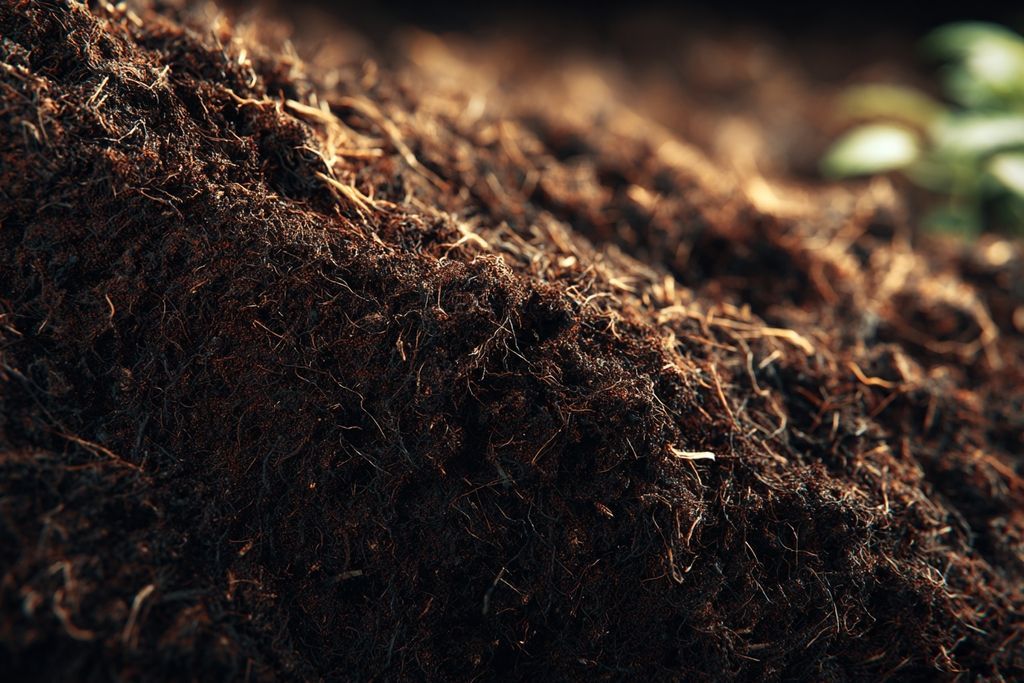
You go home, grab your watering can, and then, surprise: the water stubbornly stays on the surface of the potting soil like on oilcloth. Not cool, especially when your plants look gloomy from lack of hydration… Almost all of us have faced this puzzle at some point in our DIY or Sunday gardener life: potting soil that doesn’t absorb water is frustrating, but it’s not inevitable. Let’s look together at what lies behind this issue, how to easily recognize it, and then some practical tips to fix it without hassle.
📋 📋 In brief: Personally, I consider a substrate that has become hydrophobic to be the main cause of the silent decline of potted plants, blocking up to 90% of the assimilation of vital nutrients. My passionate opinion is clear: letting a soil clump dry out to the point of repelling watering dooms the roots to suffocation. To effectively rehydrate your compacted soil, immediately soak the entire pot rather than watering it superficially.
Why does potting soil become hydrophobic?
One day, after forgetting to water my pots during a heatwave, I noticed that the potting soil remained as compact as an old cake forgotten at the back of the cupboard. Result: the water ran off without penetrating. Yes, too dry potting soil often ends up becoming hydrophobic, meaning it repels water instead of greedily absorbing it.
🗣️ My experience: During the annual repotting of my tropical plant collection in the greenhouse last March, I reused an old bag of heather potting soil stored dry for a paltry 8 euros. At the first watering, all the water instantly ran down the pot’s sides without moistening the core of the soil clump, which remained completely dry and powdery. This real-life situation taught me that a potting soil based on blonde peat that has undergone total desiccation becomes completely impermeable and requires the addition of a wetting agent or prolonged soaking to regain its water-retaining properties.
This mostly happens with basic universal potting soils or those already used for a few seasons. The main cause is simple: when the substrate dries out completely, its fibers contract and create a hard barrier for water to cross. On top of that, if the organic matter has had time to compact, the water absorption problem only gets worse.
🗣️ My experience: During the annual repotting of my tropical plant collection in the greenhouse last March, I reused an old bag of heather potting soil stored dry for a paltry 8 euros. At the first watering, all the water instantly ran down the pot’s sides without moistening the core of the soil clump, which remained completely dry and powdery. This real-life situation taught me that a potting soil based on blonde peat that has undergone total desiccation becomes completely impermeable and requires the addition of a wetting agent or prolonged soaking to regain its water-retaining properties.
What are the aggravating factors?
A dense or compact potting soil clearly promotes this phenomenon. Sometimes, poor storage or prolonged neglect of watering is enough to turn a nice fluffy soil into a concrete slab. Lack of aeration and drainage worsens this situation, because water accumulates only on the surface before running off the edges of the pot or stagnating, without reaching the unhydrated roots.
Past excess moisture can also cause the substrate to harden as it dries. Not to mention certain enriched universal potting soils, heavily loaded with fine materials, which risk losing their absorption capacity if they are not stirred or drained properly between uses.
To go deeper, I recommend discovering our secrets on the ceriman plant which complements this topic well. Our guide on how to react to a bleeding sap on a plant also provides useful insights. And to go further, learning how to make your own homemade hydroponic fertilizer offers interesting perspectives.
How to diagnose a water absorption problem?
🌍 Did you know? Once a standard commercial peat-based potting soil has lost more than 70% of its residual moisture, it develops a microscopic waxy layer on the surface that actively repels water molecules, making superficial watering completely ineffective.
By observing watering, several signs indicate that the potting soil no longer absorbs anything. If the water takes a long time to disappear or stagnates on the surface, it is often a bad sign. Another common symptom: during an ineffective watering, moisture only reaches the first few centimeters while the core of the pot remains very dry.
When you lift your pot or planter, also weigh the substrate. Light potting soil despite good watering usually means that the water has not been retained and that the root system is suffering. Over time, the leaves yellow or wilt despite your efforts, proof that the unhydrated roots are silently sounding the alarm.
⚠️ ⚠️ Common mistake: Simply increasing the amount of water poured from above thinking it will force penetration. This is a classic trap because the water will take the shortest path to the drainage holes, leaving the central root ball desperately dry.
Practical solutions against potting soil that does not absorb water
👍 Strengths
• Peat-rich mixes remain very light for young roots.
• Excellent anchoring capacity for starting cuttings.
🔍 Drawbacks
• Becomes extremely difficult to rehydrate after prolonged neglect.
• Compacts strongly, creating an impermeable surface crust.
Fortunately, there are several ways to revive soil that has become hydrophobic or too compact. It’s never lost: sometimes it just takes a bit of ingenuity and patience to start fresh on the right footing.
Here are some tried and tested techniques, suitable for both urban balconies and larger gardens:
- Fully soaking the pot or root ball in a basin of lukewarm water for 30 minutes to restart absorption.
- Light scarification of the substrate on the surface using a fork or small claw to break the compact crust.
- Mixing draining materials (clay pellets, perlite, coarse sand) into the existing soil to improve its structure.
- Gradual addition of water in several passes rather than one heavy watering to give the soil time to absorb.
- Occasional use of natural horticultural wetting agents to “make” the soil accessible to water when drought persists.
| Structural amendment | Water retention capacity | Root system aeration | Durability in the pot |
|---|---|---|---|
| Expanded perlite | Medium | Excellent | Very high |
| Coconut fiber | Very high | Good | High |
| Vermiculite | Maximum | Medium | Medium |
| River sand | Low | Good | Permanent |
💡 💡 Practical tip: To preserve your opened bags of potting soil, seal them tightly with a clamp and store them in a cool place. Adding a few drops of water before sealing helps maintain the ideal moisture level for 6 months.
Soaking the root ball, the emergency solution!
Honestly, completely submerging your pot in a basin is a radical and effective method, especially if the soil has been too dry for weeks. However, be careful to let it drain well afterwards to avoid excess moisture which would soften the roots. Resume regular watering right after.
For an in-ground garden, a trick is to water superficially, then repeat ten minutes later. This allows the hydrophobic soil to gradually loosen without losing all the water at once. Patience: the key is spreading out the effort.
Aerating and lightening the substrate: an essential step!
Stirring the soil by lightly scratching the surface greatly facilitates its absorption capacity. The more microscopic holes there are, the better air and water circulate. Avoid injuring the main roots: go gently if you feel the plant is fragile.
At each change of season, I now take the opportunity to add a custom mix to my pots: clay balls, a pinch of coarse sand, or even a hint of mature compost to keep that airy feel from start to finish. This routine prevents seeing my geraniums thirsty in the middle of summer or, worse, drowned under excess moisture come autumn.
How to prevent the problem from recurring?
Nothing beats preventive maintenance. First, control the water supply: not too much at once and regularly, so that the universal potting soil always retains some moisture. Also add a bit of mulch on the surface, which limits rapid evaporation and keeps the substrate supple.
Remember to systematically empty the saucers under your pots, especially in winter. Insufficient drainage leads straight to root system suffocation. And beware of clogging with old substrate leftovers, which increase poor aeration: prefer a partial renewal each year if you see the texture starting to resemble that of an old dry cake.
Common mistakes to avoid with soil that repels water
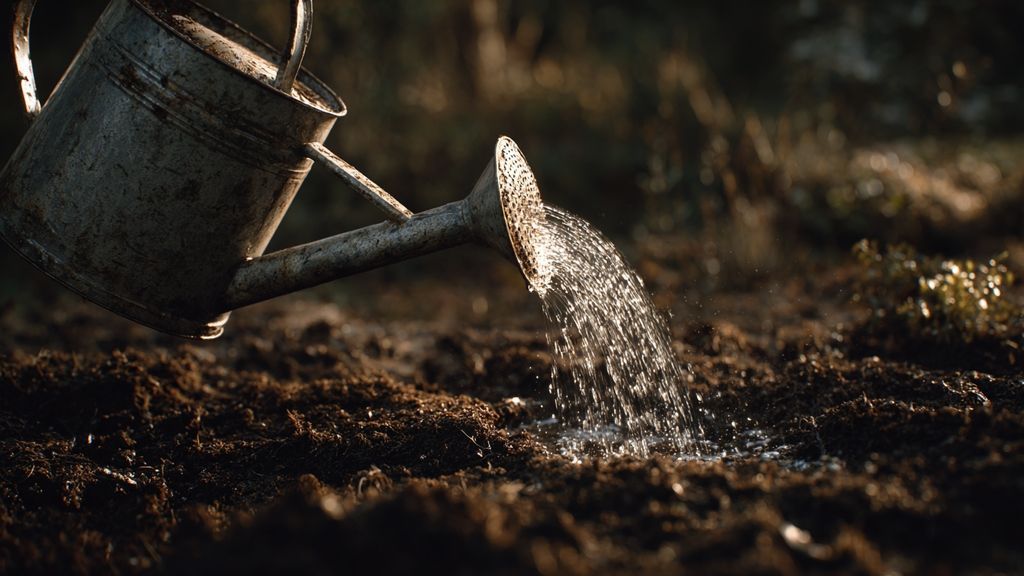
From experience, certain (bad) habits amplify the problem, so it’s better to know them to quickly avoid them. Ineffective watering and excessive use of unamended universal potting soil rank among the false friends of the beginner gardener.
Clumsily dosing watering — too rare or too abundant — quickly leads to the vicious cycle of a dry substrate followed by a sudden excess of moisture. In short, it’s better to aim for regularity and flexibility. And, something seen more than once on balcony projects, stacking different layers where one too compact blocks water access.