Ah, the shrimp willow! This small decorative tree catches everyone’s eye with its young pink and white shoots. Yet, nothing is more discouraging than seeing its foliage lose its beautiful colors and turn brown leaves or brown. What happens when a shrimp willow shows brown spots, wilting foliage, or dry leaves? Like on any garden site, this problem has several possible causes. So let’s analyze this together, find the root of the problem, and see how to give a second life to this bed champion.
📋 📋 Essential to remember: Personally, I consider that the drying out of the spring canopy remains a reversible problem in 90% of cases if water supply is adjusted before the arrival of intense heat. In my opinion, acting on root moisture prevents total decline of the shrub. A location perfectly sheltered from direct midday rays guarantees a quick return of young pink shoots and vigorous foliage throughout the season.
Main causes of brown leaves on the shrimp willow
As soon as the slightest sign of disease or anomaly in the foliage is noticed, you need to take out your plant hobbyist’s magnifying glass and observe. The problem does not always come from the same origin. Several factors sometimes accumulate without warning and end up creating this sad spectacle of brown leaves.
💬 Personal anecdote: Last July, I noticed a sudden browning on a stemmed specimen planted in the heart of an ericaceous soil bed exposed to the south. The initial purchase cost of the shrub was 35 euros at the garden center. The concrete lesson I learned from this experience is that a severe pruning of the scorched branch tips combined with the installation of an 8-centimeter thick flax mulch triggered new healthy growth in less than two weeks.
Experience has taught me that it’s better to learn to recognize the typical symptoms before panicking. When my first shrimp willow got sick, I thought it was heat stress… but it was much more subtle. Here are the main explanations to explore when your shrub shows signs of weakness.
To go deeper, I recommend our analysis on the causes of potting soil that doesn’t absorb water which also provides useful clues to rehydrate dried-out root balls. And to go further, our care calendar for the vegetable garden in July offers interesting insight on managing heatwaves in the garden.
Lack of water or irregular watering: a classic cause of wilting
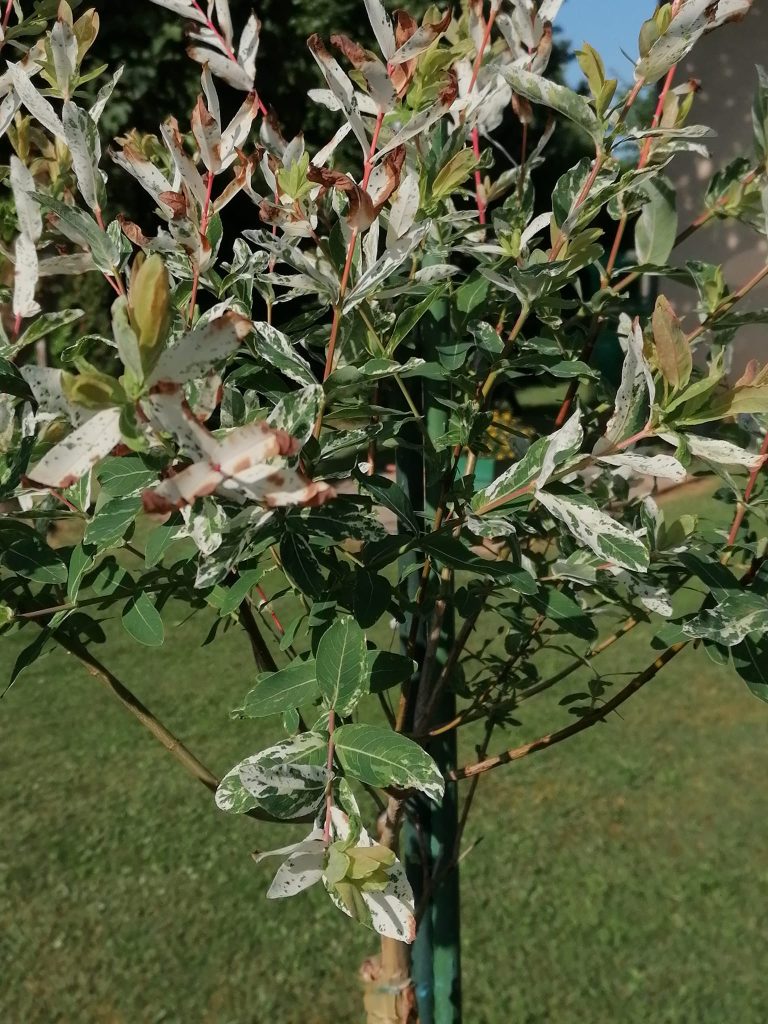
The willow loves to have its feet cool. During hot summers, if you forget the watering can for two weeks straight (yes, who hasn’t forgotten?), you risk leaf dryness. The tips brown, the leaves begin to wilt, and the overall appearance of the shrub becomes much less lively. Here, the grow/stop/grow/stop cycle tires the roots and weakens your plant even more.
But beware of excess water! Accidental flooding, insufficient drainage… Your roots end up soaking and literally suffocating, also causing brown leaves or even premature twig drop. Just stick a finger into the soil: if it sticks or smells moldy, you’ve got a clue!
🌍 Did you know?
The genus Salix (willows) is naturally native to wet areas and riverbanks. Even though it has been hybridized to take on a colorful horticultural form, this variety retains a greedy root system that evaporates more than 4 liters of water per day during the summer growth period.
Too hot exposure and sunburn
Sometimes, you think you’re doing well by placing your shrimp willow in full sun, but this variety poorly tolerates scorching exposures, especially during heatwaves. If the foliage browns mainly on the south side or at the top, beware! It often means sunburn combined with a little thirst. The exposed parts wilt quickly, dry out, then fall off, leaving bare patches.
Don’t forget that mulching around the base can limit evaporation and offer some relief during hot periods. It can sometimes save you several weeks without having to play the crazy sprinkler.
| Foliage appearance | Main cause | Urgency of action | Recommended remedy |
|---|---|---|---|
| Brown and dry tips | Scorching sun or lack of water | Moderate (watering required) | Thick mulch + afternoon shade |
| Soft then brown leaves | Root suffocation by stagnant water | High (risk of rot) | Stop watering and drain the pot |
| Black spots on brown leaf blade | Attack by fungal disease (anthracnose) | High (rapid spread) | Prune twigs + Bordeaux mixture |
| Discolored and wilted leaves | Presence of pests (red spider mites) | Standard (monitoring) | Shower the foliage in the evening |
⚠️ Common mistake
A common mistake is to apply a massive amount of complete chemical fertilizer on a shrub whose foliage yellows or browns due to thirst. The concentrated mineral salts will saturate the soil and burn the weakened fine roots, accelerating the plant’s death.
Diseases and pests responsible for brown spots
When leaves, previously vigorous, show spotty brown patches or unusual discolorations, one quickly thinks of a fungal disease. Yes, willows are not exempt. To properly diagnose and save your shrub, some observation is necessary to differentiate these discreet enemies.
I have seen the same problem twice with neighbors. They asked me, “Do you think it will recover now?”, while the problem was already well established. Taking the time to observe prevents worsening the situation.
💡 Practical tip
Practice severe pruning of two-thirds of the branches every year in February. This cut helps clean dead wood, eliminates fungal hotspots, and ensures the appearance of shoots with a bright pink color in spring.
Anthracnose: a formidable attack on the foliage
Anthracnose loves humidity and attacks from spring if the climate remains mild and wet. It appears as brown or dark brown spots with irregular edges, giving the leaf a scorched or rust-stained appearance. Over time, repeated attacks slow the growth of the willow and exhaust its reserves.
Reasoned pruning of affected shoots, combined with the rapid removal of fallen leaves, slows the spread. Some also choose to treat according to severity with appropriate organic methods, to protect the entire shrub.
Other common fungal diseases and pests
Besides anthracnose, other fungi can take advantage of chronic excess moisture or waterlogged soil. Powdery mildew, rust, black spots: each outbreak brings its share of troubles and worsens leaf wilting. Check the underside of the leaves and the small black dots: that’s often where the story begins…
Regarding insects, aphids or mites also like to exploit tired branches to invade a weakened willow. If you notice sticky honeydew or curling of young leaves, inspect carefully before acting.
How to recover a shrimp willow with damaged leaves?

Successfully restarting the process always depends on your speed of action. Once the cause is identified (excess or lack of water, too hot exposure, fungal disease), here are some simple steps to give your shrub a real chance. I have an old willow at home that survived a difficult summer, and today, it’s thriving like a champ!
The secret often lies in adapting daily care, making some adjustments to the location, and the ability to prevent other problems in the following seasons. It’s better to be consistent than reactive only in times of crisis.
🌟 The advantages
- Unique tricolor spring coloration extremely decorative in the garden.
- Excellent resistance to winter frost tolerating down to -15 degrees.
- Great ease of pruning allowing shaping the crown into a perfect ball.
⚡ Weak points
- Extreme sensitivity to chronic lack of water during summer.
- The foliage loses its pink shades from early autumn.
- Water regularly without excess, adjust according to the weather
- Weed and mulch to protect the base from heat
- Prune dead wood or branches that are clearly diseased
- Monitor new shoots after treatment to check for regrowth
- Look under the leaves to detect any new brown spots or parasites
Don’t hesitate to slightly move your willow if you realize it is suffering from scorching exposures. Adding some light compost often helps stimulate a new wave of vigorous foliage.
With patience, method, and a bit of perseverance — and believe me, some garden projects demand more than others — you quickly regain the cheerful hues of the shrimp willow. And it’s always satisfying to see a plant come back to life thanks to common sense and some advice shared among enthusiasts.