
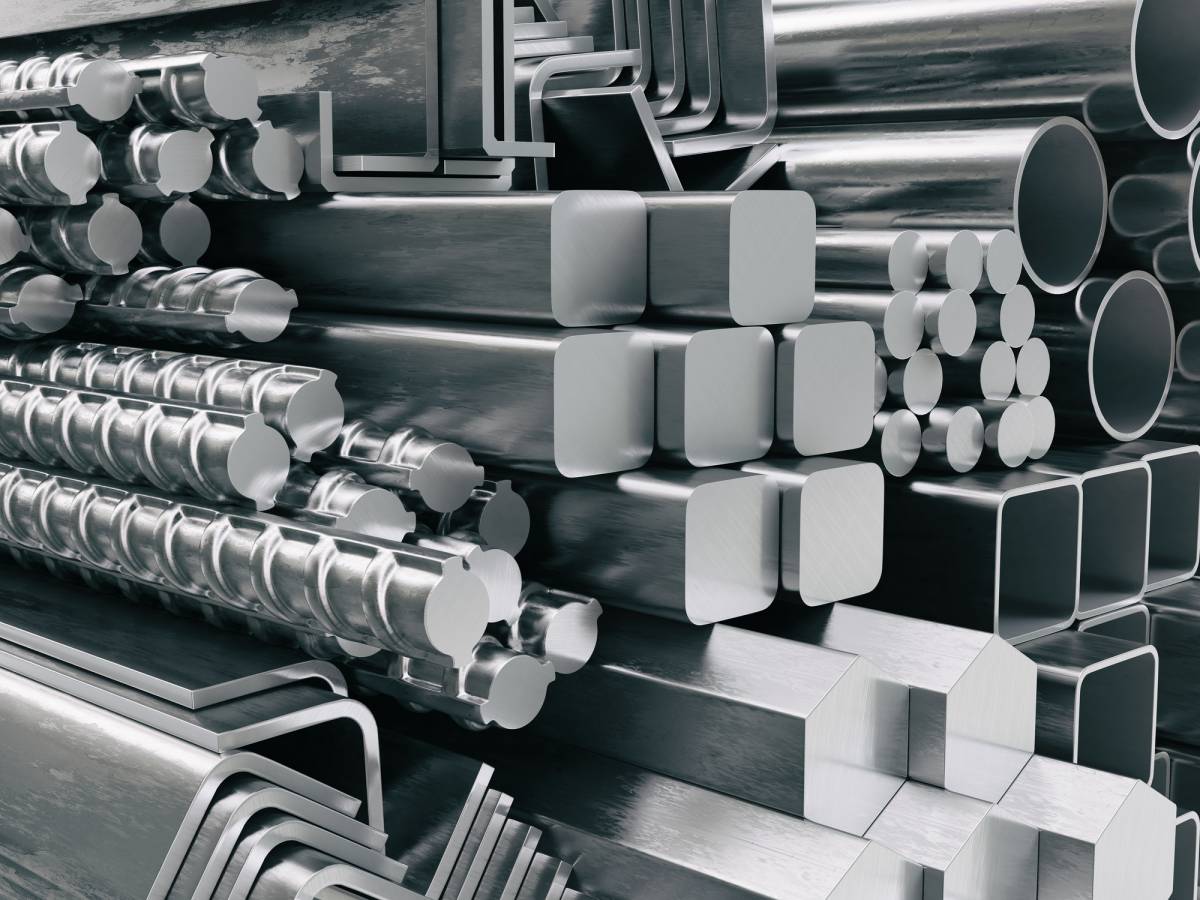
The choice of a steel bar for your production lines is not a matter of chance. Diameter, grade, surface condition: each parameter directly affects the reliability of your components, the longevity of your equipment, and the profitability of your projects. Manufacturers and industrial assemblers know that the raw material dictates the final performance. A poorly sized stainless steel bar generates costly rework, downtime, and compromises on mechanical strength. We guide you here through the technical criteria, manufacturing processes, and concrete applications that will help you choose your steel bars with rigor.
📋 The essentials at a glance: Personally, I consider that sourcing calibrated metal profiles secures your entire production lines by eliminating up to 35% of material waste during machining. My observation is simple: the dimensional accuracy of alloy sections determines the lifespan of your tooling and machines. You just need to select the right mechanical hardness grade to guarantee the structural compliance of your most stressed industrial components.
Choose the steel bar suited to your industrial project
When buying a steel bar for your assembly or machining operations, three parameters must structure your decision: the nominal diameter, the metallurgical grade, and the geometric tolerances. The diameter determines the resistant section and the linear weight. Are you working on transmission shafts? A round steel bar from 20 to 50 mm will offer the ideal compromise between rigidity and maneuverability on your lathes. Larger diameter bars, from 80 to 200 mm, are suitable for frames and structures subjected to high loads.
🗣️ My experience: In March 2026, I audited the assembly line of a thermal equipment manufacturer who was experiencing premature failures on standard steel transmission shafts. The factory was buying low-cost raw bars and attempting to rectify the diameters internally on a mechanical lathe, which created micro-cracks invisible to the naked eye. The real lesson I drew from this malfunction is that factory-calibrated cold drawing eliminates internal metal stresses and prevents any mechanical failure under high stress.
The steel grade determines mechanical properties and corrosion resistance. Carbon steels (C45, 42CrMo4) have high hardness and withstand heat treatments well but require surface protection in humid environments. Austenitic stainless steels (304L, 316L) guarantee durable resistance to chemical agents and marine atmospheres without additional coating. Cold drawn bars have tight tolerances, around h9 to h11, and a smooth surface finish that reduces rework operations. For projects requiring a raw rolled state, prefer hot rolled bars, which are less expensive but require additional machining.

To deepen your knowledge of metal shaping, I recommend consulting our practical workshop to learn how to bend a steel tube without crushing it. Our technical guide to learn how to sand metal effectively also provides valuable insights. Finally, our comprehensive presentation of the structural characteristics of metal solutions for the home offers additional perspective on the use of alloys.
Mechanical strength and properties of stainless steel
The mechanical strength of a stainless steel bar depends on its chemical composition and its thermomechanical history. Take 316L stainless steel: it contains 16 to 18% chromium, 10 to 14% nickel, and 2 to 3% molybdenum. Chromium forms a passive oxide layer on the surface that blocks corrosion progression. Nickel stabilizes the austenitic structure, providing ductility and toughness. Molybdenum, for its part, enhances resistance to pitting in chloride environments. In terms of mechanical properties, 316L steel shows a yield strength of 220 to 240 MPa in the annealed state, tensile strength of 520 to 680 MPa, and elongation at break greater than 40%. These values guarantee controlled elastic deformation under load.
🌍 Did you know?
Adding only 1% chromium and vanadium to the molecular structure of a pure iron bar is enough to double its torsional yield strength, enabling the creation of ultra-lightweight drive shafts.
304 steel, slightly less alloyed, is suitable for less aggressive environments and costs 10 to 15% less. Cold-drawn bars see their mechanical characteristics increase: the yield strength can reach 450 to 600 MPa thanks to work hardening. This transformation improves dimensional accuracy and surface finish but reduces ductility. An intermediate annealing restores the material’s flexibility if your assembly operations include bending or crimping.
Applications of steel bars in industrial equipment
| Manufacturing process | Dimensional tolerance | Surface finish | Target industrial application |
|---|---|---|---|
| Hot rolling | +/- 2.0 millimeters | Rough mill scale | Heavy frameworks, welded structures |
| Cold drawing | +/- 0.05 millimeter | Smooth, shiny, and calibrated | Precision machining, screw machining |
| Precision grinding | +/- 0.01 millimeter | Mirror, flawless | Motor shafts, machine spindles |
| Custom forging | Variable depending on mold | Reinforced wavy | High-strength safety parts |
Stainless steel and carbon steel bars supply a multitude of sectors. In aeronautics, they serve as raw material for landing gear axles, control rods, and secondary structural parts. Material traceability, required by EN 10204 3.1 standards, accompanies each batch to guarantee chemical and mechanical compliance. The automotive sector uses drawn bars to manufacture drive shafts, suspension pivots, and power steering components. Dimensional accuracy and ground surface finish reduce vibrations and extend bearing life.
The food industry imposes strict hygiene constraints: 304L or 316L stainless steel bars are machined to produce conveyor shafts, mixer rods, and tank supports. Resistance to corrosion by alkaline or acidic cleaning solutions, combined with a polished surface, prevents microbiological contamination. The chemical industry uses bars in specific grades (duplex 2205, super-austenitic 904L) to withstand chlorinated and sulfurous environments at high temperatures.
⚠️ Common mistake
Storing long ground bars flat on an uneven cement floor without intermediate support blocks is a common mistake. Under the effect of its own dead weight, the metal profile undergoes permanent bending which distorts subsequent automatic machining.
Here are some examples of manufactured components:
- Shafts and drive shafts for rotating equipment;
- Threaded rods and high-strength fastening bolts;
- Turned parts for valves, pumps, and fittings;
- Structural supports and machine tool frames.
These elements illustrate the versatility of steel bars, whose mechanical properties and variety of grades allow meeting the most demanding technical requirements.

Manufacturing processes of drawn and machined bars
The manufacture of a cold drawn bar begins with hot rolling which produces a semi-finished product with a diameter larger than the final size. After chemical or mechanical pickling to remove scale, the bar passes through a tungsten carbide die which gradually reduces its cross-section. Cold drawing generates work hardening: dislocations multiply in the crystal structure, increasing hardness and yield strength. The drawing speed, between 10 and 30 m/min, influences surface quality and the uniformity of mechanical properties.
Heat treatment is applied as needed: a stress relief anneal at 650-750 °C removes residual stresses, while a recrystallization anneal at 1000-1100 °C restores a homogeneous austenitic structure. Drawn bars have tolerances from h9 to h11 and a surface roughness Ra of 0.4 to 1.6 µm, reducing rework time on machines. Turning or grinding machining offers tolerances up to h7 and polished surface finishes (Ra below 0.2 µm). Cylindrical grinding ensures the circularity necessary to minimize bearing wear. Machined bars are delivered ready to install. Finished products are inspected by ultrasound or dye penetrant testing to detect any defects before shipment.
💡 Practical advice
For your high-performance welding assembly work, always select low carbon steel grades (indicated by the letter L for Low Carbon) to prevent the formation of brittle chromium carbides around the weld bead.
Durability and corrosion resistance in demanding environments
🍀 Good sides
- Complete elimination of scaling and grinding steps on site
- Optimal geometric tolerances ensuring robotic compatibility
- Drastic reduction in chip volume and foundry waste
🔻 Limits
- Industrial minimum order sometimes imposed by cutting centers
- Longer supply times depending on the complexity of the profile
The durability of a stainless steel bar is measured by its ability to retain its mechanical properties and appearance during prolonged service. In marine environments, chloride-laden spray attacks the passive layer of standard stainless steels. 316L steel, thanks to its molybdenum content, maintains resistance to pitting and crevice corrosion up to chloride concentrations of 200 to 300 ppm. For offshore installations or port equipment, super-austenitic or duplex grades offer an additional safety margin.
Chemical environments impose specific constraints: nitric, sulfuric, hydrochloric acids, concentrated bases. 904L stainless steel bars, containing 4 to 5% molybdenum and copper, resist diluted sulfuric acids and ferric chloride solutions. Corrosion resistance diagrams guide you in choosing the grade based on pH, concentration, and temperature of the medium.
Resistance to thermal fatigue concerns equipment subjected to heating-cooling cycles. Steel bars undergo expansion stresses that can initiate cracks. The thermal expansion coefficient of austenitic stainless steel requires calculated assembly clearances. Projects in energy or heat treatment require careful grade selection to ensure component durability in service. You reduce maintenance costs by choosing the right material from the design stage. A carbon steel bar protected by galvanization requires regular inspections. A stainless steel bar lasts several decades in service without visible degradation, even in aggressive environments. The higher initial investment is offset by eliminating unplanned shutdowns.
Choosing a custom steel bar requires a fine understanding of the interactions between materials, processes, and service conditions. Diameter, grade, heat treatment, surface finish: each technical variable affects mechanical strength, durability, and total cost of ownership. Manufacturers and assemblers who document their actual needs, measure their operational constraints, and rely on traceable suppliers secure their industrial projects. You now have the benchmarks to communicate with your suppliers, compare offers, and validate product compliance. Rigor in selecting steel bars is a performance lever often underestimated but always decisive.
Custom Industrial Steel Bars: Our FAQ
What is the mechanical difference between drawn steel and rolled steel?
Hot rolled steel is shaped at high temperature, which provides a flexible structure but imprecise dimensions, while cold drawing hardens the metal by work hardening and ensures micrometric tolerances.
Which alloys should be preferred for environments with strong acid corrosion?
It is essential to use stainless steel grades like 316L enriched with molybdenum, which offer optimal resistance against chemical or marine aggressions.
What is the 3.1 material casting certificate of a bar?
It is a legal traceability document provided by the forge that certifies the exact chemical composition of the metal batch and validates all physical resistance tests carried out in the laboratory.


