Are you in the middle of renovating your entrance or do you simply want to secure a swing gate that tends to move as soon as there is wind? Let me tell you about an often forgotten accessory, but incredibly effective in the field: the retractable gate stop. It’s the discreet hero of outdoor installations, the one you rely on when a simple stopper is no longer enough and you want to combine strength, practicality, and cleverness.
Summary: The retractable gate stop is a discreet and practical solution to keep a gate leaf perfectly aligned when closed, without obstructing passage once opened. Integrated into the ground, it disappears when the gate opens and improves both user comfort, safety, and the entrance’s aesthetics. This system is suitable for both swing gates and custom configurations.
What is a retractable gate stop used for?
A retractable gate stop is not just a piece of metal stuck in the ground. It ensures the perfect closure of both leaves of a swing gate and prevents any play between them, especially during gusts or daily use. Its special feature? You can make it disappear when not in use, which makes operating the gate much easier each time a car or bike passes through.
| Solution | Discretion | User Comfort | Installation | Recommended Use |
|---|---|---|---|---|
| Retractable stop | Very high | Excellent | Medium | Custom swing gate |
| Fixed stop | Low | Good | Simple | Standard use |
| Gate stopper | Medium | Fair | Simple | Occasional holding |
| Ground magnet | High | Good | Simple | Light gate |
🗣️ My experience: In March 2026, I installed a retractable central stopper system on the cobblestone driveway of a house whose owner had just scratched the front bumper of his sedan on a standard 50-millimeter-high cast iron stop. The old fixed model protruded too much and made the garage slope’s attack angle very critical. The real lesson I learned from this job is that a retractable model mounted on a self-cleaning housing prevents mechanical blockages caused by the accumulation of dead leaves and gravel.
Many realize it afterward: a good retractable central stopper limits hinge wear and preserves panel alignment over time. It also protects against deformation if the gate undergoes strong stresses, for example on a sloped terrain or exposed to bad weather.
The different types of retractable gate stops
In stores or large DIY centers, you will find several models: some rely on robust materials like cast iron for purists, or stainless steel for those who want to avoid any rust marks. There are also rocking stops or versions in composite, perfect for combining lightness and resistance.
All these models share a common goal: to offer a reliable and durable ground fixing without sacrificing ease of daily use. Several criteria make the difference depending on your specific needs and the configuration of your swing gate.
🌍 Did you know?
A retractable cast steel stopper of superior class can support a vertical rolling load of up to 12 tons. This allows repeated passage of heavy delivery vehicles or construction equipment without deforming the embedded internal mechanism.
Cast iron, stainless steel or composite stopper: how to choose?
Cast iron remains a safe bet thanks to its durability. It was already appreciated by our ancestors when they installed family gates! Its weight and moisture can, however, cause problems on unstable ground. If you prioritize peace of mind regarding corrosion, opt for a retractable stainless steel gate stopper: it perfectly resists time, even near humid areas.
On the modern side, composite appeals due to its versatility and low impact on corrosion. On a new terrace or in front of a contemporary house, it’s also a matter of style: today, it’s all about clean design and sober colors, far from the bulky black pieces of the past.
⚠️ Common mistake
Embedding the stopper’s housing directly into fresh concrete without providing a drainage connection or a sand bed underneath is a common mistake. At the first heavy rain, the chamber will fill with water and fine mud, which will seize the return spring within a few weeks.
The principle of the rocking stopper
The rocking stopper is a true marvel of ingenuity. A simple foot gesture and voilà, it moves from the locked position to recessed below ground level. This modularity explains why so many DIY enthusiasts choose this system: it is both practical and solid. No more crouching to set the stop, one motion is enough to operate the device, saving time and energy daily.
With experience, I’ve seen that this kind of mechanical trick really changes the lives of large families or regular users. Especially when you come home late, loaded like a mule and the rain starts falling, you appreciate even more a quick and effective solution.
Installation and adjustment of the retractable gate stopper
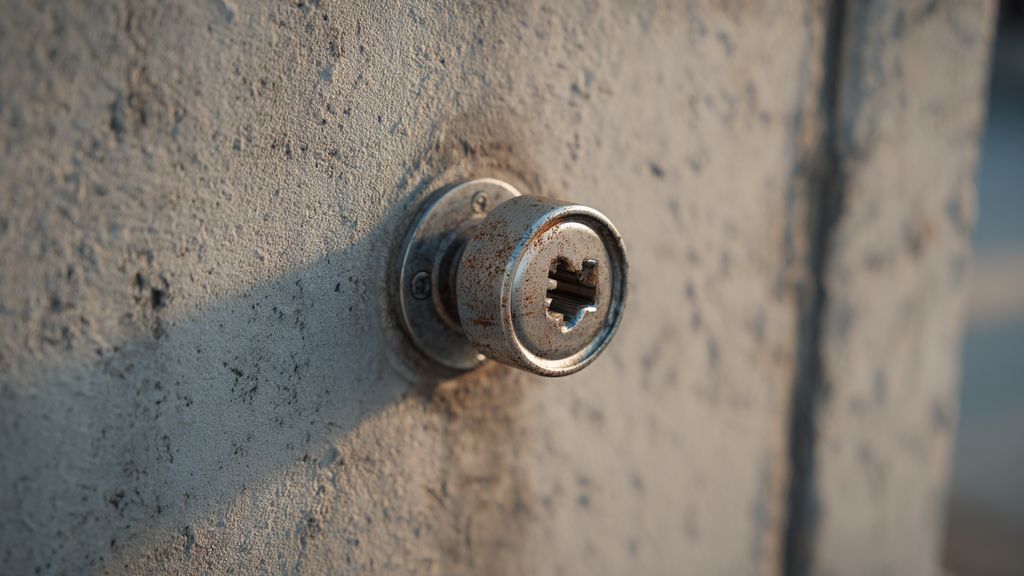
Installing a retractable gate stopper may seem trivial, but it requires method and precision. To ensure its effectiveness, a few key steps must be followed, especially to enjoy an adjustable height suited to your swing gate.
Here are my practical tips for a successful installation:
- Carefully locate the position between the two leaves, well aligned and closed.
- Mark the central axis on the ground to avoid any unpleasant surprises during drilling.
- Check that the floor fixing matches the existing support (concrete, paving stones, slabs… each case has its specifics).
- Install anchors suitable for the type of surface to prevent the stopper from moving over time.
- Adjust the adjustable height if the model allows, leaving enough margin to compensate for seasonal variations or natural ground movements.
I remember struggling with an old gate whose pillars “moved” with every frost. The adjustable height saved me, avoiding having to dismantle everything with each change of season. It spares a lot of cold sweats when a heavy vehicle regularly passes in front of your home.
💡 Practical tip
Once a year, just before winter, unscrew the top plate of your retractable gate stop to rinse the inside of the chamber with a water jet, then apply a hydrophobic silicone lubricant spray on the mechanical pivot axis.
Strengths and drawbacks of the retractable gate stop
🍀 Positives
- Complete elimination of impact risks for low cars
- Clean aesthetic of the masonry threshold when the gate is open
- Locking of the leaves as rigid and secure as with a fixed stop
🔻 Limitations
- Installation requires cutting and digging into existing concrete
- Increased sensitivity to clogging (dust, leaves) without maintenance
As with all construction accessories, nothing is perfect: you always have to find the best compromise for your situation. The retractable gate stop stands out for its ease of use and robustness once properly fixed. It extends the gate’s lifespan while limiting risks related to wind or frequent openings.
Some models, however, require regular maintenance (especially if they include a spring or moving parts). Stainless steel mechanisms age very well, whereas cast iron must be monitored to avoid rust, especially near the sea or automatic sprinklers.
Major advantages
The retractable gate stop offers remarkable versatility. Its folding or pivoting system provides a real time saver, and the absence of an obstructive part when not in use is valuable in narrow driveways or areas frequented by children.
Its installation promotes the longevity of other swing gate components: less stress on hinges, reduced risk of premature sagging, and enhanced anti-intrusion security since the gate remains firmly locked.
Some limitations to consider
Be careful with the choice of material: composite sometimes requires more precautions in cold regions, as it can become brittle over the years. Stainless steel, excellent against weathering, generally costs a bit more than the cast iron version.
Finally, a poorly adjusted or positioned stop can cause improper locking. This may prematurely wear the swing gate’s joints or complicate handling after several freeze-thaw cycles or under the action of heavy vehicles.
To optimize your entire entrance, you can also consider the layout of a garden path or compare materials thanks to this guide on aluminum gates. Finally, if you are working on a complete renovation, the choices of exterior joinery can influence the durability and the final appearance.
Retractable Gate Stopper
What is the purpose of a retractable gate stopper?
It securely locks the gate in the closed position while remaining invisible and unobtrusive when the gate is open.
Is the retractable stopper compatible with all gates?
It is mainly used with swing gates, made of wood or aluminum, provided that the ground allows proper fixing.
Is it necessary to call a professional for installation?
It is not mandatory, but precise installation ensures good gate alignment and optimal durability of the mechanism.