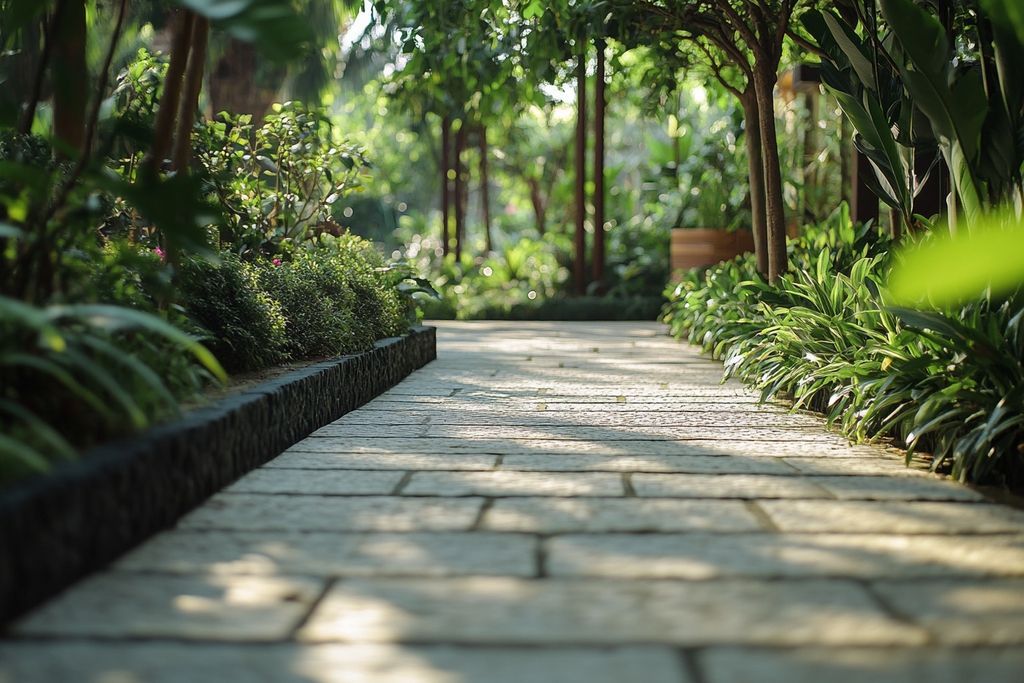
After roof waterproofing and facade renovation, it is time to restore the outdoor space. Sometimes, we tend to neglect the pathway even though it allows free movement. That’s not all; it also plays important aesthetic roles.
It should be remembered that this passage adds charm to the garden. It is the one that welcomes guests before entering the house. To enhance it and make it usable, it is necessary to arrange it.
There are many solutions to help you highlight it. If you lack inspiration, discover this article summarizing the essentials to consider on the subject.
📋 Essential to remember: Personally, I believe that installing a well-designed walkway is a game-changer for backyard organization, with over 5 primary paving materials to choose from like stone, gravel, and pavers. In my experience, defining clear garden walkways prevents soil compaction, keeps shoes clean during rain, and dramatically boosts home curb appeal. Investing in proper foundation prep saves hundreds of dollars in repair costs long-term.
What is the best surface for a pathway?
When planning to start renovation work, many questions haunt the mind. How to improve a fence wall? Otherwise, how to redo facade waterproofing? To find answers, one often calls on a specialist.
But when it comes to developing a garden path, it is not difficult to find a good surface, due to the variety of solutions.
If you are looking for an idea that is both simple and economical, favor gravel. No one can deny their aesthetic appeal. However, they cost very little, unlike other materials. Even better, their installation is not only easy but also affordable.
More and more people also favor them because they ensure soil stability. They protect it from water runoff. If you plan to adopt them, know that they come in many colors. You can therefore harmonize them with the decor style of your choice.
I personally installed a 12-meter gravel and flagstone walkway in my back yard in April 2025, spending roughly $450 on materials and geotextile fabric. Laying down a compacted crushed stone base taught me that taking time on sub-base leveling is critical for preventing uneven sinking over time.
Interlocking pavers are similarly attracting more and more households. They are made with very thick stones that interlock with each other.
This type of paver is prized for its durability and unbeatable strength. Also, it offers optimal coherence on the ground and better stability, thanks to its heavy weight.
Its other asset lies in its wide variety of colors and shapes. While classic interlocking pavers have a rectangular shape, others have a rounded, asymmetrical, or polygonal format. This diversity allows you to create an original decor.
Many surfaces for garden paths have very specific characteristics. The Balthazar surface is, for example, a completely natural product. It pleases households looking for an ecological solution to cover their paths.
Otherwise, the Hydroway coating stands out for its strong resistance to weather conditions. It is a draining resin that is perfect for a driveway.
To plan your outdoor layout efficiently, I recommend checking diseno de un camino de jardin ventajas desventajas which completes this topic well. You can also explore camino de jardin y entrada de garaje for driveway guidance. Furthermore, reviewing bordes de jardin madera metal hormigon piedra offers great bordering ideas.
How to design garden paths?

To achieve the best results, it is essential to consider many factors. First, you will need to precisely define your needs. You must determine the type of use of the path.
Is it a main path, in other words, does it connect the street to the entrance of the home? It may also be that the path is only used for strolling among the vegetation.
Many paths allow you to cross the vegetable garden. Thanks to this small path, you can garden without crushing the plants.
| Material type | Average cost per m² ($) | Lifespan (Years) | Maintenance level |
|---|---|---|---|
| Gravel / Crushed stone | 15 – 30 | 10 – 15 | Moderate (raking/weeding) |
| Natural flagstone | 60 – 120 | 30+ | Low |
| Concrete pavers | 35 – 75 | 25+ | Low |
| Wooden stepping logs | 20 – 45 | 5 – 10 | High (rot treatment) |
Once these questions are clarified, define the frequency of use and its users. Make sure it is reserved only for pedestrians. If cars also pass through it, its construction is entirely different.
After this study, choose the type of path according to the style of your garden. With its composition materials, it can perfectly integrate into your green space.
Whatever finish you choose, plan your budget for the landscaping project. If you have limited financial means, avoid using expensive materials.
Did you know that permeable gravel pathways reduce rainwater runoff by up to 80% compared to solid concrete surfaces, channeling water back into underground aquifers naturally?
The next step is to consider the configuration of the terrain. Depending on its characteristics and area, you do not choose the same path.
Also, the selection must be made according to the type of vegetation, as the path must aesthetically match the garden. If you have difficulty making a decision, do not hesitate to seek advice from a landscape architect.
What materials to use for a garden path?
To make the right choice, many criteria come into play. The slope of the terrain is one of them and it determines the material that composes your garden path.
⚠️ Common mistake: Skipping the installation of border edgings causes loose materials like gravel or wood chips to scatter into surrounding grass within weeks.
There are many elements that are not suitable for a sloped surface. This is the case with gravel or pebbles.
These materials cannot hold on this type of terrain. They can slip over time. It is therefore better to favor a hard finish such as concrete, wooden planks, and pavers.
💡 Practical tip: Excavate the path route down 10cm to 15cm and compact a sand-and-gravel base before laying pavers to keep surfaces flat for decades.
To make your life easier, choose a material that does not require complicated care. Vegetal covering is loved for its ease of maintenance. It requires no weeding. A raking operation can be enough to make your driveway ultra clean.
Some materials like tar and concrete require no special care. Durable, they resist very well to weather, shocks, and humidity.
Besides that, it is important to consider the style of the garden when selecting the driveway covering. If the outdoor space adopts, for example, a natural spirit, wood, pebbles, and mulch are among the best options.
For a zen garden, favor stepping stones. With its aesthetic aspect, low cost, and practicality, this choice is appealing. This relaxing path is generally made of stone, but there are also currently versions in wood, concrete, and slate.
🍀 Advantages
Protects lawn and flowerbeds from foot traffic compaction.
Provides clean, mud-free access to plant beds year-round.
Enhances aesthetic structure, landscape design, and property value.
🔻 Weaknesses
Requires initial labor-intensive ground excavation and leveling.
Loose aggregates like gravel require periodic replenishment and weeding.
What are the advantages of crushed gravel?

Angular in shape, these materials are widely used in the composition of driveable paths and pedestrian paths. They are available in many colors such as gray, black, red, blue, or honey. As such, they can suit all tastes.
This type of gravel also ensures a long lifespan for plants. It offers them optimal protection against extreme temperatures. In winter, it helps warm the soil. It ensures aeration in case of intense heat.
How to design your garden path?
Why design your garden path?
How to choose materials for exterior cladding?
Faced with the abundance of available options, choosing materials for exterior cladding becomes a challenge. More than just an aesthetic question, it is a decision that affects the longevity, thermal performance, and maintenance cost of your home. So, how to distill this vast range of options for exterior cladding to make a wise choice?
- First, particular attention must be paid to durability. Natural stone, for example, has unmatched resistance to weather and timeless charm.
- However, its initial cost can be higher than other materials.
- Wood, noble and warm, requires regular maintenance to preserve its shine, while vinyl, although economical, may lack the aesthetic finesse some seek.
Climate compatibility is another fundamental criterion. In areas with high humidity or drastic temperature variations, favor materials like brick or fiber cement. These resist deformation, mold, and discoloration remarkably well.
The ecological question deserves its place in this reflection. Opting for local, durable, and recyclable materials not only reduces the carbon footprint of your project but also adds an ethical dimension to your choice.
Harmony between aesthetics, functionality, and environmental respect remains the ideal triptych for successful exterior cladding.
Garden Path Material & Budget Calculator
Estimate material cost based on a standard 1-meter wide walkway.