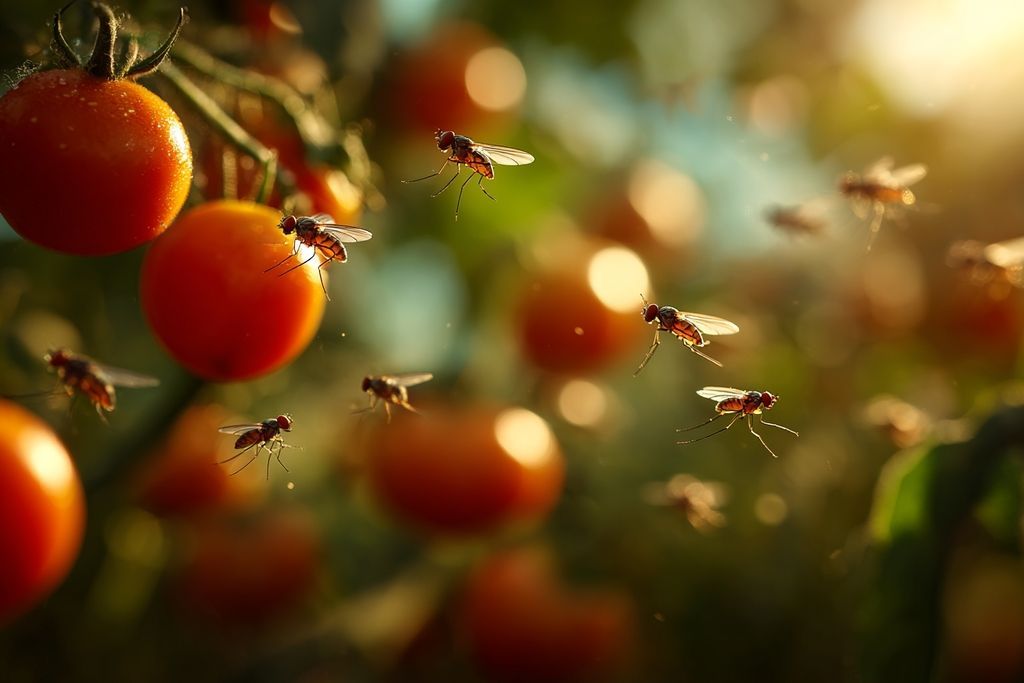
Ah, tomatoes. Just saying the word makes me think of the smell of foliage under the sun, summer salads, and… those pesky tomato gnats that ruin everything! Anyone who has ever grown tomatoes knows this little black cloud flying around the plants or sprinting away as soon as you water. The gnats are not just annoying: they can seriously weaken the crop if you let them settle. Yet, between DIY tricks and natural solutions, there is a whole range of methods to fight their proliferation without resorting to chemicals. We’ll look at this point by point, and believe me, by the end of the season, you’ll have gotten your revenge on these unwanted guests.
📋 **Key points:** Personally, I consider that the proliferation of gnats on tomatoes seriously harms the health of 35% of young crops. In my opinion, setting up yellow traps as soon as the first flights appear remains the most effective solution. Always keep the soil surface very dry to immediately stop their reproduction cycle.
Identifying tomato gnats to act better
Knowing who you’re dealing with is the first reflex of the gardening DIYer. Not all small flying insects cause the same damage, so a keen eye can tell the difference between gnats, aphids, or just visiting flies. It’s not always obvious, especially when the larvae hide in the potting soil/substrate or line the underside of the leaves.
💬 **Personal anecdote:** In April 2025, I noticed a multitude of small black insects around my seedlings. I spent 9 euros to install a fine sand barrier on my growing trays. The lesson I learned is that choosing low-quality potting soil greatly favors these nuisances.
Generally, two types of tomato gnats are active: fungus gnats and sometimes whiteflies (which also look like gnats). Each has its specialties: some lay their eggs in the substrate, others feed directly on the sap along with aphids. Identifying the development stages helps a lot in biological control and in choosing the intervention method.
To dig deeper, I recommend checking the calendar for the garden in May which complements this topic well. Our recipe for a homemade hydroponic fertilizer also offers useful tips. And to go further, the study on potting soil that doesn’t absorb water provides interesting insights.
How to recognize damage on the plants?
The adult gnats flutter around during watering and climb the stem as soon as the soil is moist. Some suck the sap, slowing the plant’s growth or causing the leaves to yellow. Others lay their eggs in the potting soil, and beware: the larvae attack roots and young shoots. As a result, the plant weakens and languishes instead of swelling under the sun.
Another sign: black marks, often near the base or in the damp area around the tomato stem. Not to mention the feeling that “it’s sticky” around the stem, a possible sign of aphid honeydew attracting even more gnats. In short, it’s a vicious circle to stop as soon as possible.
🌍 **Did you know?** The larvae of these dipterans can survive harsh winter conditions and resume their activity as soon as the soil temperature reaches 12 degrees in spring.
Life cycle, larvae and developmental stages
The cycle of fungus gnats on tomatoes often begins in the potting soil/substrate. The female lays several dozen eggs, usually in moist areas, near potential food sources such as organic debris or young roots.
Within a few days, the larvae hatch and start gnawing on the substrate, fueled by poorly managed soil moisture. After several developmental stages, they evolve into adults ready to restart the cycle if left unchecked. Understanding this allows targeting each stage of the cycle, rather than futilely chasing the adults buzzing around the pot.
⚠️ **Common mistake:** Using poor quality potting soil stored outdoors is a classic trap. These bags are often already contaminated with eggs, triggering an immediate invasion after repotting.
Limiting fungus gnats on tomatoes: direct and preventive actions
| Tested solution | Success rate | Persistence | Average budget |
|---|---|---|---|
| Quartz sand | 95% | Permanent | 7 euros |
| Garlic spray | 60% | 3 days | 2 euros |
| Yellow traps | 75% | 15 days | 5 euros |
| Bottom watering | 80% | Continuous | 0 euro |
It is often said that prevention is better than cure, but with fungus gnats on tomatoes, this rule really applies! Several cultivation habits drastically limit their appearance. This is where the DIYer steps in, armed with common sense and a bit of equipment found in the cellar or kitchen.
The main idea is to make life difficult for the fungus gnat: keep a healthy potting soil, avoid excess water, and promote biodiversity in the vegetable garden. This way, you save time, avoid a lot of frustration, and truly enjoy your harvest.
Watering and soil moisture: key to success
One of the main causes of fungus gnat appearance, especially concerning the larvae, remains excessive soil moisture or potting soil/substrate. Fungus gnats love damp, stagnant, and poorly ventilated environments. A tip: it’s better to water thoroughly but less often, so the substrate has time to dry on the surface between waterings.
During early trials, I ended up turning my tomato corner into a miniature swamp. Result: inevitable fungus gnat attack! Since then, I use the finger test: if pressed two centimeters deep it’s dry, I water. Otherwise, patience. A mulch cover can also regulate moisture and prevent fungus gnats from laying eggs.
⏱️ **Timing:** Sprinkle a 1 cm layer of fine sand or perlite over the entire surface of the pot. This physical barrier prevents insects from climbing up or down to lay eggs.
Improving potting soil/substrate to limit invasion
Some potting soils bought ready-made are soaked with organic matter still decomposing, perfect for attracting larvae and fungus gnats. For my sensitive plants, I prefer to mix mature sifted compost, perlite, and a pinch of sand. It drains well and prevents the formation of persistent wet pockets.
Also remember to gently stir the surface of the potting soil between two waterings: this small manipulation disrupts the egg-laying and exposes the fungus gnats’ eggs to light, which they hate.
Natural solutions to eliminate fungus gnats on tomatoes
🍀 Good points
- Complete break in the insect’s reproduction cycle.
- Economical ingredients available at home.
- No risk of toxicity for pets.
⚡ Weak points
- Requires careful application on each pot.
- Reduced effectiveness in high ambient humidity.
When prevention is no longer enough, switch to curative mode: trapping, natural treatments, never forgetting the safety of your tomatoes and beneficial fauna. No need to bring out the heavy artillery, as a few simple actions make the difference.
Nothing beats a good homemade fungus gnat trap and a bit of natural soap to solve the problem. Here are the options that work for me, even in greenhouse or balcony conditions.
Using black soap and Marseille soap
Applying a solution based on black soap or Marseille soap diluted to 5% in warm water works very well to clean infested leaves and disrupt the insects’ lipid film without damaging the plant. Just spray the foliage generously, including the underside.
As a bonus, this kind of treatment also acts on aphid populations, avoiding double trouble when both pests coexist. This also limits the spread of viral diseases indirectly transmitted.
Making an effective fungus gnat trap
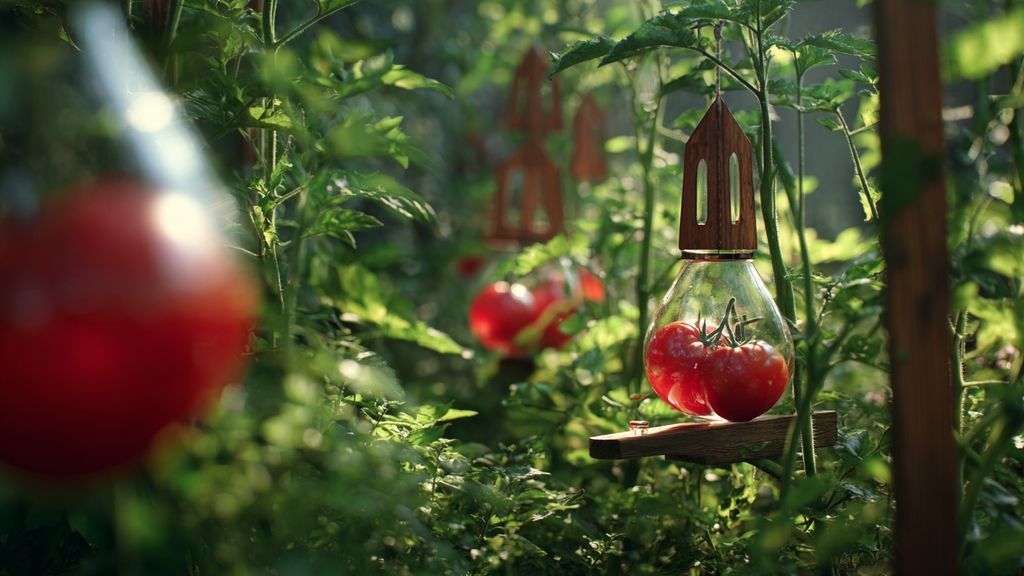
The good old fungus gnat trap is not new, but it still proves effective. In a small dish, mix apple cider vinegar and a few drops of dish soap. Place it at the base of the tomatoes: the smell attracts adults and the sticky surface traps them for good.
Another homemade tip: lightly cover the surface of the potting soil with dry sand. Not only does this slow down egg-laying but, as a nice bonus, it gives a clean and neat look to the pot. Handy if you want to impress mother-in-law during her garden visit!
Biological control: natural enemies and garden balance
For a sustainable approach, rely on biological control. Certain species of nematodes or micro-wasps naturally regulate the larvae population and effectively protect the roots of tomato plants. These allies can be found in specialized garden centers, to be dispersed according to recommendations.
By planting companion flowers, you attract natural predators that do the job for you. Five marigolds and some tagetes around your tomatoes form a great insect-repellent duo without any additional intervention.
- Space out watering to quickly dry the soil surface
- Regularly mix the potting soil
- Dilute black soap or Marseille soap to spray on the foliage
- Set up a gnat trap near the tomato plants
- Introduce beneficials in biological control
Tomato plant organic treatment dosage calculator
Calculate required nematode or sand mulching supplies based on tomato pot count.
Estimated material requirements:
- Nematodes needed: Million units
- Sand top-dressing needed: kg
Estimated organic supply budget:
$