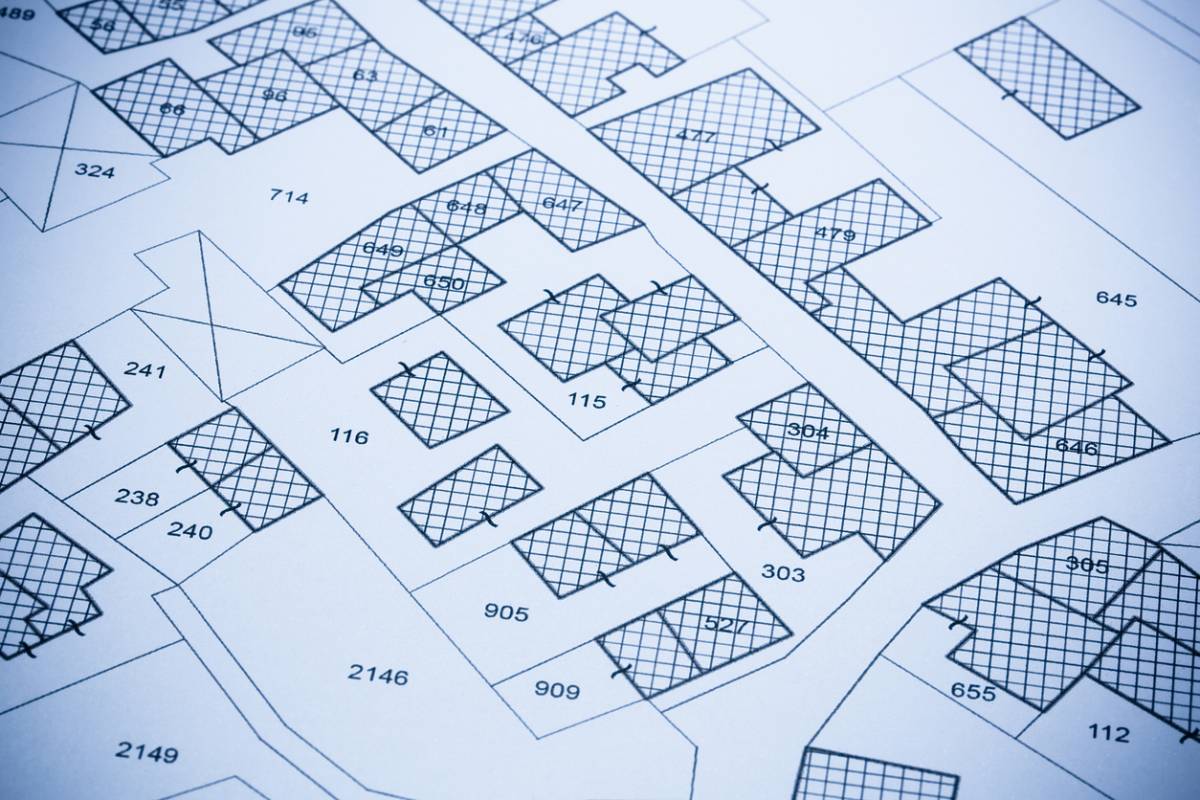
Launching a construction or renovation project involves a multitude of stakeholders: architects, craftsmen, project managers, but also the clients themselves. For everyone to speak the same language, avoid misunderstandings, and limit delays, a clear and universal support is needed. This is exactly the role of the 2D plan. Much more than just a drawing, it becomes a central communication and coordination tool in any real estate project. Let’s discover how the 2D plan can transform your interactions with building professionals.
📋 The essentials at a glance: Personally, I consider the 2D plan to be the indispensable universal language to eliminate up to 90% of interpretation errors on a renovation or construction site. My observation is clear: a textual or oral description will never replace the precision of a dimensioned plan view. It is enough to graphically formalize the spaces to instantly align the expectations of the project owner and the technical expertise of the various trades.
How does a 2D plan serve as a clear support for craftsmen?

🗣️ My experience: In March 2026, I was involved in monitoring a kitchen renovation site where the client had simply told the electrician “to want outlets above the worktop.” Without a precise 2D reference plan, the boxes were embedded at 90 cm from the finished floor, landing exactly at the level of the future Corian backsplash. The real lesson I learned from this costly misunderstanding is that an annotated and signed technical drawing remains the only contractual barrier against defects and rework of cladding.
The 2D plan acts as a true common roadmap. Even without advanced technical skills, it allows a quick understanding of the layout of spaces, the placement of walls, openings, or even networks.
To deepen your knowledge, I recommend consulting our guide on how to smooth a silicone joint like a professional. Our thematic file to understand the difference between attic and loft also provides valuable insights. Finally, our comprehensive presentation of the features of the infrared presence detector offers very useful technological insight for your daily comfort.
A universal language
🌍 Did you know?
In 2D architectural drawing, each type of line has a strict standardized meaning: a thick continuous line represents cut elements (load-bearing walls), a thin continuous line indicates elements seen in the background, while a dotted line signals elements located above (lintels, openings).
Building professionals have always used a graphic language based on standardized symbols and precise scales. The 2D plan follows this code, understandable by all, whether drawn by hand or created with specialized software.
Thus, if you create a 2D plan, the craftsmen immediately know where to work, the project owner has a clear discussion basis, and the client visualizes their project without complicated jargon.
Save time on construction sites
Upstream, each trade anticipates its material and human needs. On site, execution is faster since the instructions are visual and not just verbal. A simple glance at the plan is enough to confirm the course of action.
Support your quote requests with a precise visual representation
When an individual or project owner submits a detailed 2D plan with their quote request, the craftsman immediately gains visibility. Understanding is faster and cost estimation becomes reliable.
Better calibrated quotes
Calculate estimated professional drafting fees for your project floor plans.
Thanks to the 2D plan, a professional can identify technical constraints (cable lengths, socket locations, ventilation), accurately calculate the quantity of materials needed, and anticipate the actual duration of the work.
Result: the quotes received are more accurate and comparable to each other.
A common basis to avoid unpleasant surprises
When each craftsman relies on the same document, there is no ambiguity. Electricity, plumbing, and masonry are based on an identical description, which greatly reduces price discrepancies caused by misinterpretation of the project.
⚠️ Common mistake
Working on a construction site with different versions of plans depending on the craftsmen is a classic mistake. If you change the location of a partition on the plan, make sure to date and number the plan revision (e.g., Plan Revision A), then immediately distribute it to all trades.
How to avoid misunderstandings with annotated and scaled plans?
A simple plan can already be useful, but a 2D plan annotated and drawn to scale goes even further.
Clear annotations to guide the work
Each room can be numbered, each water inlet or light point indicated by a precise symbol. Annotations and color codes make reading immediate. For example:
- red for load-bearing walls,
- blue for water inlets,
- green for openings.
These markers reduce errors and streamline communication on site.
| Trade (Craftsman) | Key information extracted from the 2D plan | Major risk avoided on site | Required associated plan type |
|---|---|---|---|
| Mason / Structural work | Thickness and alignment of load-bearing walls | Foundation placement error | Formwork or site plan |
| Electrician | Exact location of switches and sockets | Omission of lines or incorrect box height | Electrical layout plan |
| Plumber | Position of water inlets and drains | Insufficient slope or incorrect sanitary spacing | Fluid distribution plan |
| Drywaller / Carpenter | Dimensions of openings and ceiling heights | Misalignment and incorrectly positioned partitions | Partitioning / Layout plan |
The Importance of Scale
A 2D plan drawn to scale provides access to real dimensions: passage widths, exact room surface area, ceiling height. This avoids approximations and ensures that layout choices are feasible.
For a craftsman, it is a precise working tool. For a client, it is a guarantee of transparency and security.
💡 Practical Tip
Never rely solely on the theoretical dimensions from the original plan when ordering custom materials (doors, windows, glass partitions). Always require the craftsman to come and take the “execution measurements” or actual dimensions on site once the main structural work is completed.
Gather Your Layout Ideas on a Single Easy-to-Share Medium
One of the great advantages of the 2D plan is to centralize all ideas on a single document. Rather than multiplying sketches or notes, simply update the plan and share it with all project stakeholders.
✅ Advantages of 2D
- Immediate and standardized technical reading for all craftsmen
- Ease of printing to scale on site for quick verifications
- Surgical precision of dimension lines for calculating material surfaces
🔻 Limitations
- Requires an effort of abstraction and imagination for non-professional clients
- Does not reflect the impact of volumes and natural lighting
A Collaborative Tool
The plan becomes a living medium where everyone can add comments, suggest adjustments, or validate choices. Moving a partition, modifying a kitchen, reconsidering the location of a staircase: everything can be simulated upstream.
Decide Collectively, Without Loss of Information
A shared plan allows craftsmen, the architect, and the client to visualize several scenarios together. Decisions are then made based on concrete data, visible immediately, which avoids often costly late changes.
Monitoring and Traceability
Each modification is recorded, ensuring clear monitoring throughout the design process. It is known who validated what and when. This monitoring greatly reduces potential disputes.
Conclusion
The 2D plan is not just a technical drawing: it is a universal communication tool that facilitates coordination among the various building stakeholders. It allows:
- clarifying expectations with craftsmen,
- obtaining precise and comparable quotes,
- avoiding misunderstandings thanks to annotations and scale,
- gathering and sharing all ideas on a single medium.
Thanks to this simple yet powerful approach, every construction or renovation project gains in efficiency, reliability, and peace of mind.
The 2D plan in building: our FAQ
What is the difference between a site plan and a section plan?
The site plan represents the architectural project from above in its overall environment (plot), while the section plan offers a vertical view showing heights, slab thicknesses, and the roof structure.
Does a 2D plan not signed by an architect have legal value?
Yes, if it is attached to the signed quote from the craftsman. It then serves as a contractual reference document in case of dispute or non-compliance observed upon completion of the work.
What is the standard scale used for detail plans?
For general plans, the 1/50 scale is used (2 cm for 1 meter). For complex execution details (bathroom, kitchen), the 1/20 or 1/10 scale is preferred for greater precision.