Maintaining large green spaces is not something you improvise! Between rapid growth in spring, uneven terrain, and the pace of intensive use, a classic lawn mower quickly reaches its limits. The professional lawn mower meets these challenges: reliable, robust, efficient, whether at your home, on a sports field, or in a large private park. Let’s look together at which criteria to consider, which features are really worth it, and how to make the right choice.
📋 **📋 The essentials at a glance:** Personally, I believe that investing in an industrial-quality machine can reduce mowing time by 40% on large areas. In my opinion, prioritizing a reliable engine and a reinforced deck remains the key to a profitable investment. Analyze the topography of your green spaces to choose the cutting system best suited to your daily tasks.
What is a professional lawn mower?
🍀 Advantages
- Impeccable lawn finish without visible surface residues.
- Ideal for play areas or the immediate surroundings of homes.
- Allows efficient collection of dead leaves in autumn.
⚡ Weak points
- Frequent stops necessary to empty the bag volume.
- Significantly increases total weight and pulling effort.
A professional mower is not just a larger garden mower. It chains sessions without flinching, resists shocks, swallows tall grass effortlessly thanks to a powerful engine and serious materials like an aluminum deck. I’ve seen entry-level models give up after two years in neighboring gardens, whereas a true professional model still runs perfectly five years later. The result remains clean and even when mowing; this is what we observe in the field with brands like Ryobi or Stiga, which really hold up under intensive daily use.
To go deeper, I recommend reading our advice on choosing a riding mower for sloped terrain which complements this topic well. Our analysis on the performance of a professional lawn mower also provides useful comparison clues. And to go further, our selection of tools for the vegetable garden in May offers interesting insights.
The essential criteria for choosing a professional lawn mower
Not all models are equal, and a few criteria really make a difference daily. To give you a product overview, here is what to look at before buying. I tested it on a plot of about 1200 m² with thick grass and frankly, the result surprised me!
🗣️ **🗣️ My experience:** In March 2026, I switched to a zero-turn radius riding mower for maintaining an 8000 square meter landscaped estate. I spent about 4800 euros on this equipment equipped with a very sturdy welded steel deck. The lesson learned is that the absence of a quality hydrostatic transmission makes maneuvers around flower beds extremely tiring.
What power and engine to prioritize ?
A powerful engine is what makes the difference on rough terrain or with dense grass. The cut remains consistent, starting is easy, and you get much less tired at the end of the day. I was able to compare several models: the Ryobi 36V at a neighbor’s holds up well on a maintained lawn, the Stiga I tested in store showed 2,800 W and was really comfortable on tall grass, and the Alpina I use at home runs with a 163 cm³ petrol engine that has never stalled in three seasons. For intensive use, petrol remains the safe bet. New generation electrics are improving well, but they are mainly suitable for occasional use on medium-sized lawns.
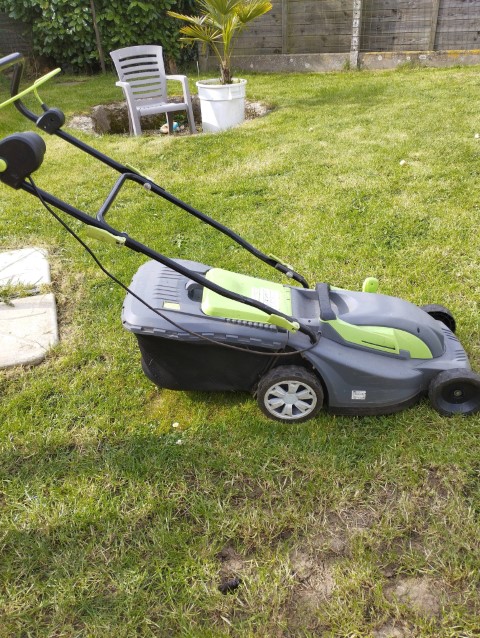
| Type of machine | Cutting width | Recommended area | Drive system |
|---|---|---|---|
| Walk-behind mower | 53 to 56 cm | Up to 2500 m² | Variable traction |
| Riding mower with front cutting deck | 92 to 112 cm | From 2500 to 7000 m² | 2WD hydrostatic |
| Zero Turn model (ZTR) | 112 to 132 cm | Over 7000 m² | Dual hydro pump |
| Professional robotic mower | Modular | Continuous / Effortless | Lithium-ion battery |
Why choose an aluminum deck ?
Aluminum resists corrosion, absorbs shocks, and remains significantly lighter than steel. On a sloping terrain or after three hours of mowing, this weight saving is really felt in the arms. Reinforced steel has its fans for its raw strength, but on a daily basis aluminum is more pleasant to maneuver. It is often this detail that distinguishes an entry-level machine from a model truly built to last.
How to achieve optimal cutting cleanliness ?
It all starts with the blade! A poorly sharpened blade tears the blades of grass instead of cutting them cleanly and it shows immediately on the lawn, which yellows within a few days. A good blade, well balanced, gives a clean cut regardless of the weather. Height adjustment matters just as much: it must be done quickly, without tools, to adapt to the season or current growth. In spring you cut high, in summer you adjust according to drought; if the adjustment is rigid or imprecise, the quality of the finish quickly deteriorates.
🌍 **Did you know?** Following the 1/3 rule, which consists of never cutting more than one third of the total height of the grass in one pass, helps preserve the root system and limits weed growth by 80%.
Practical features and user comfort
On large areas, it is often ergonomics that make or break a workday. A too small collection bag, poorly placed handles, a machine that is too heavy, and fatigue quickly accumulates.
⚠️ **Common misconception:** Thinking that tipping the machine on any side to clean the deck is safe is a frequent mistake. If you tilt the engine the wrong way, the oil flows directly into the air filter or exhaust, preventing any restart.
What capacity for the collection bag?
A large bag means fewer stops, and over several hectares it really changes the work pace. Some models include a fill indicator or a one-hand extraction system — a small detail, great comfort over time. Personally, since switching to a 70-liter bag, I empty it half as often and finish my sessions much faster!
What are the smart features for?
Honestly, the first time you use a machine with automatic power adjustment, you wonder how you managed before! The engine adjusts its speed according to the grass density, assisted starting avoids unnecessary effort, and maintenance is reduced to a few quick actions.
At the end of the day, the difference is really felt — less fatigue, a consistent result from start to finish. These are the little details that turn a chore into something almost enjoyable.
💡 **Practical tip:** Always use a fuel stabilizer if gasoline remains stored in the tank for more than 30 days. This prevents the formation of gummy deposits that clog the carburetor jets during the winter storage period.
To summarize, here is what really matters on a professional mower:
- a powerful engine,
- a lightweight and durable aluminum deck,
- a precise blade,
- a large collection bag,
- quick height adjustment,
- smart features,
- materials built to last.
Where to use a professional lawn mower?
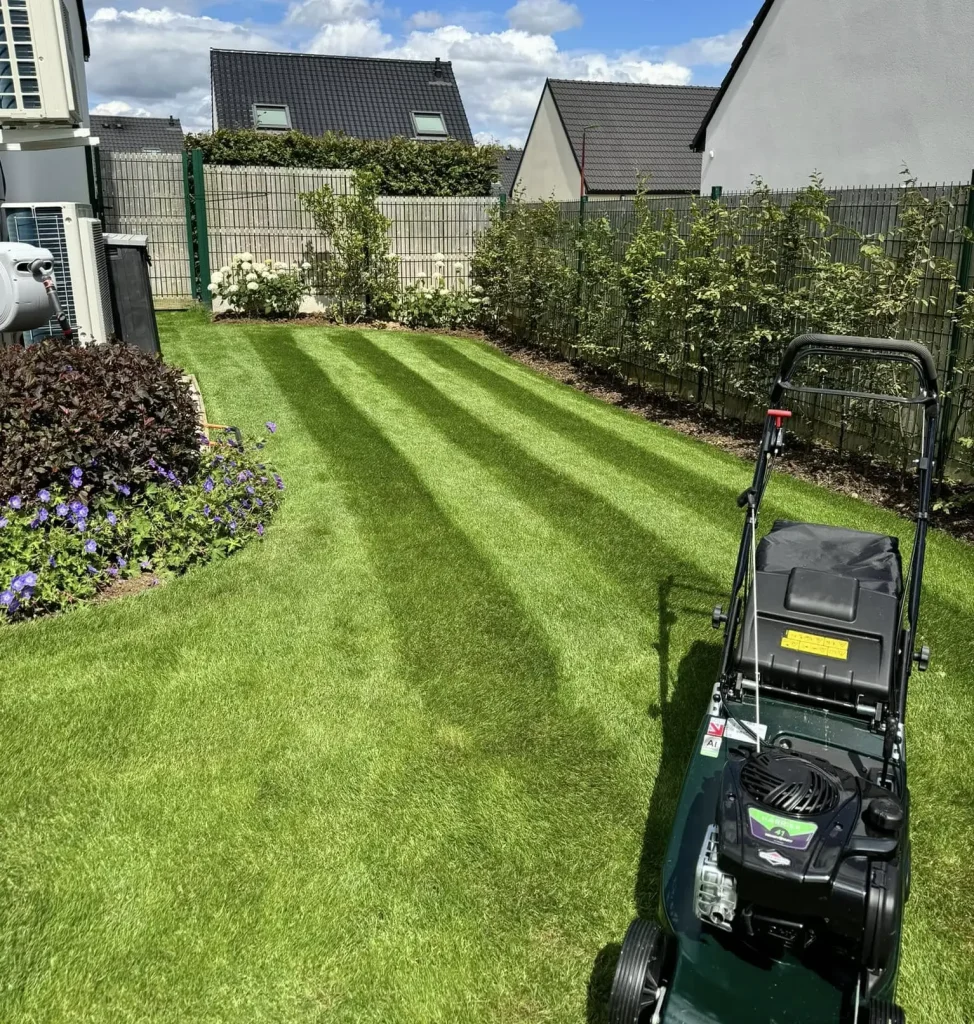
These machines are often imagined to be reserved for landscapers or municipal teams, but that is far from the case! A large sloping garden, a terrain with uneven areas, a property with trees everywhere and roots surfacing… these are exactly the situations where a professional lawn mower makes the difference.
At my place, for example, with a 1,200 m² slightly sloping terrain and grass that grows quickly in spring, classic models really struggled. Since switching to a professional machine, there have been no problems. Each configuration has its constraints; you just need to adapt the cutting width and the engine power to the reality of your terrain.
How to extend the lifespan of your professional lawn mower ?
A good professional mower is expensive, so it’s worth taking care of it! The steps are simple:
- clean the deck after each session,
- check the blades regularly,
- lubricate the moving parts,
- check the oil level.
Nothing complicated, but many people neglect this and then wonder why they break down at the worst possible moment.
The step that almost everyone forgets? Draining the fuel at the end of the season. I learned this the hard way: a failed start in spring, a clogged carburetor, and a repair that could have been avoided with five minutes of work in November. Since then, I never skip this step, and my mower starts up instantly every year.
Find the right mower type and estimated investment based on your lawn size.