
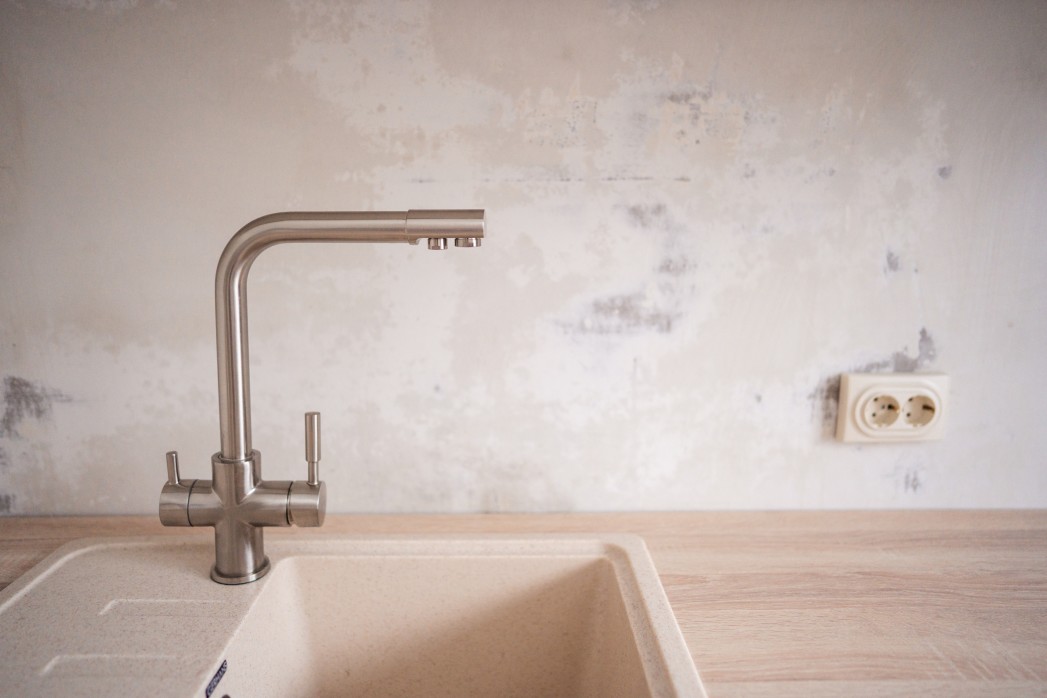
📋 Key takeaway: Personally, I consider installing GFCI protection for any outlet within 1.8 meters (6 feet) of a kitchen sink essential for electrical safety, as over 80% of kitchen shock hazards occur near wet areas. In my view, electrical standards require an outlet within 60 cm (24 inches) of any countertop break, including sinks, to avoid using extension cords. Maintaining a minimum horizontal clearance of 30 cm prevents water splash risks during everyday washing up. Following local wiring codes ensures a safe, compliant kitchen environment for your household.
Installing an electrical outlet in the kitchen is not just reserved for plumbers. With some technical knowledge, you can do it without any problem.
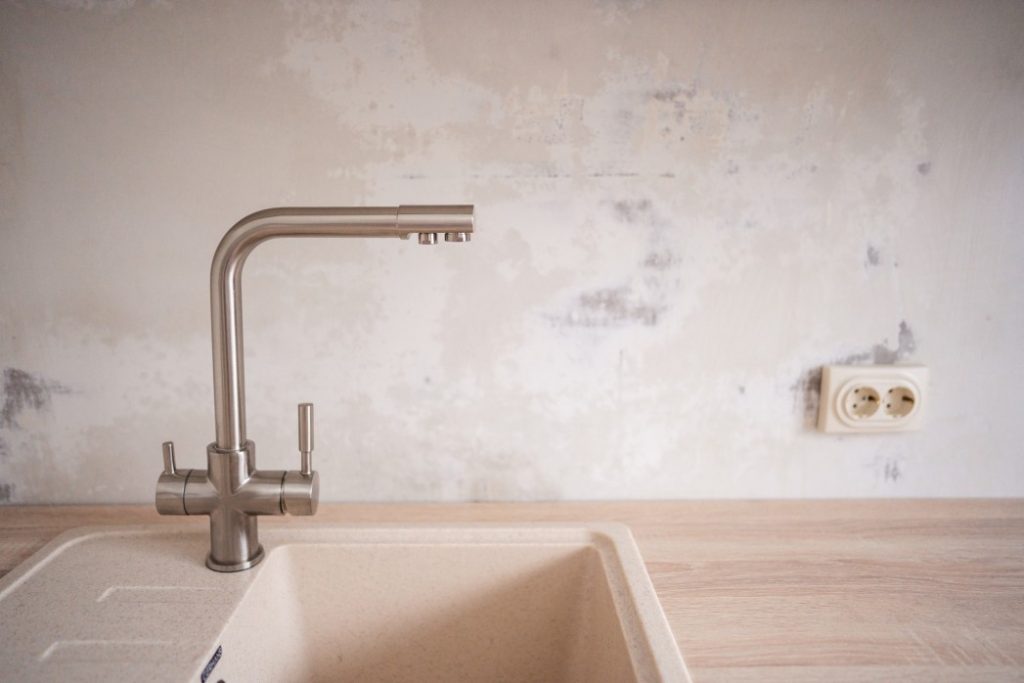
However, it is crucial to maintain a certain distance to avoid risks. It should be noted that its location near a water point is an imminent threat of an accident. Electricity and water do not mix well.
If you plan to install a wall outlet near a kitchen sink, we invite you to carefully read our article. We provide important advice on the subject.
🗣️ My experience: In August 2024, I renovated a client kitchen where an old electrical outlet was positioned just 10 cm from the sink basin, causing water splashing directly onto the faceplate. I relocated the outlet 35 cm away and installed a dedicated GFCI breaker line for under $120 total. This small adjustment eliminated moisture risks completely while keeping appliances within easy reach. The main lesson here is that safety clearances and splash protection are far more critical than convenience alone.
What distance between an outlet and a water point?
When planning to renovate the bathroom or kitchen, it is not just about installing a suspended ceiling. This operation requires relocating all electrical installations. There are many water points in the house. Except for the bathtub and shower, the washbasin and the kitchen sink are also included.
If the first is installed in the bathroom, the second, as its name suggests, is placed in the kitchen. It is used for washing dishes and cleaning vegetables or fruits. As for the washbasin, it is used for washing up.
Their common point is that these basins are supplied with water. Therefore, avoid installing an electrical outlet nearby, as this increases the risk of accidents. To avoid making a mistake, try to estimate a reasonable distance.
Planning a compliant kitchen electrical installation requires balancing safety clearances and appliance access. If you are handling emergency electrical repairs during renovation, reading a blown fuse troubleshooting guide provides essential safety steps. To better manage overall household power demands, learning about electricity rates understanding factors that influence your bills helps optimize daily appliance usage. Furthermore, for general electrical panel compliance, exploring an electrical panel fuse overview ensures full home wiring protection.
Despite the application of the NF C 15-100 standard, there is still no regulation enforced on the matter. It is nevertheless imperative to ensure that an outlet is located away from a sink, a washbasin or any other water point.
According to expert recommendations, it is advised to maintain as much as possible a distance of 60 cm to 80 cm between a wall outlet and a basin. The same applies to drains, valves and many others.
Whatever the style of decor in your kitchen, avoid placing an outlet just a stone’s throw from a sink. Regardless of its shape, square, rectangular, round or angled, this basin constitutes a water point. To be cautious, it is wiser to install the outlet opposite or next to the worktop.
Kitchen electrical standard: everything to know about the NF C 15-100 standard
When discussing the distance between a power outlet and a kitchen sink, one often hears about the NF C 15-100 standard. If you don’t know much about the subject, the formula brings together all the obligations related to electrical installation at home.
It sets guidelines for each room and each element. The goal is to guarantee the safety of occupants as well as property.
The kitchen and bathroom are among the places prone to accidents due to the presence of many outlets and water points. The NF C 15-100 standard includes a series of recommendations related to the location and number of electrical outlets, circuits compliant with the connection of domestic equipment, and lighting.
| Regulation / Standard | Minimum distance from sink | Maximum allowed distance | GFCI protection requirement | Primary safety objective |
|---|---|---|---|---|
| NEC (National Electrical Code – USA) | No strict minimum (30 cm suggested) | 60 cm (24 in) from sink edge | Mandatory within 1.8 m (6 ft) | Prevents extension cord use & shock |
| BS 7671 / IET (UK Wiring Rules) | 300 mm (30 cm) horizontally | No maximum limit | Mandatory RCD protection | Prevents direct water splash on socket |
| CEC (Canadian Electrical Code) | 1 meter (unless GFCI protected) | 60 cm (24 in) from sink edge | Mandatory within 1.5 m | Reduces electrocution risk near water |
| NF C 15-100 (French Code) | 60 cm from water basin center | Must cover worktop zones | Mandatory 30mA differential | Ensures wet area electrical safety |
🌍 Did you know? GFCI outlets monitor the balance of electrical current flowing through a circuit and cut power in as little as 25 milliseconds if a moisture leakage is detected.
Tools used to measure the distance between an outlet and a kitchen sink
Specialists use countless tools to carry out this operation successfully. Most use a tape measure. Some prefer a laser distance meter to obtain more precise measurements.
To assemble outlets, many tools such as Phillips and flathead screwdrivers are very useful. The same goes for a set of pliers like cutting pliers, universal pliers, needle-nose pliers, and wire strippers. They can be easily found in the tool store.
As for electrical tools, a screwdriver drill is a precious aid allowing you to easily remove or insert screws. Likewise, a cordless drill is useful for drilling a wall during the installation of an outlet.
During a flush-mounted installation, you need a chisel, a hammer and a disc groove cutter to help you make channels. There are many basic tools, so consider making a list so that nothing escapes you.
⚠️ Common trap: Placing an outlet more than 60 cm (24 inches) away from the edge of a kitchen sink is a code violation. It forces homeowners to stretch appliance power cords across wet countertops.
What distance between an outlet and a faucet?
Unlike other rooms in the house, electrical installation in the bathroom can be somewhat complex. Since it includes several water points, it is necessary to avoid as much as possible the risks of short circuits.
To do this, it is advised to place the outlets far from water splashes from the faucet. Ideally, they should be located at a minimum distance of 60 cm.
If possible, install the device at a height. Position it all around its place of use. However, try to keep it away from the water point to avoid any contact with moisture.

💡 Practical tip: Install kitchen countertop outlets between 10 cm and 15 cm above the finished countertop surface to protect faceplates from accidental liquid spills while keeping plugs accessible.
Where to place power outlets in a kitchen?
🍀 Key advantages
Provides instant protection against fatal electric shocks in wet zones.
Ensures full compliance with local residential electrical codes.
Allows safe operation of small kitchen appliances near sinks.
🔻 Main limitations
GFCI outlets cost slightly more than standard receptacle units.
Requires occasional manual testing using the built-in reset button.
According to the NF C 15-100 standard, 3 outlets are acceptable in small kitchens measuring less than 4 m². As for large kitchens, you can install up to 6 outlets.
If yours belongs to the second category, you have the possibility to install 4 outlets parallel to the worktop, at about 8 cm high. As for the communication outlet, it should not be positioned above the sink or the cooking appliances.
If you use 32 A type power outlets in your home, you can place them 12 cm from the floor. As for 16 A outlets and those 20 A, they can be placed 5 cm from the floor.
It should be recalled that 16 A outlets are suitable for connecting small appliances such as dishwashers, hoods, washing machines. On the other hand, 32 A models are perfect for large appliances such as cooktops or the stove.
What is a 32A outlet?
While 16 ampere outlets are suitable for less energy-consuming equipment, those of 32 amperes allow powering powerful devices.
Often used in the kitchen, the device is intended for electric stoves and oven models requiring more current.
It differs from a standard power outlet in its format. The 32A socket does not consist of a grounding pin and holes like conventional sockets. It is made up of a terminal block with 3 wires hidden behind a cable outlet plate.
Avoid using it with devices requiring a 16 A socket. This could lead to serious consequences such as a house fire.
Similarly, an electrical device requiring 32 A will likely not work on a 16 A power outlet. This connection causes damage to the electrical circuit.


