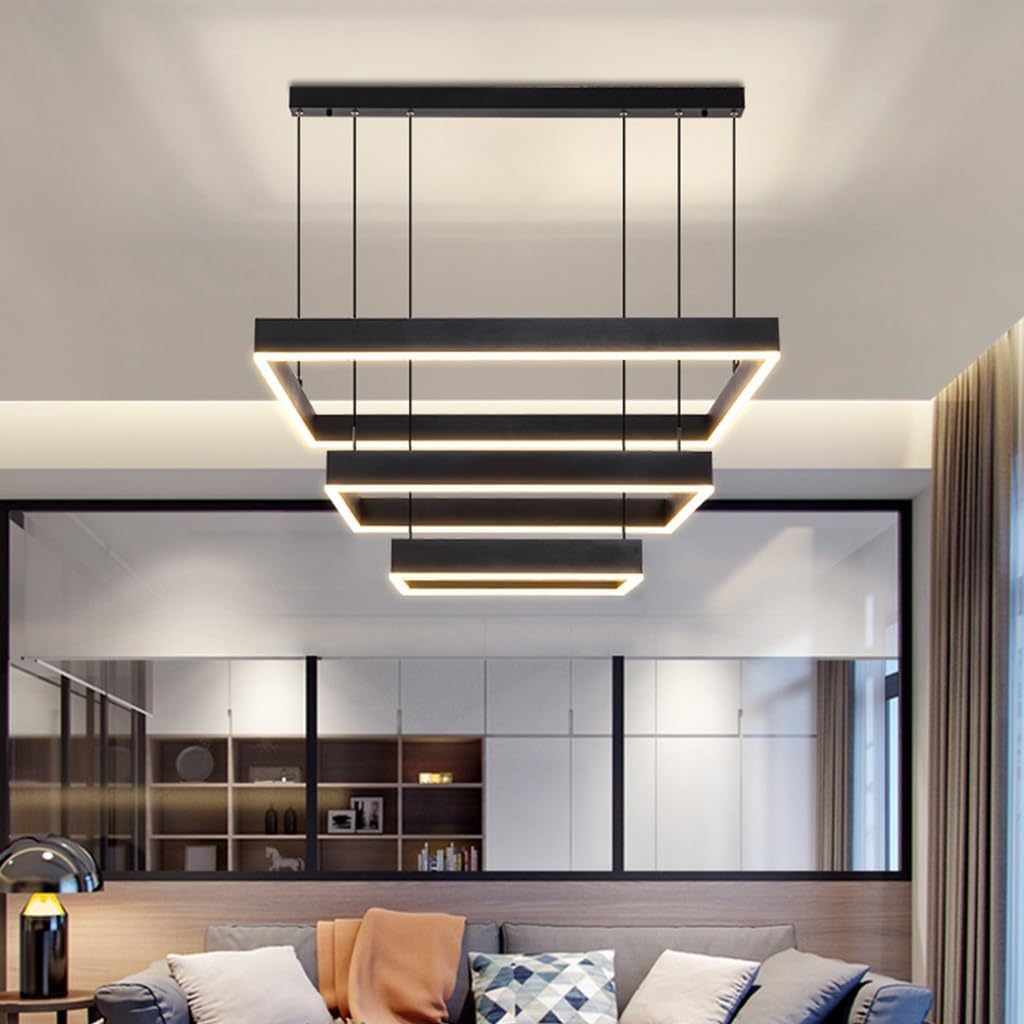

📋 Key points: Personally, I consider the suspended ceiling to be one of the most effective solutions for quickly renovating an interior. In nearly 70% of projects, it helps to hide defects while improving insulation. With a good metal framework and well-installed panels, you get a clean and durable finish. It is also an excellent option for easily integrating lighting and cables.
If you plan to start renovation work, consider modernizing your ceilings. Unlike the floor, walls, bathroom, or kitchen, this part is often neglected.
To avoid making this mistake, do not hesitate to restore it to good condition. Ceiling ideas are becoming more and more numerous, but the suspended ceiling is among the most appreciated lately.
Also called a false ceiling, this system is installed on a frame below the original ceiling. It is hung using rails and hangers, usually made of metal.
It consists of lightweight materials, namely plasterboard panels used to hide irregularities and imperfections of the main ceiling. The space is also used to conceal technical ducts.
If you don’t know much about it, we invite you to consult this article. We develop in detail the suspended ceiling price, the different suspended ceiling advantages, as well as the steps of the ceiling installation.
📍 My experience: During the renovation of an old living room, I installed a suspended ceiling to hide exposed cables and a cracked ceiling. In one day, the room completely changed appearance, with a modern and clean finish. I was also able to integrate LED spotlights without difficulty. The lesson is simple: it is a quick solution to transform a room.
What is the price of a suspended ceiling?
Compared to the stretched false ceiling, the suspended ceiling price can be affordable. Materials are among the elements influencing the price of the panel. For example, PVC ceiling tiles do not have the same cost as the suspended plasterboard ceiling.
Besides that, the installation price can vary according to certain parameters such as the level of thermal insulation, finishes, surface area, technical devices to be integrated, and many others. It remains essential to determine them well to help you refine the budget allocated to the work.
In general, the suspended ceiling price ranges between €20 to €43 per square meter. As for installation, it is advisable to plan between €21 to €65/m². This cost rises depending on the quality of materials and the complexity of the work.
Indeed, the suspended ceiling quote is not necessarily the same. Each provider has their own pricing.
The table below presents an estimate of suspended ceiling prices including materials and installation. These amounts come from average prices from various specialized sites.
| Type of suspended ceiling | Minimum price per m² | Average ceiling price per m² | Maximum suspended ceiling price per m² |
| Metal framework | €22 | €25 | €28 |
| Plasterboard or drywall ceiling tiles | €16 | €20 | €23 |
| Wood fiber ceiling tiles | €25 | €30 | €34 |
To go deeper, I recommend placostil structure which complements this topic well. building a partition also provides useful insights. And to go further, interior wall insulation offers interesting information.
Average cost of a suspended ceiling per m2
Whatever the type of coffered ceiling to be suspended, you can handle its installation yourself. To do this, you need to have some technical knowledge. Apart from that, don’t forget to equip yourself properly.
To purchase only suspended ceiling plasterboard or drywall ceiling, the average price is around €8/m².
If you prefer the suspended ceiling PVC paneling, plan for an amount up to €50/m². Similarly, the suspended ceiling in wood is a bit expensive, ranging from €8/m² to €70/m².
In any case, nothing beats entrusting the task to a professional. Of course, the suspended ceiling price including installation may seem costly. However, the work is not only reliable but also of high quality.
It is better to spend money on ceiling installation so that you can benefit from it for as long as possible.
The average cost per m2 varies depending on the type of suspended ceiling used. With labor and accessories, the price ranges between €25 and €75 per m2.
If you choose the drywall suspended ceiling, a budget between €23 and €28 should be prepared. This average price necessarily includes installation.
Similarly, the cost of PVC coffered ceiling with installation ranges between €25 and €60. As for the suspended ceiling in wood, it climbs between €27 and €75.
In professional premises, the suspended ceiling tiles are very often encountered. The principle is the same as with the drywall suspended ceiling. But instead of installing plasterboard panels, you install tiles made of various materials.
The installation price of ceiling tiles varies between €30 and €45 per square meter. With this wide range of costs, you can manage the budget allocated to the work.
🌍 Did you know?
A suspended ceiling can improve acoustic insulation by up to 30% when combined with suitable mineral wool.
How to install a suspended ceiling?

The installation of a suspended ceiling does not necessarily follow the same procedure. It depends on the type of materials.
For a suspended plasterboard ceiling, the latter must be fixed onto a wooden or metal framework. You must therefore start by assembling this supporting element.
Once this is done, you hang the board with screws or nails. Finish the work by applying joint tape and a coat of paint.
Regarding the installation of the suspended panel ceiling, it requires a finer framework than that of the suspended plasterboard ceiling.
You use metal nails or staples to secure the panels. Once they are well attached, you apply varnish or paint to them.
Those made of PVC require no finishing. This material provides a contemporary decorative effect. These PVC models allow the installation of an LED lighting ceiling.
Let us now discuss the installation of the suspended tile ceiling. This technique is distinguished by the visible placement of the framework. While this framework should not be seen with the two previously explained ceiling types, it can be prominently visible with tiles.
It is therefore important to adopt a flawless grid to receive them. These panels are fixed without glue or screws. Moreover, the installation requires no finishing.
⚠️ Classic Pitfall
Neglecting the level of the framework is a common mistake. Poor alignment results in an uneven ceiling that is difficult to correct after the boards are installed.
Advantages of a suspended ceiling
👍 Strengths
- Hides ceiling defects
- Allows integration of lighting and cables
- Improves insulation
👎 Drawbacks
- Reduces ceiling height
- Technical installation
Even if you find the suspended ceiling quote a bit expensive, know that this installation offers countless advantages.
It is part of a practical solution to improve the appearance of the room. A PVC suspended panel ceiling provides a modern decorative note not only through its colors but also through its appearance.
For the wooden model, it is perfect for bringing a zen atmosphere to your interior. Many prefer not to paint it, highlighting its natural touch.
Besides that, the suspended ceiling renovation helps improve insulation. Whether it is a plasterboard ceiling or ceiling tiles, the system plays a major role in both thermal and acoustic insulation.
You can put rock wool or other fibrous materials in the plenum or the space between the false ceiling and the original ceiling.
Many people also opt for the suspended ceiling to reduce ceiling height. In an old house, the ceiling height seems enormous. It is therefore difficult to heat the room.
This solution also allows you to hide irregularities or defects on the original ceiling. Thanks to it, you can conceal bulky pipes, cables, or wires.

Differences Between Suspended and Stretch Ceilings
These two systems constitute a false ceiling, but they differ in many ways. Their first difference lies in the materials.
The first enjoys various finishes such as plasterboard, PVC slats, or wood. The second, on the other hand, is made of fabric.
The suspended ceiling price can also seem reasonable compared to the stretch false ceiling. The installation of the latter sometimes faces difficulties. That is why its fitting is rather reserved for professionals.
The suspended structure is suitable for renovating the bathroom or other more intimate rooms. As for the stretch system, it is widely used in a modern interior decor style. It offers a flat surface without imperfections.
💡 Practical Tip
Allow a minimum space of 10 cm between the original ceiling and the false ceiling to effectively integrate cables, spotlights, or insulation.
Step-by-Step Installation Method for a Suspended Ceiling
The first step concerns taking measurements. Mark points for the first hanger 10 cm from the original ceiling. Using a level, note the height under the existing ceiling.
Once done, screw the hangers onto the beam or joist. Make sure they align perfectly. For installing the next hanger, stretch the chalk line between each hanger, which also allows you to visualize the rails.
The third phase consists of mounting the rails at the spot previously marked with the chalk line. Fix them using anchors. If necessary, do not hesitate to cut them to the desired length using a nibbler.
It is important to always check the alignment since the suspended ceiling must be perfectly straight. For this, use a spirit level.
If everything is in order, you can now install your plasterboard sheets. They must be positioned correctly relative to the rails. Secure them firmly with screws. For this operation, enlist someone else to help hold them properly.
Once the installation of the suspended ceiling with paneling or suspended plasterboard ceiling is complete, all that remains is to finish the work.
There are many options such as integrating light sources to obtain a LED lighting ceiling. For wooden paneling, many choose to paint the materials.
What is the Maximum Length for a Self-Supporting Ceiling?
The self-supporting frame is an interesting renovation idea when the original ceiling is deteriorating or uneven.
It is suitable for a room where the height below the ceiling needs to be lowered. This false ceiling solution attracts many people due to the ease of its assembly. This operation differs by the absence of hangers and the installation of rails.
The principle is very simple: just fix the rails then install the studs while adjusting their spacing.
The self-supporting structure can be made of single studs or studs joined back to back. The choice depends on the distance or spacing from wall to wall.
Aside from that, several types of bearing rails and studs can be distinguished, namely the M48-35, M70-35, M90-35, M100-50, and many more.
For the M48, the maximum span or length of the ceiling with single studs is 2.10 m. As for the maximum length with studs placed back to back, it is 2.50 m.
Take the case of the M100, the maximum length of the ceiling with single studs measures 3.30 m. For the span with studs placed back to back, it reaches 3.90 m.
What are the different types of false ceilings?
For a renovation project, there are many ceiling ideas, each with its advantages and disadvantages. The false ceiling offers multiple benefits. If this option interests you, know that there are 3 distinct categories.
The suspended ceiling involves fixing hangers under the original ceiling in order to install plasterboard panels. It is also possible to use ceiling tiles. These can be made of mineral fibers, PVC, plaster, or mineral wool.
The affordable price is among the main advantages of the suspended ceiling. Some individuals prefer to carry out the ceiling installation themselves, reducing the cost. This implies the simplicity of suspended ceiling renovation.
As for the stretched false ceiling, this technique involves stretching a fabric called velum between the walls of a room. The materials are fixed using hooks on profiles.
This false ceiling is most often used for decorative purposes. You can accompany it with recessed spotlights. It is very popular for its aesthetic aspect. Once installed, it presents no irregularities.
The third category of our ceiling ideas relates to the self-supporting false ceiling. This process provides the same finish or appearance as the suspended plasterboard ceiling or suspended tile ceiling. Their difference lies in the installation procedure.
With the self-supporting framework, the system does not require any fixing of hangers to the original ceiling. Instead, it is supported by rails attached to the existing walls.
How to install a suspended ceiling?
u003cbr/u003eFor a successful installation, you need to have the necessary tools. A panel lifter plays a crucial role in facilitating the task. This involves first assembling the framework and then the suspended plasterboard ceiling on it.u003cbr/u003e
What are the steps to install a suspended ceiling?
u003cbr/u003eStart by taking measurements. Then install the hangers and rails. The final step is to fix the plasterboard panels.u003cbr/u003e
What tools are needed to make a suspended ceiling?
u003cbr/u003eYou will likely need measuring instruments such as a tape measure and a spirit level to check alignment. A cutter may be useful for cutting the rails. A panel lifter is also very helpful when installing the plasterboard.