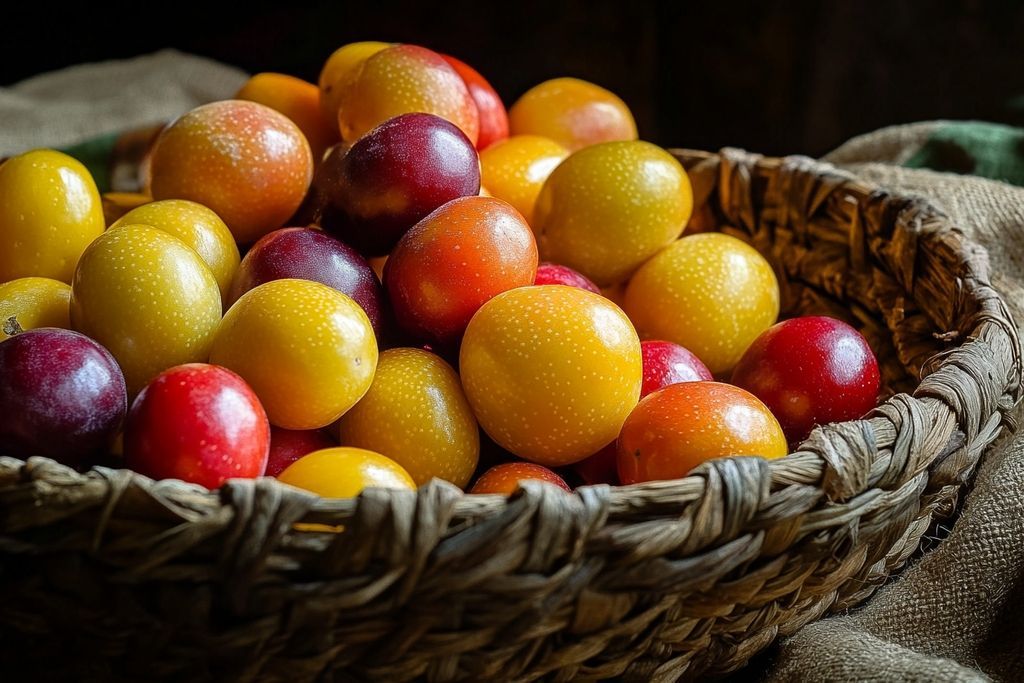
Exploring fruits and vegetables that start with the letter J can be an adventure as rewarding as it is nutritious. These foods are often rich in vitamins and add a rich variety to your diet. Whether to diversify your dishes or enrich your summary of knowledge in agriculture, knowing these specimens can definitely improve your daily life and that of your immune system.
The alphabet is full of flavors and discoveries if we take the time to explore each letter. The letter J is no exception and invites us to discover fruits and vegetables often from sunny origins and with distinct tastes. While some are well established in our daily lives, others transport us to distant lands. Get ready for a taste journey through this selection of fruits and vegetables that start with the letter J.
📋 The essentials at a glance: Let’s be clear: the letter J is the playground for taste adventurers. Between the monumental jackfruit and the spicy jalapeño, this category shakes up habits. Personally, I consider these plants to be the pillars of successful fusion cuisine in 2026. Less common but nutritionally dense, they offer a credible alternative to diversify your intake of vitamin C and exotic fibers.
The basics of fruits and vegetables starting with J
🗣️ My experience: In 2025, during a culinary test for a vegetarian barbecue, I replaced pulled pork with young jackfruit. The resemblance was such that my guests were none the wiser! The lesson learned? For plants starting with J, you need to know how to distinguish the ripe fruit (sweet) from the young fruit (neutral and fibrous) to succeed in savory dishes.
The letter J offers us an interesting range of fruits and vegetables, each with its own benefits. The jackfruit, for example, is an exotic fruit native to tropical regions, appreciated for its unique taste and nutrient richness. It is an excellent addition to both sweet and savory dishes. On the other hand, the jujube, a small red fruit, is valued for its contribution to strengthening the immune system. Vegetables are not left out with watercress, often used for its ability to bring a touch of freshness and spiciness to salads and soups. These species, although less common, are treasures of nature full of flavors and benefits.
To continue your gourmet alphabet, don’t miss our selections on the fruit vegetable starting with i as well as the complete guide to the fruit vegetable starting with h. If you are looking for more summery flavors, the file on the fruit vegetable starting with f is also available.
Practical tips for integrating these fruits and vegetables into your diet

To incorporate these fruits and vegetables into your diet, several methods can be considered. First, experimenting with jackfruit in various dishes can be a pleasant way to discover new textures and flavors. Try it in smoothies or curries for a surprising result. Watercress, with its crunchy leaves and peppery taste, works wonders in salads or as a garnish in sandwiches. As for jujube, it can be eaten fresh or dried, offering flexibility in its culinary use. All these elements bring not only a gustatory enrichment but also nutritional benefits to your meals.
| Food | Type | Main Benefit | Calories (100g) |
|---|---|---|---|
| Jackfruit | Fruit | Energy / Fiber | 95 kcal |
| Jalapeño | Pepper (Vegetable) | Metabolism / Vit. C | 29 kcal |
| Jujube | Fruit | Sleep / Stress | 79 kcal |
| Jicama | Root vegetable | Hydration / Inulin | 38 kcal |
| Java apple | Fruit | Diuretic | 25 kcal |
🌍 Did you know? The jackfruit is the largest fruit growing on a tree in the world. A single specimen can weigh up to 50 kg! It is a major food resource for the future as one tree can produce up to 3 tons of food per year.
This exploration of fruits and vegetables starting with the letter J is not only an enrichment of your cooking but also a step towards a more varied and balanced diet. By integrating them into your menu, you benefit not only from their unique flavors but also from the multiple health advantages they offer.
Nutritional properties and health benefits of fruits and vegetables starting with J
Fruits and vegetables starting with the letter J, such as jackfruit, jujube, and watercress, offer a surprising variety of vitamins and essential nutrients. Watercress, for example, is rich in vitamin C and iron, making it an excellent choice to boost the immune system. Jackfruit, for its part, contains vitamin B6, which plays a key role in protein metabolism and neurotransmitter production. These types of vegetables and fruits are not only delicious but also adaptable in various dishes, thus enriching daily nutrition.
How to incorporate fruits and vegetables starting with J into your daily recipes?

To fully enjoy the benefits of vegetables and fruits starting with J, it is wise to incorporate them into your recipes creatively. Jackfruit, for example, can be used as a meat substitute in vegetarian dishes thanks to its fibrous texture. Watercress, with its slightly spicy taste, is perfect in salads or as a garnish for soups. Jujube, with its natural sweetness, is ideal in desserts or simply eaten fresh. Using these vegetables and fruits not only enriches your diet but also allows you to explore new flavors.
Jackfruit: a versatile fruit for your vegetarian dishes
This tropical fruit can be consumed at different stages of ripeness, offering a wide range of culinary uses. Green, it is cooked like a vegetable; ripe, it becomes sweet and can be used in desserts or eaten fresh.
Jujube: a sweet fruit for healthy snacks
Small but powerful, the jujube is perfect for snacking. Rich in vitamin C, it is ideal for boosting immunity, especially during the winter months.
Fruits starting with J: sunshine on the plate
The jackfruit and its multiple flavors
The jackfruit, also called jackfruit tree fruit or jackfruit, is a tropical fruit native to India. It is impressive in size, reaching up to 50 kg. Its flesh is divided into several parts: sweet “bulbs” when ripe, reminiscent of a mix of mango, pineapple, and banana, and a more fibrous flesh when picked young, used as a meat substitute in many vegetarian dishes.
The jackfruit is also an excellent source of vitamin $C$ and potassium. The seeds inside the bulbs are edible once roasted or boiled, offering a texture similar to chestnuts. Its versatility, from sweet to savory, makes it an exceptional fruit and increasingly popular in international markets.
The jujube, the delight of orchards
The jujube, sometimes also called “Chinese date,” is a fruit native to Asia. It appears as small drupes of reddish-brown color when ripe, with a sweet and slightly tangy flavor reminiscent of honey or date. It can be eaten fresh or dried and is highly appreciated for its exceptional nutritional qualities.
The jujube is particularly rich in vitamin $C$, antioxidants, and minerals, which has led to its use for centuries in traditional Chinese medicine for its calming and revitalizing properties. These fruits are perfect for enhancing fruit salads, desserts, or simply for a healthy and energizing snack.
The jaboticaba, the brazilian curiosity
The jaboticaba is an astonishing fruit from the jaboticabeira, a tree native to Brazil. Its peculiarity lies in the fact that it grows directly on the trunk and branches of the tree. These fruits resemble large black or purplish cherries, with thick skin and translucent, juicy, sweet flesh, with notes of lychee and blueberry.
Consumed fresh, jaboticaba can also be made into juice, jam, or even wine. It is a good source of vitamin $C$ and calcium. Its unusual appearance and delicate taste make it a true curiosity to discover for exotic fruit lovers.
⚠️ Warning: The classic mistake with jalapeño is relying solely on its green color. Jalapeños that have small “stretch marks” or brown scars on the skin are generally much spicier because they have undergone water stress, which concentrates their heat.
Vegetables starting with J: authentic flavors
🌟 Highlights
- Amazing meat substitute (jackfruit)
- Ultra-crunchy texture (jicama)
- Richness in specific antioxidants
🔻 Limitations
- Difficult to find outside specialty stores
- Sometimes laborious preparation
The judelas and the Jerusalem artichoke
The term “Judelas” can sometimes refer to varieties of jujubes that are treated or prepared, but it does not designate a vegetable in itself. However, the Jerusalem artichoke, better known by its French name topinambour, is an important root vegetable. Although it starts with “T”, it is sometimes listed in lists where one looks for an answer for the letter “J” by association, but technically, it does not start with a J.
However, to stay strictly within the letter J, we can look for other vegetables where this letter might appear in their name, even if they are less common. Jicama is a crunchy root vegetable, native to Mexico, which is eaten raw in salads or as a snack. Its taste is mild and slightly sweet, reminiscent of apple or pear. It is also called “Mexican yam,” which can cause confusion with the African yam.
💡 Tip: Jicama does not oxidize (does not turn black) once cut. It is the ideal ally for your crudité platters prepared in advance. For a refreshing snack in 2026, cut it into sticks and sprinkle with lime and a pinch of mild chili.
Julienne and dog’s leg
The term julienne refers to a technique of cutting vegetables into thin sticks, rather than a specific vegetable. Julienne is made with various vegetables such as carrots, zucchinis, leeks, or peppers. This method highlights the texture of the vegetables and their freshness, often used in salads or as a light side dish.
The “Dog’s leg” is a vernacular name sometimes used to designate a plant called “Galeopsis”. In some regions, its young shoots or leaves might be consumed marginally, but it is not a common vegetable in modern cuisine. Its use is more often associated with folk remedies than everyday cooking.
Click here to see the complete list of fruits and vegetables starting with J
Fruits starting with J
- Jackfruit (or Fruit of the Jack tree, Jackfruit)
- Jujube (or Chinese date)
- Jaboticaba
Vegetables starting with J
- Jicama
- Julienne (cutting technique, but sometimes mentioned)
- Dog’s leg (vernacular name for Galeopsis)
Summary of knowledge on fruits and vegetables starting with J
Thus, understanding the properties of fruits and vegetables starting with J not only enriches your diet but also your culinary palette. Whether you choose to consume jackfruit as a meat substitute, enjoy watercress in your salads, or snack on jujubes for a vitamin boost, these foods offer a fabulous richness of flavors and health benefits. Feel free to incorporate them into your meals to discover new textures and nutrients. Explore the abundance that nature offers through these wonderful foods.