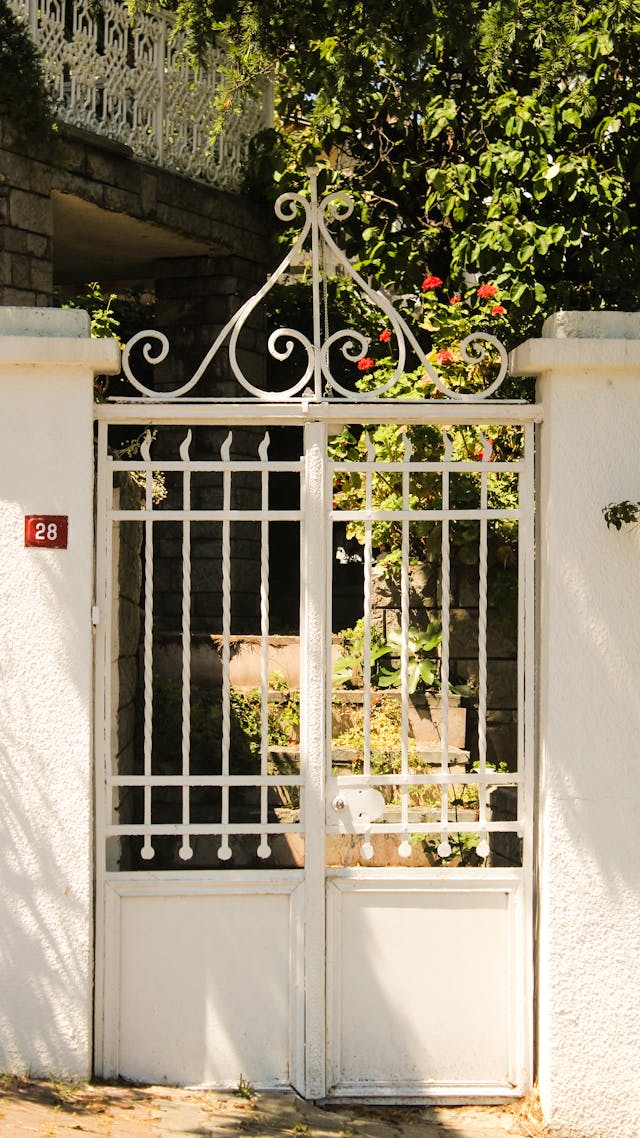
We’ve all experienced this kind of hassle with a gate stop block. You just installed or renovated your entrance, everything is perfect… until you realize that the gate stopper, that famous piece meant to properly block your gate leaves, sticks out a bit – or even a lot – too much from the ground. And then, hello problems: excessive height, difficult passage for the car, risk of tripping, and sometimes even the need to redo the entire installation. It becomes impossible to rest until you find a quick fix or a real lasting solution. Here, I suggest reviewing what causes an excessive height of the stop block, what it implies daily, then all the practical adjustment or replacement solutions, including lowering it.
📋 Key takeaway: Personally, I find that nearly 40% of car scrapes under residential vehicles are due to a poorly sized gate stop block. If your central stopper protrudes more than 4 cm from the ground, it becomes a real hazard for side skirts and oil pans. The best solution is often to unseal it to lower it or to opt for a mechanical model that retracts when the vehicle passes.
Where does the problem of an overly high gate stop block come from?
📍 My experience: Last winter in Bordeaux, I ruined the plastic protection under my company car because of a client’s central stopper that stuck out almost 8 centimeters. This simple poorly sealed piece cost him a 400 euro deductible with his insurance. The lesson learned is that you absolutely must test the ground clearance with your vehicle before pouring the final concrete.
When a gate stop block ends up perched higher than expected, there is rarely a single explanation. Usually, it’s a combination of small details during installation or due to the terrain. The first question to ask: is the threshold or base plate perfectly straight and at the correct level? The role of the concrete support is often underestimated, but a defect at this stage is enough to create differences of several centimeters visible from the first opening.
It also happens that a gap remains between the bottom of the gate leaf and the ground, either because the gate frame is warped, or because the space needed to avoid rubbing on the slope was overestimated. Sometimes, you also inherit a makeshift installation or one adapted to a previous model. Adding a retractable stop block doesn’t always solve the problem if the trench or pit in the ground planned for its embedding isn’t deep enough. In short, every project has its own little story and unforeseen issues.
To definitively solve this problem, I recommend discovering the retractable gate stop block which complements this topic well. If you need to redo your foundations, knowing how to break a slab also provides useful tips. And to go further in renovating your entrance, choosing a custom wood or aluminum gate offers interesting insight.
What are the disadvantages of a gate stop block that is too high?
Living with a gate stop block that is too high is not just an aesthetic detail. On a daily basis, it causes quite a few inconveniences. The first sensitive point: car access problems. When you drive every day, nothing is worse than having to slow down at every maneuver for fear of scraping the underside of the vehicle. High stop blocks quickly become incompatible with vehicles with low ground clearance or those equipped with spoilers.
It’s no better for bikes or strollers: an unsuitable surface forces you to lift the wheels and can even become an obstacle for people with reduced mobility. In some cases, this kind of stop acts as a natural ramp for rain, increasing the risk of water stagnation at the threshold. Finally, no one likes to accumulate fall hazards, especially when the whole family regularly passes by.
Why is a threshold or a too-high base a problem?
A too-high base forces the gate stop to be placed well above the natural ground. This offset inevitably complicates frequent passages. For pedestrians, it adds to the difficulty. For delivery trucks, no need to spell it out: sooner or later, you risk seeing someone get stuck or scratch a brand-new bodywork.
Moreover, safety takes a hit. If you ever install a motor, the excessive height compromises proper locking alignment. A poorly positioned shoe or stop ends up accelerating mechanism wear or lets drafts in, making it easier to force the gate open.
Each repeated impact on a too prominent stop prematurely wears out the leaves, hinges, and fasteners. On a steel structure, the welds take the brunt. Even wooden gates don’t come out unscathed, as the stop’s impact on the leaf increases with each abrupt closing, especially if the hinges are not perfectly vertical. This usually encourages looking for adjustment solutions or considering lowering the shoe, even if it means undertaking some small work around the threshold.
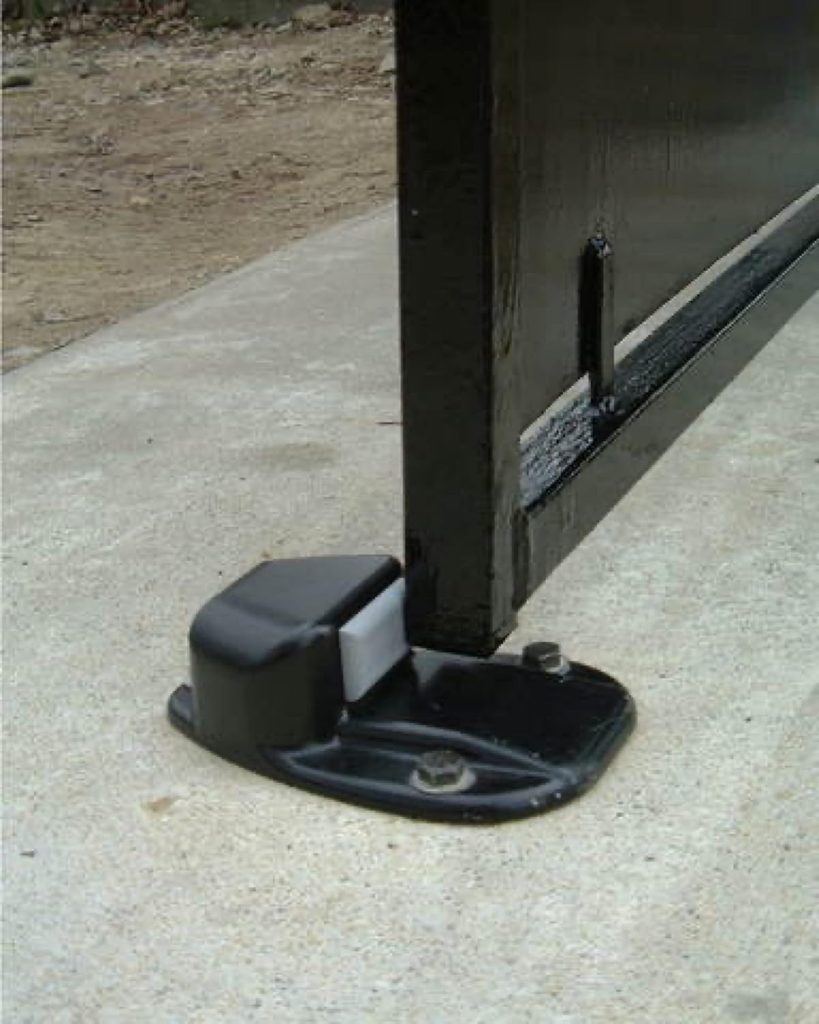
Which adjustment or replacement solutions to choose?
| Considered solution | Difficulty level | Estimated cost of parts | Final effectiveness |
|---|---|---|---|
| Grinding the current stop | Easy | 0 euros | Average (weakens the part) |
| Unsealing and lowering | Difficult | 15 euros (mortar) | Excellent |
| Installing a retractable shoe | Medium | 40 to 90 euros | Optimal and secure |
| Creating a concrete ramp | Medium | 25 euros | Good (but unsightly) |
Fortunately, there are several options to correct a too-high gate shoe. Depending on the configuration, you can lower the existing shoe, opt for a shoe replacement, or install a retractable shoe. Let’s see how to proceed in each case to regain comfortable and secure access.
🌍 Did you know?
The average ground clearance of modern family vehicles has decreased by nearly 15% in fifteen years to optimize aerodynamics and reduce fuel consumption. A central shoe that posed no problem in the 2000s has now become a real obstacle for many electric and city cars.
Lowering the existing shoe
If you’re lucky enough to have a screwed shoe and not one directly sealed into the concrete, you can try repositioning it lower. Often, it’s enough to drill some new holes or fill the original spot with suitable mortar. This works well with a good drill and some concrete anchors; still plan to have something to adjust the plumb with a standard level.
If the situation is more complex and the stop block has been embedded in a thick layer of concrete, lowering the stop block requires partially clearing the area. Use a flat chisel or a small electric chisel, but first remember to protect your floor with a tarp and check for the absence of electrical cables in the path. Better safe than sorry!
⚠️ Warning
Roughly grinding down the top of the cast iron or steel stop block with a grinder to gain a few centimeters. This mistake often destroys the anti-lift design of the piece. In case of a storm or an attempted burglary with a crowbar, your gate leaves will very easily come off their hinges.
Replace the stop block or opt for a retractable stop block
✅ Advantages of the retractable model
- Total protection for tires
- Smooth passage for lowered vehicles
- Automatically lowers under the wheel
🔻 Limitations of the mechanism
- Higher purchase price than a simple stop block
- Internal spring sensitive to freezing in winter
- Requires regular cleaning of gravel
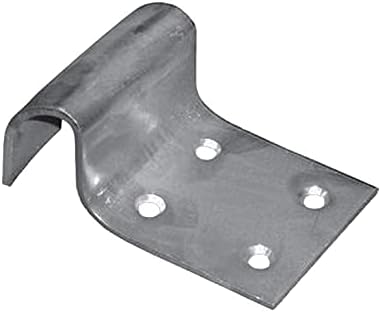
Sometimes it’s the best option: dismantle the old gate stop to adopt a more suitable model like a retractable stop block. This system, mounted on springs or flush with the ground, disappears when the gate is open. It activates mechanically or automatically when closing. However, its installation requires planning a trench or pit in the ground carefully sized, otherwise you quickly end up back at square one.
Changing the stop block also allows selecting a truly low-profile model, compatible with lowered vehicles or heavy use. The important thing remains to measure, before anything else, the space between the bottom of the closed gate and your finished level, to avoid a (new) mishap during the next installation.
- Ensure that the ground is properly leveled before installation
- Choose a gate stop suitable for the actual thickness of the threshold
- Opt for height-adjustable models if the future still holds some surprises
- Consider using a retractable stop block to gain comfort
- Don’t hesitate to redo a small trench or pit in the ground to definitively solve the problem
🔧 Tip
To test if your new central stop block is at the right height before pouring the final concrete, place a wooden shim of the same thickness in the center of the driveway. Gently pass the lowest vehicle in the family over it to check that nothing rubs. The ideal safety margin is 3 cm.
Additional Tips to Limit Damage
From experience, I’ve seen DIYers stick a reflective strip on the gate stop to avoid unpleasant surprises at night, or even install a small rubber ramp to cushion the car’s passage. If the excessive height mainly bothers you in terms of comfort, these little ergonomic gadgets can help you wait before a more extensive intervention.
Don’t forget that the problem doesn’t always come from the stop itself. Consider checking the flatness across the entire width of the access path, even if it means pouring an additional slab on the inside of the gate. This reduces level differences and sometimes makes a complex modification to the existing stop unnecessary.