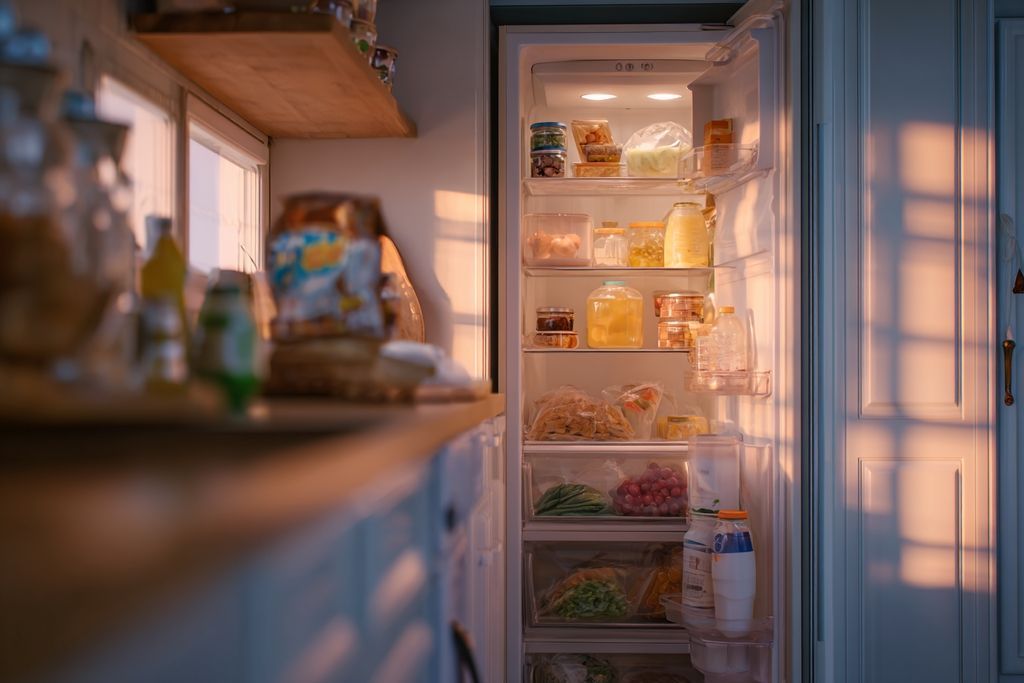
Forgetting to properly close your fridge can happen to anyone. A somewhat chaotic grocery return, or a door stuck by a bottle, and suddenly you find yourself with foods exposed to room temperature longer than expected. Many then wonder if they should throw everything away or if some products can be saved. Here are my everyday handyman tips, inspired by (sometimes smelly) experiences from the field.
Situation overview: A fridge left ajar for several hours can compromise food safety, depending on the duration of opening, the temperature reached, and the type of stored foods. Some products must be discarded without hesitation, while others can be kept if they remained sufficiently cold. The goal is to avoid any risk of food poisoning by making the right choices.
What are the risks of a poorly closed fridge?
A partially open refrigerator is a real breeding ground for bacteria. The storage temperature gradually rises and quickly approaches that of the kitchen. Many perishable foods do not tolerate these variations well. It’s not always obvious, but even a few hours can be enough for some products to become unfit for consumption.

A friend of mine experienced this after leaving the door open all night. Result: mandatory trash for a good part of his groceries. And I can tell you that the smell of the food was not inviting upon waking up! Between food safety and waste management, it’s better to know the right reflexes.
🗣️ My experience: In July 2025, after a weekend return, I noticed that my freezer-dispenser had frosted because the refrigerator door had been left ajar by barely two centimeters. The internal temperature rose to 14°C, making the chicken breasts sticky and odorous. The lesson I learned from this mishap is that it’s better to lose twenty euros worth of goods than risk hospitalization for food poisoning.
How to assess what should be thrown away?
| Type of food | To throw away | To keep | Main reason |
|---|---|---|---|
| Raw meat | Yes | No | High bacterial risk |
| Fish and seafood | Yes | No | Very sensitive to heat |
| Opened dairy products | Yes | No | Rapid bacterial growth |
| Hard cheeses | No | Yes | Low water content |
| Whole fruits and vegetables | No | Yes | Good resistance |
| Homemade cooked dishes | Yes | No | Cold chain broken |
| Condiments (mustard, ketchup) | No | Yes | Highly preserved |
There’s no question here of relying on the naked eye or tasting everything lying around. Some pathogens do not alter either the appearance or smell of the food. Caution is necessary, especially for families with children or vulnerable people.
Exposure duration and actual temperature
The essential thing is to know how long your fridge was left poorly closed and up to what temperature it rose. Generally, after 2 hours outside of a temperature below 4°C, certain foods to throw away should catch your attention.
If the internal temperature exceeded 10°C for several hours, play it safe: food safety takes precedence over waste. A refrigerator thermometer, shown to my handy friends, proves useful to check the situation after every mishandling.
🌍 Did you know? At a room temperature of 20°C, a single bacterium present on ground meat can divide every twenty minutes. In just eight hours, this single cell gives rise to more than sixteen million bacteria, making the food highly toxic.
Check the condition and smell of foods
Often, the nose does not lie. A sour, unusual or suspicious smell should alert you. Products that have changed texture, shown mold, or become slimy do not deserve a second chance: straight to the trash without regret.
This does not mean that smell alone is enough, because many undesirable bacteria, like salmonella, have no olfactory signature. This is where your cautious handyman instinct must take over: better safe than sorry, especially in the kitchen.
⚠️ Common misconception: The classic trap is to rely solely on the smell or visual appearance of a product to decide if it is still good. Pathogenic bacteria responsible for the worst poisonings do not alter the taste, texture, or smell of the foods they colonize.
Which foods to throw away first?

All foods react differently to an increase in storage temperature. Some, very sensitive, require quick decision-making to avoid any risk.
👍 Maximum safety
• Complete elimination of health risks for the family.
• Ideal opportunity to clean and disinfect the shelves.
• Start fresh with healthy and traceable fresh stock management.
🔍 Impact of sorting
• Immediate financial loss due to involuntary waste.
• Need to urgently repurchase meal ingredients.
• Time spent emptying and inspecting each package.
Dairy products and yogurts
Milks, yogurts, fresh cheeses, dessert creams, and softened butters are among the foods to throw away after 2 hours out of the cold. They can quickly become breeding grounds for bacteria, leading to poisoning.
Same remark for all those containing raw or unpasteurized milk. If you have lost track of time, it’s better not to play with the health of your loved ones. Doubt has no place with these products.
Raw meats, fish, and seafood
No hesitation possible for ground meat, steaks, carpaccio, raw poultry, as well as fish and shellfish. As soon as the cold chain is broken for more than 2 hours, they become too risky to consume. Forget the idea of cooking them “to kill the germs”: some toxins remain even after cooking!

Same for fresh charcuterie like white ham, homemade rillettes, or opened sausages. Drop the idea of salvaging them, even if their appearance seems fine under packaging.
Cooked foods and prepared dishes
Anything that has been cooked and stored in the fridge must also be added to the list of foods to throw away in case of a prolonged power outage. Lasagnas, gratins, dressed salads, rice or pasta already mixed: don’t take any risks. The same goes for sliced hard-boiled eggs or preparations based on mayonnaise.
Don’t listen to advice like “put it back in the fridge and it’s good to go.” Spreading a cooled dish with something won’t restore its food safety. This is the kind of advice to absolutely ignore.
To better prevent this type of incident, it can be useful to understand how connected devices work, such as temperature sensors. In case of repeated failure or malfunction, also check appliance repair solutions. Finally, if humidity becomes a problem after forced defrosting, a dehumidifier can prove useful.
Which foods to keep despite everything?
Fortunately, not everything is necessarily lost when the fridge is left ajar. Some products resist temperature rises much better.
- Salted butter, hard cheeses (such as comté, emmental), and sealed jams can sometimes be kept for several hours at room temperature.
- Raw eggs, fresh uncut vegetables and fruits generally hold up well if they have not been washed or damaged, which delays their spoilage.
- Closed juice bottles, condiments like ketchup, mustard, pickles, or vinegar-based sauces are rarely affected by a slight temperature increase.
However, be sure to inspect by hand: if the packaging has swollen, or the contents look suspicious, don’t hesitate to get rid of it. Even foods considered “safe” require a minimum of vigilance. Better to lose a jar of mustard than face a food poisoning in the family.
💡 Practical tip: You can safely keep opened jams, salted butter, mustards, industrial sauces like ketchup, as well as whole unpeeled fruits and vegetables, because their acidity or low moisture content blocks germ development.
Practical tips to prevent it from happening again
The misadventures of an open fridge, I’ve had more than my share before adopting some habits of an old hand at home DIY. Take two minutes to check that the door closes properly each time. If your model tends to be stiff, clean the seal or straighten the shelves that get in the way: very often, a board that’s too wide or a forgotten box blocks the complete closing.
Add a sticky reminder on the handle, place a thermometer with external display. And why not, as I saw at a friend’s house, install a small sound signal ready to beep if the door stays open for more than a minute? These details prevent quite a bit of waste… and unpleasant surprises at the bottom of the vegetable bins.
Fridge not properly closed: what to throw away to avoid risks?
Which foods should be thrown away first after a fridge is left open?
Meats, fish, prepared dishes, opened dairy products, and sensitive foods should be discarded without hesitation if they have been above 4 °C for several hours.
Can some foods be kept despite a fridge being left open?
Yes, whole fruits, vegetables, hard cheeses, and condiments can generally be kept if they show no abnormal smell or appearance.
How long does a fridge left open become dangerous?
After 2 to 4 hours above 4 °C, some foods become risky. When in doubt, it is always better to throw away than to consume.