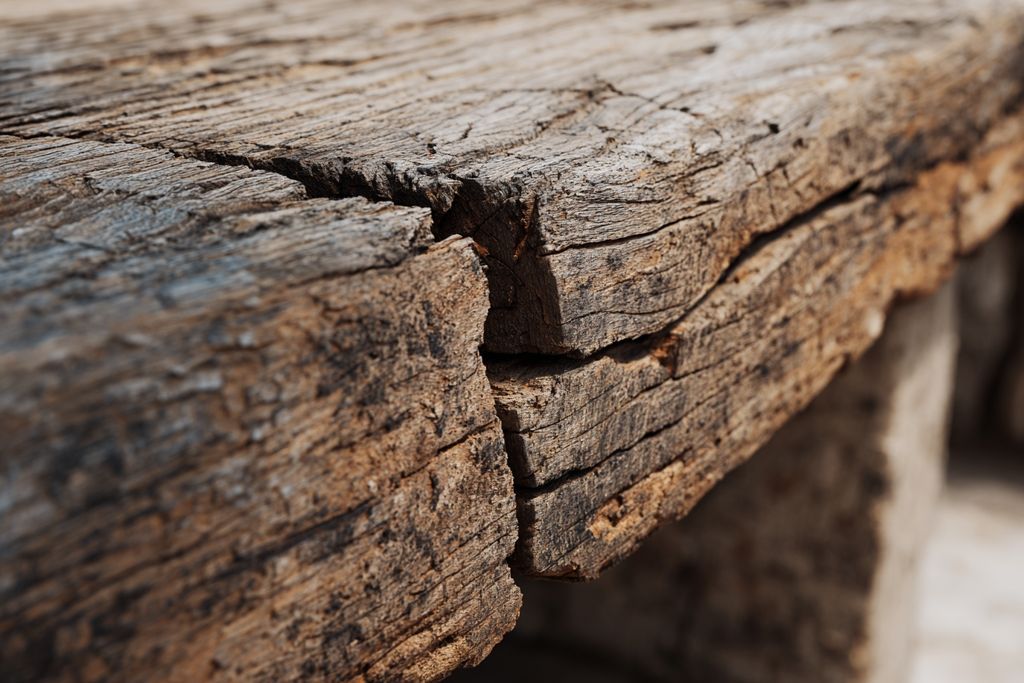
Sometimes during a renovation or a careful inspection, one discovers a long crack running along a wooden beam. It may have happened to you, as it did to me in this old Alsatian house where the framework creaked every winter. This kind of split quickly raises suspicion and brings up many questions: is there a serious danger? Should we worry about the crack’s progression? Fortunately, with a bit of method and the right information, you can analyze the situation and act effectively.
Clarification: A beam split along its length is a common phenomenon, especially in solid wood beams exposed to variations in humidity and temperature. These longitudinal cracks do not always indicate an immediate danger, but their size, depth, and progression must be analyzed to assess the real impact on the structure’s strength. Understanding the origin of the split helps decide whether to monitor, reinforce, or replace the beam.
How to recognize a longitudinal crack on a wooden beam?
It is very common to find a wooden beam with a longitudinal split. Most of the time, one first notices a simple fine line, discreet, then the crack slowly widens over time. This phenomenon is often confused with a real break, whereas it is generally a natural effect related to certain factors.
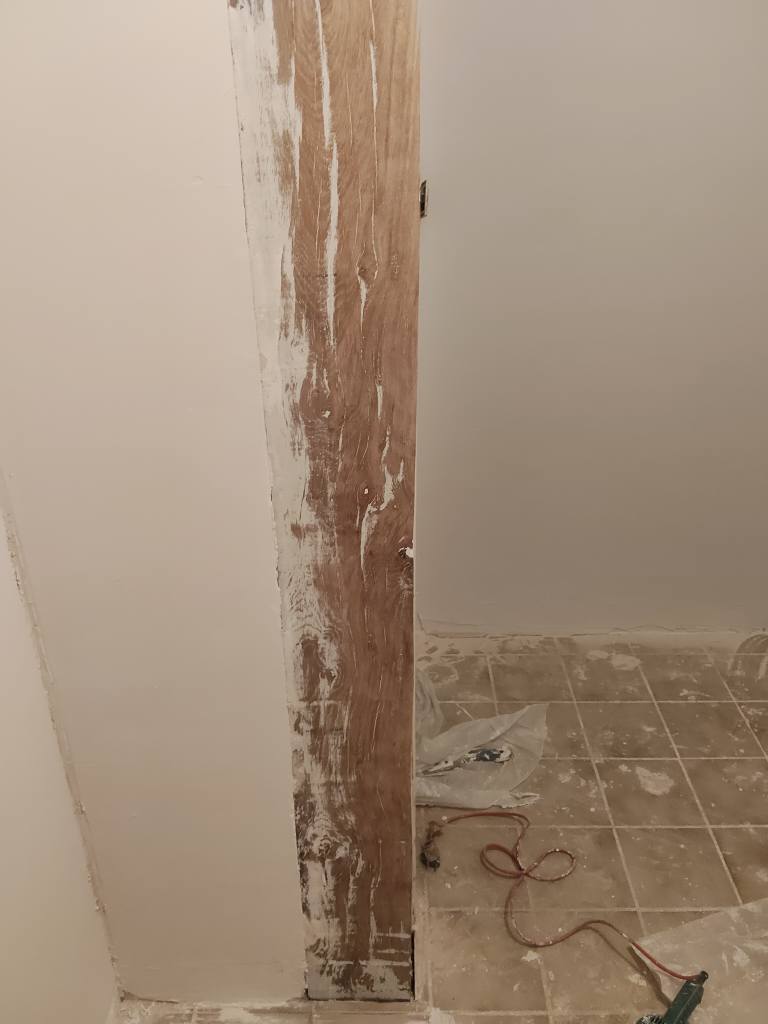
🗣️ My experience: In May 2026, I inspected an old oak floor joist beam 6 meters long that had an impressive 4-millimeter-wide split running over more than half its span. The owner was worried and wanted to install a vertical support post in the middle of his living room, which would have broken the entire volume of his room. The real lesson I learned from this geometric assessment is that by inserting a thin gauge, the crack measured only 35 millimeters deep on a square-section piece of 200 millimeters, thus remaining well below the structural danger threshold.
It is also not uncommon to hear a cracking noise. The first time, I thought everything was going to collapse! In fact, these noises remain frequent during temperature or humidity changes and are not always signs of immediate danger. Observe carefully the shape, depth, as well as the progression or potential widening of the split to judge the level of concern.
| Type of crack | Observed width | Depth | Structural risk | Recommended action |
|---|---|---|---|---|
| Microcrack | < 2 mm | Superficial | Low | Simple monitoring |
| Visible split | 2 to 5 mm | Partial | Moderate | Professional advice recommended |
| Deep split | > 5 mm | Significant | High | Reinforcement or replacement |
| Progressive split | Variable | Variable | Potentially high | Structural diagnosis |
| Old stabilized split | Stable | Medium | Low to moderate | Periodic check |
Why does a beam split along its length?
The main causes of the creation of a longitudinal crack on a wooden beam are natural, but they deserve to be understood in detail. Among the major reasons, natural drying and material aging hold a significant place. Wood, even long after installation, continues to move: it shrinks, swells, or works depending on the ambient humidity and heat.
🌍 Did you know?
Heartwood (duramen) has a volumetric shrinkage rate twice as low as that of sapwood (soft outer zone). It is this molecular drying differential that generates the appearance of star-shaped radial cracks visible on trunk sections.
Sometimes, installing a beam that is too young, not dry enough, or poorly protected accelerates the appearance of long cracks. The old masters knew to let their beams rest for a long time before building. Nowadays, some speed up construction at the expense of drying time, which also explains the increase in longitudinal cracks observed on relatively recent structures.
- Natural drying post-installation
- Sudden temperature or humidity variations
- Wood aging (loss of elasticity)
- Poor choice of species or internal defects (knots, irregular grain)
Over time, you sometimes notice a slight deformation accompanying the crack. This remains common when the longitudinal crack appears near the center of the beam rather than at its ends. Don’t necessarily think it’s critical right away, but monitoring the evolution helps anticipate the transition from a minor disorder to a bad surprise.
A deformed beam can also generate additional stresses at the supports or alter the structural balance of a floor. Stay attentive to the slightest changes: if you see worsening symptoms like the floor sagging, then it’s time to investigate further.
Do you listen closely in the evening and hear that typical cracking noise? Rest assured, in many cases, it’s nothing dramatic. In winter, for example, heating dries the air, contracts the wood, and it expresses its tension through such sounds. However, if repeated and associated with a rapid enlargement of the crack, this noise should prompt you to check the beam’s integrity.
When a dull breaking sound and a clear increase in the crack size appear simultaneously, consult a professional quickly. Better to prevent than to end up with all your furniture on the ground floor…
⚠️ Common mistake
Filling an active drying crack with hard plaster or rigid cement mortar under the pretext of hiding it is a common mistake. Since the wood continues to swell according to seasonal humidity levels, the rigid material will crumble or worsen the crack by acting like a splitting wedge.
All the risks related to a longitudinally cracked beam
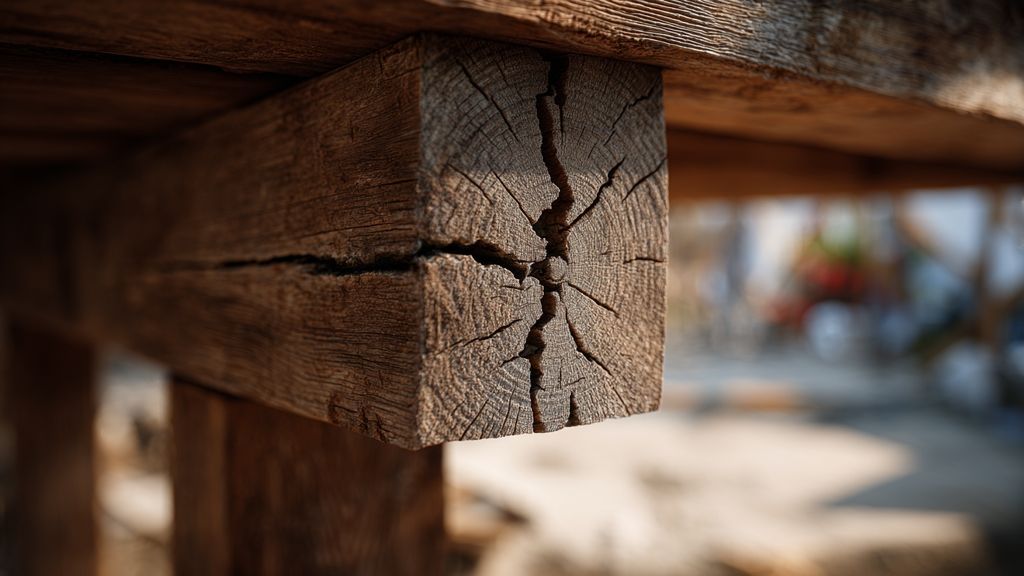
While there are harmless cracks, some truly jeopardize the load-bearing capacity of the beam. The severity of the problem mainly depends on the depth, the precise location of the crack, and the extent of movement observed around it. A beam restrained by a large longitudinal crack risks losing part of its structural role: supporting a floor, a roof frame, or even a lintel of a load-bearing wall.
As soon as there is concern about overall stability – a step sinking, a beam sagging, elements becoming loose – the risk becomes real and calls for repair. Of course, just because a beam has a longitudinal crack doesn’t mean it will necessarily fail tomorrow, but it’s better to keep a close eye on any suspicious development. Here are some warning signs to watch for:
- Rapid crack progression or noticeable enlargement
- Visible deformation or localized sagging
- Persistent unusual noises
- Weakly supported adjacent floors or walls
💡 Practical tip
To accurately monitor the progression of a structural crack over a long length, draw small perpendicular pencil marks at the ends of the crack, or fix a plaster gauge (Saugnac gauge) to check if the joint moves.
What solutions and repairs can secure a cracked beam?
There’s no question of trying quick fixes if you have detected a real structural weakness. The appropriate solutions range from simple filling to reinforced intervention depending on the severity and use of the beam. A special wood epoxy product is sometimes enough to stabilize a small, shallow longitudinal crack, especially in the case of a purely decorative or lightly loaded element.
If the beam plays a key role in the stability of your building, consider a mechanical reinforcement. This could be the installation of screwed metal plates sandwiching the weakened area, or adding a “sistering” with another glued-laminated beam that will take the load. I had to do this in an old barn, and believe me, it’s reassuring!
- Epoxy resin filling for consolidation
- Installation of steel plates or carbon fiber strips
- Addition of a second beam against the cracked one (“sistering”)
- In extreme cases, complete beam replacement
Marking the end of the crack with a pencil, taking regular photos, or installing a monitoring gauge helps to precisely track its progression. Monitor for several weeks the possible enlargement, while regularly checking for the absence of major deformation.
If in doubt, seek the opinion of a professional (carpenter or structural engineer) who will use specialized measuring tools. This is especially useful before undertaking heavy work or in a valued old building.
Minimal maintenance of the beam limits the risk of a too pronounced crack. If possible, place a humidifier during very dry winters, avoid fully covering the beam so it can “breathe,” and remember to apply a regular protective treatment to keep away fungi and wood-boring insects.
When installing a new beam, favor wood species that have undergone good natural drying, as this will reduce the risk of premature longitudinal cracks appearing. Keep in mind that regular monitoring, even if brief, will help you avoid most issues in the long term. Finally, the following section helps you choose between using a traditional solid wood beam versus the performance of glued laminated timber (glulam):
🍀 Advantages of solid wood
- Unique rustic aesthetic providing a noble traditional charm
- Excellent fire resistance (the charred layer protects the core)
- Lower supply cost through local sawmill circuits
🔻 Limitations
- Significant sensitivity to splitting and deformation during installation
- Maximum span limited compared to the performance of glulam
Before any intervention, it is useful to distinguish the different types of load-bearing structures as explained in this guide on I-beams. For broader renovation work, you can also consult solutions to transform a house into a BBC (low-energy building). Finally, if the crack is worrying, learning how to check the general condition of a building helps to better diagnose the entire home.
Beam split lengthwise: should you worry?
Is a beam split lengthwise dangerous?
Not necessarily. Many longitudinal cracks are due to the natural drying of the wood and do not immediately affect the beam’s strength.
How to know if the crack compromises solidity?
You need to observe the width, depth, and progression over time. A crack that widens or almost crosses the entire section is a warning sign.
What to do about a beam split lengthwise?
Depending on the diagnosis, simple monitoring may suffice, but reinforcement, structural bonding, or replacement may be necessary in the most serious cases.