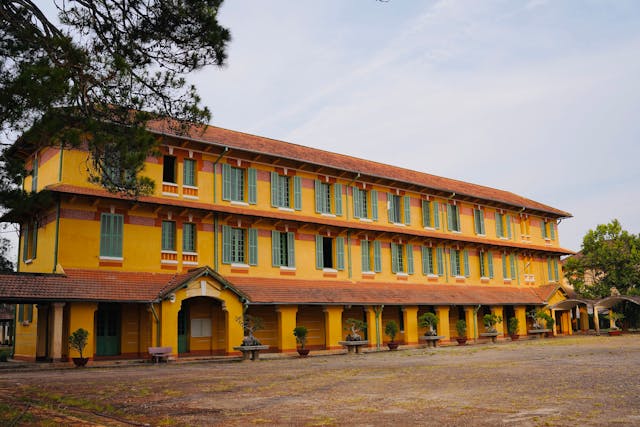
Like the split-level house, contemporary house, Victorian house, and craftsman-style house, a colonial-style house is gaining popularity. It is one of the most sought-after country house styles in the real estate market.
A home does not necessarily need to be equipped with a huge veranda, a beautiful garden, or a pallet pool to attract more buyers. Once it stands out by its unique construction, it is able to spark the interest of most people. This is the case with a colonial house.
It continues to improve over time. Both outside and inside, it combines exoticism with elegance through its interesting features. To learn more about this, this article summarizes the essentials to remember about colonial houses.
📋 What to remember: Personally, I consider the colonial house to be the masterpiece of ancient bioclimatic architecture, designed to offer natural coolness without any technology. Its structure is characterized by vast peripheral galleries, very high ceilings, and permanent cross ventilation. I recommend preserving these original elements during renovation, as they ensure thermal comfort far superior to any modern air conditioning system.
What is a colonial house?
When acquiring a property, we have often heard of the colonial house in Mauritius, the New Orleans style house, or the Louisiana style house. Simply put, these different terms refer to a type of colonial architecture. This term indicates a set of multiple construction styles that developed mainly in colonies of European empires.
Because of its unique charm, this country house style has continued to captivate the world. That is why it can still be found today in countless European and American countries. It was first popularized at the beginning of the 17th and 18th centuries by colonists who arrived from England.
Initially, it was a dwelling for settler-farmers. It was a simple, temporary construction. The colonizers made their fortune more quickly and then returned to their homeland. The colonial houses on the island were consequently created roughly and randomly.
Although it is not recent, a colonial-style house has not undergone many changes over the centuries. A luxurious property, it is a blend of European architectural style and the styles of French, English, Portuguese, Spanish, Dutch colonies, and more.
Although this New Orleans style house originally had a very European appearance, it adapts to the climate, color, and local architecture of the colonies. Even the presence of torrential downpours and tropical heat shape, for example, the colonial houses on the island today. In any case, they resemble each other thanks to the specific features that distinguish them from other buildings.
🗣️ My experience: In 2024, I visited a restored colonial home in Martinique. The owner made the mistake of closing part of the veranda with bay windows to “gain space.” The result: the natural air circulation was broken and the indoor temperature rose by 4°C. The lesson is clear: in a colonial house, the veranda is not an aesthetic luxury, it is the essential thermal lung of the dwelling.
What are the architectural features of a colonial house?
Whether it is a Louisiana-style house, a colonial house in Mauritius, or a New Orleans-style house, every colonial-style house stands out by its impressive size. It is generally white, but some colonial houses in Creole style can also be colorful.
From the outside, the dwelling features a large porch with galleries and majestic colonnades. The purpose is to provide shade. Additionally, the setup prevents the exterior walls from heating up and deteriorating due to tropical heat. Even better, this system helps protect against torrential rains.
🌍 Did you know? The pastel colors emblematic of colonial houses (sky blue, almond green, straw yellow) were not just an aesthetic choice. They helped reflect solar radiation while better resisting intense fading caused by tropical glare.
To allow air circulation, the colonial house construction has large openings. They also let in daylight, further illuminating the interior. Generally, the dwelling is rectangular in shape. Its front door is located in the middle with two or more windows on each side. They are evenly distributed across the floors.
Besides that, colonial houses in Mauritius or those in New Orleans style resemble each other through their majestic and spacious interior. They include a large central staircase and a vast reception room giving an impression of grandeur.
Just like in the codes of Scandinavian decoration, wood is present everywhere, especially mahogany, oak, cherry, and walnut. You can also find rattan, leather, wrought iron, and decorative terracotta accessories. Colorful and exotic decorations also find their place here.
⚠️ Common mistake: Replacing original shutters with sealed PVC windows. This traps moisture inside, promoting mold growth on walls and rot in beams. If you must install double glazing, be sure to keep high-performance upper and lower ventilation grilles.
What are the advantages of living in a colonial house?
🌟 The pros
- Effective natural air conditioning
- Timeless architectural charm
- Large outdoor living spaces
🔍 The cons
- Regular wood maintenance
- Susceptibility to wood-eating insects
- Limited interior soundproofing
Louisiana-style house, country-style house, New Orleans-style house or colonial house in Mauritius, every colonial house construction fascinates the whole world, thanks to its undeniable charm. It is prized for its elegant facade which is sometimes symmetrical. This exterior face is also equipped, on each side, with an equal number of windows. White in color and of imposing size, the building is magnificent to behold.
It generally features a large veranda which is perfect for fully enjoying the beautiful days. You can set up a dining area or deck chairs there to help you rest a little at any time.

Outside, the colonial style house is beautifully decorated with well-maintained gardens and lawns. It is often surrounded by fruit and fragrant trees.
Its advantages also lie in its multiple openings. A colonial house in Mauritius or Louisiana colonial house is equipped in most cases with numerous windows. These serve to optimize natural light inside the home. Additionally, they ensure natural ventilation. During periods of intense heat, they allow fresh wind to enter, combating the heatwave.
The construction materials of colonial houses are also mostly wood. It is a material that is both clean and renewable, providing better thermal performance. That’s not all, a wooden construction is timeless. Inside and out, it is visibly very attractive.
What are the disadvantages of colonial houses?
It must be admitted that colonial houses abound in countless strengths. They combine durability, aesthetics, and comfort of use. However, some disadvantages can be found that cannot be ignored.
Even though large openings guarantee you more natural light and better ventilation, they can also be a source of heat loss. The latter escapes through the windows. It thus becomes difficult to heat a Louisiana style house or country style house.
Fortunately, current joinery is designed to meet thermal insulation standards. Still try to favor windows with better heat transfer coefficients.
With a finish largely in wood, a colonial style house presents the same disadvantages as any wooden construction. Since this natural material does not tolerate humidity, it requires specific treatment regularly.
If you do not take care of it properly, fungi and mold will develop. However, they can cause serious damage, not only to the construction but also to the health of the occupants. Note that humidity problems cause allergies in people with fragile health.
How to maintain a colonial house?

Whatever the architectural style of your home, it needs to be properly maintained to extend its lifespan and preserve all its distinctive features. The same applies to houses in the colonial house construction range.
So that you can enjoy it for many years, please take care of it frequently. Colonial houses are generally equipped with a large wooden veranda. To preserve its condition over time, you must protect it from the test of time. Every day, remove dust with a vacuum cleaner. To remove dirt, use soapy water and a scrub brush.
Besides the veranda, the wooden cladding, the terrace, and the garden furniture require protective treatment. This allows them to withstand rain, UV rays, humidity, weather, and other external aggressions.
Also take the time to maintain the floor, walls, paint, and facade. As soon as you notice cracks, do not hesitate to repair them. If it is necessary to replace materials, consider doing so without delay to increase their lifespan.
As for the interior of the colonial house in Mauritius or the country-style colonial home, daily cleaning contributes significantly to cleanliness. It is not recommended to use household products containing many harmful chemical components. More and more natural solutions are possible. They also promise better results.
💡 Practical tip: In hot and humid areas, check every 6 months the contact points between the wood and the ground. The use of cast iron or stone “shoes” to elevate gallery posts is the best natural barrier against termites and capillary rise.
Is it possible to modernize a colonial house while preserving its original charm?
Of course, it is still possible to restore the shine to a colonial style house while preserving its original appeal. If its exterior walls are generally painted white, know that this shade comes in several tones. To change, for example, the facade from pure white, you can opt for off-white or warm white. Moreover, almost all neutral colors are good alternatives to white.
As for the interior of the colonial house in Mauritius or the Louisiana-style house, you can make some changes while keeping the original features. For example, you can keep the wooden veranda, plaster moldings, wooden floors, or sash windows.
To bring a touch of freshness, cleverly rethink the layout of the spaces. Island colonial houses are recognized by a large reception room. It should be preserved, but you can revise the distribution of other rooms by opening up the space, for example. The country style house as well as the Louisiana colonial house style is characterized by bright and larger rooms.
Regarding colonial house decoration, preserve period elements such as antique furniture, fireplaces, wooden stairs, or parquet floors. To optimize comfort, please improve heating, ventilation, and insulation. Nothing prevents you from using modern systems even in a Louisiana colonial house or Mauritius colonial house.
What is the average cost of building a colonial house?
Estimate restoration work costs based on surface and overall condition.
Houses in the colonial style house range are among traditional homes. The price of their construction ranges on average between 1,200 to 2,000 euros per square meter. For example, if you plan to build a 100 m2 country style house, you should budget 120,000 to 200,000 euros.
This price range can, however, vary depending on many parameters. The material is one of them. If wood is the most commonly used building element, it significantly reduces costs compared to a colonial house made of brick or cinder block.
Expenses are also not the same if you carry out the construction project yourself or if you plan to entrust it to a professional. The cost of a project manager and a builder is lower than that of an architect. In any case, you can compare prices by requesting several quotes. This helps you save money in creating your colonial style house.
What materials are typically used in the construction of colonial houses?
As mentioned in the previous paragraphs, wood is among the major components of a Louisiana style house, New Orleans style, country house style, or colonial style. It is possible to use several types of wood in construction as well as in colonial house decoration. This is why colonial houses in Mauritius are classified among ecological dwellings.
Since they originate from exotic regions, many materials from tropical areas have their place in the house. For example, decorative elements made from banana leaves, wooden furniture, bamboo decorations, and much more can be found. Likewise, light and shiny accessories are highly favored. They create a contrast with the dark appearance brought by other decorative objects such as textiles and animal skins.
Other elements such as leather, wrought iron, and terracotta also form part of the colonial house decoration. As for fabrics, cotton and linen enhance the country house style or the colonial house in Mauritius.
How to choose an architect specialized in colonial houses?
| Key Element | Technical Role | Typical Material | Comfort Impact |
|---|---|---|---|
| Varangue / Gallery | Sun and rain protection | Exotic wood / Teak | Temperature drop of 3 to 5°C |
| Shutters | Ventilation and privacy | Painted wood | Constant airflow |
| Ceiling height | Hot air evacuation | Exposed framework | Breathable volume |
| Pilings / Foundation | Moisture insulation | Stone / Concrete | Floor protection |
Since a colonial house has its own specific characteristics, its construction requires expertise and in-depth technical skills. Although the project may not seem so complex, the intervention of an architect is strongly recommended for professional quality work.
You can entrust them with the project design, site supervision until the completion of the work. For this final stage, they are responsible for verifying the conformity of the work. In case of a dispute with the company or craftsmen, they can advise you on the procedures you intend to undertake.
To find a good architect, take the time to compare many profiles. Gather information about the professional’s motivation, qualifications, and especially their experience. They must be particularly skilled in constructing colonial houses in Mauritius or those of New Orleans style. It is important to remind you that the price of an architect is expensive. Therefore, it is essential to plan a substantial budget.
What are the differences between a French colonial house and a Spanish colonial house?
As a general rule, no major difference can be seen between these two types of colonial houses. Each preserves the specific characteristics of a colonial style house. The same applies to a Louisiana style house, a country style house, or a New Orleans style house.
They contribute to the design of a unified architectural style. The central entrance is highlighted by a roof that overhangs the columns and the door. This type of house is also distinguished by a large wooden veranda. Many sash windows can also be seen. The rooms are sometimes large and bright.
Regarding the roof, Spanish and French colonial houses generally have a roof with two slopes. This architectural configuration consequently features two gables on the lateral sides. It must be admitted that the colonial house comes in several styles. But it is designed on the same basis emphasizing symmetry.
FAQ: Everything to Know About the Colonial House SEO
How to thermally insulate a colonial house without altering it?
What maintenance is required for exotic wood structures?
Can a colonial style house be built today?