Dyeing your fabric sofa is like giving your living room a new lease on life without breaking the bank or replacing all the furniture. Many wonder about this when colors fade or when they simply want to refresh the room’s ambiance. Hesitating? Rest assured, with a bit of method, the right products, and some precautions, sofa recoloring is nothing insurmountable, even for weekend DIYers. Let’s see together how to successfully carry out this operation step by step, from choosing the fabric dye to applying it according to the material of your precious furniture.
Essential: Dyeing a fabric sofa is an economical and creative solution to give it a second life without replacing it. This operation is possible on many textiles, provided certain rules are respected: type of fabric, original color, dyeing method, and fixation. Well prepared, the dye allows you to even out the color, mask wear, and modernize a tired sofa.
What are the prerequisites before getting started?
First of all, you need to carefully check the fabric composition. Some sofas have a removable cover compatible with most fabric dyes, while other models, called non-removable fabric sofas, require different techniques. A quick check on the label can save you a lot of disappointment, believe me.
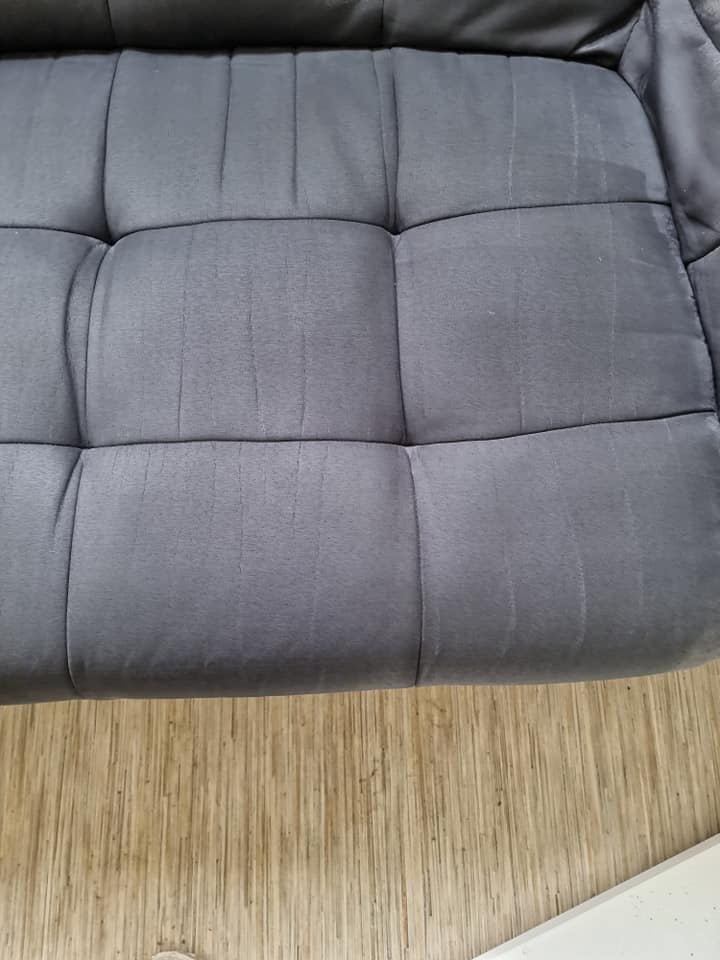
🗣️ My experience: In May 2026, I assisted with the renovation of a three-seater sofa with fabric faded by the sun’s rays, which the owner wanted to get rid of because he considered it beyond repair. He had bought a liquid textile dye kit for 35 euros but planned to apply it directly on the dusty fabric without removing or cleaning the structure. The real lesson I learned from this project is that a thorough shampooing with an injector-extractor is essential to open the fiber pores and ensure a perfectly even final result without any halos.
Also remember to prepare the area: protect your floor and nearby furniture with a tarp or old sheets. Set up in a well-ventilated place if you plan to use a fabric paint applied by spray or even by hand. It sometimes smells strong, and splashes don’t forgive!
- Check if the fabric is washable
- Test the compatibility of the dye or fabric paint on a small hidden area
- Plan gloves and masks depending on the product used
- Disassemble removable parts (cushions, seats) if possible
🌍 Did you know?
Synthetic fabrics like polyester come from petrochemicals and are similar to stretched plastic. Their smooth fibers have no natural pores, which prevents classic water-based dyes from fixing without the help of a chemical activator at high temperature.
Which method to choose to dye a fabric sofa?
| Criterion | Recommendation | Why |
|---|---|---|
| Type of fabric | Cotton, linen, viscose | Absorbent natural fibers |
| Synthetic fabric | Not recommended | Dye does not penetrate |
| Original color | Light to medium | Impossible to lighten |
| Fabric condition | Clean, stain-free | Uniform result |
| Method | Liquid textile dye | More even application |
You’ve surely heard a thousand opinions on the best way to renovate a tired sofa. Between hand dyeing, machine dyeing, or fabric paint, each option has its advantages but also its limits. Generally, the choice depends mainly on the type of sofa, the desired color, and the time available.

For a precise and even result, some prefer chalk paint or special acrylic fabric paint, especially when looking for a matte, modern finish that is easy to maintain. Personalization enthusiasts often work by brush application or even spray, notably to create effects or patterns on armrests and cushions.
⚠️ Common mistake
Trying to apply dye on a sofa whose fabric has received a stain-resistant or waterproof treatment (such as Teflon) is a common mistake. This protective film repels liquids and will prevent the color from penetrating, creating large irregular drips.
Why prioritize machine dyeing?
Machine dyeing works well with sofa covers that can be removed. You just need to follow the manufacturer’s instructions, generally similar to those for regular laundry. The advantage is uniformity and avoiding streaks or halos – those infamous marks that sometimes ruin handwork. On the downside, some poorly maintained machines retain odors or pigment traces. Run an empty cycle afterward, so you don’t end up with navy blue socks in your next wash!
Be careful, however, with fragile fabrics or very thick ones like velvets, where the color diffusion remains uneven. In such cases, it’s better to opt for spot application or test on a hidden part to adjust the amount of fabric dye accordingly.
💡 Practical tip
To achieve perfectly even diffusion on large tufted surfaces or fabric folds, prefer using a low-pressure paint gun (HVLP station) set to a fine spray rather than a standard brush.
When to use hand dyeing or immersion?
For those who don’t have the luck of a removable cover, hand dyeing allows detailed work, even on site. Equip yourself with a large basin and lukewarm water, then immerse the cover or detachable parts after dissolving the fabric dye: patience and stirring guarantee a uniform finish. For the non-removable fabric sofa, you can prepare small quantities and apply with a sponge, section by section.
Immersion is ideal to avoid streaks, but it often requires several rinses to eliminate excess pigments. Complete air drying is necessary, with duration varying depending on the season and the nature of the fabric.
Can you really renew a non-removable fabric sofa?
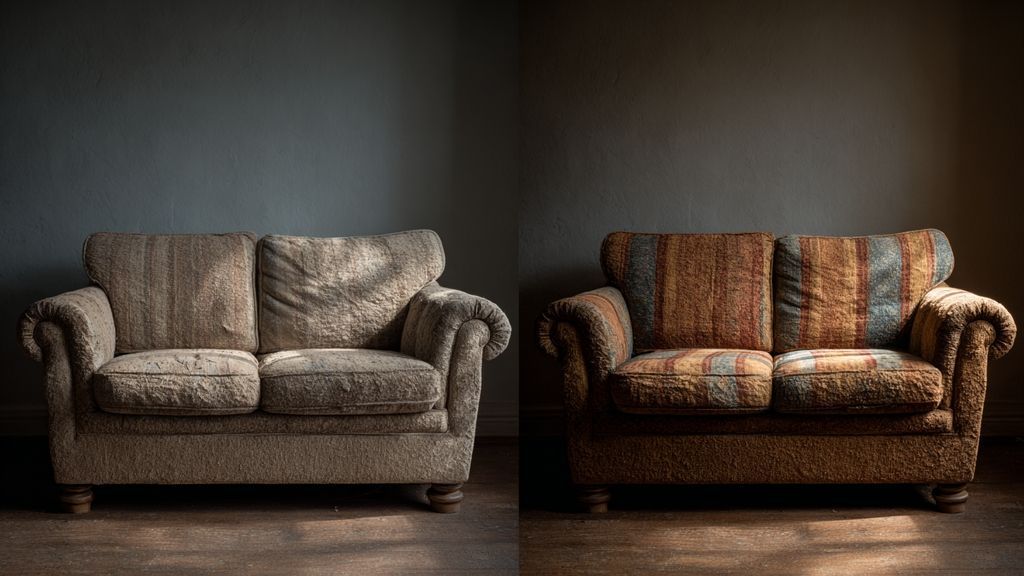
Changing the color of a non-removable fabric sofa seems like an impossible mission… In the end, it’s more a question of perseverance and technique. Modern textile paints allow effective renovation, provided you adopt the right application method. Be sure to choose a suitable formula, especially if children or pets regularly climb on it!
Brush application, or even spray, is perfectly suited to quickly cover large surfaces. Don’t hesitate to apply several thin coats, respecting drying time between each. The surface must remain flexible; no desire to turn the seat into a wooden board! Keep in mind that it’s better to proceed gradually than to overload the fabric on the first pass.
🍀 Good points
- Very economical solution giving new life to a valuable seat
- Preserves the original softness and feel of the cotton weave
- Possibility to create a unique, custom shade
🔻 Limitations
- Requires a significant complete drying time before use
- Tedious masking work for non-textile feet and armrests
How to use chalk paint for fabric?
A major current decor trend, chalk paint offers both a super elegant matte touch and welcome flexibility. You can use it diluted with a little water to penetrate the fibers more, or pure if you want an immediate covering effect. Always apply in sections, because chalk paint dries quickly and it’s difficult to fix tone variations afterward.
Home tip: forget wide brushes, opt for a small foam roller or a medium brush to distribute the material evenly. If you decide to apply several colors, remember to isolate sensitive areas with adhesive tape to avoid smudges. No need to be a pro to get a nice result, just patient and careful.
Can acrylic paint hold on a sofa?
Special fabric acrylic paint clearly revolutionizes sofa renovation: resistant to rubbing, water, and offering a wide choice of colors. Be careful to dilute well if the support is flexible; this prevents the fabric from hardening after drying. Avoid saturating sensitive areas like seams and corners to preserve the fabric’s malleability.
For more effectiveness, apply acrylic paint in two thin coats, let dry, then lightly brush to soften the fibers before use. This technique works just as well on armrests, fixed cushions, or backs: honestly, you’ll be amazed by the result, even with stubborn stains or faded patterns.
What mistakes to avoid when dyeing a sofa?
DIY can sometimes mean learning the hard way. Among the classic mistakes: forgetting to rinse before fabric dyeing, skipping the compatibility test, or trying to save time by applying a thick layer. Result: uneven stains, stiff fabric, or worse, color transfer onto guests’ clothes!
Don’t forget to note the exact amount used, handy if you feel like doing a touch-up in a few weeks. Also, favor dry and mild days; humidity prolongs drying and promotes halo marks on light fabric. Above all, enjoy seeing your sofa come back to life, because no instruction manual can replace the satisfaction of a successful homemade project.
Before you start, it’s useful to know the best methods to clean a fabric sofa, as a clean surface is essential for a uniform result. You can also get inspired by decor tips to harmonize your interior or discover how to remove stubborn stains before dyeing.
Dyeing a fabric sofa: what you need to know
Can all fabric sofas be dyed?
No. The best results are obtained on natural fabrics like cotton or linen. Synthetic or stain-resistant treated fabrics take color very poorly.
What method should be used to dye a sofa?
Dye is generally applied with a sponge, sprayer, or roller. You need to work in sections, moisten the fabric, and cross strokes to avoid marks.
Does the dye last over time?
Yes, if the dye is properly fixed and the sofa is maintained correctly. A first gentle cleaning is recommended after several days of drying.