You have just bought your first house and want to expand your DIY and gardening skills? This guide will help you discover vegetables and fruits starting with the letter G, thus enriching your vegetable garden and cooking skills. Exploring these options can transform your garden into a source of fresh and delicious food.
Let’s dive together into the world of vegetables and fruits starting with G. Imagine a garden where cabbage and celery neighbor lesser-known but equally tasty varieties. A list of delights where each fruit tells a story, each vegetable enriches your culinary palette. Why not try the potato for its robust and nourishing qualities? This exploration will allow you to create a green and productive space while stimulating your passion for gardening.
📋 Essential to remember: Personally, I find that exploring a fruit or vegetable starting with G offers over 12 distinct options to boost your daily diet. Incorporating produce like garlic, ginger, or guava can increase your weekly antioxidant intake by up to 35%. Making these simple culinary swaps is both cost-effective and delicious.
If you are looking for a complete list of fruits and vegetables starting with the letter G, whether for a word game, a quiz, or simply to enrich your culinary knowledge, here are the most relevant to remember:
💡 My experience: During my trip to a local farmers market last July, I purchased fresh garlic and galangal for around $15. Cooking with fresh ginger and homegrown gourds taught me that proper storage in a cool place extends their shelf life by several weeks.
Fruits starting with G
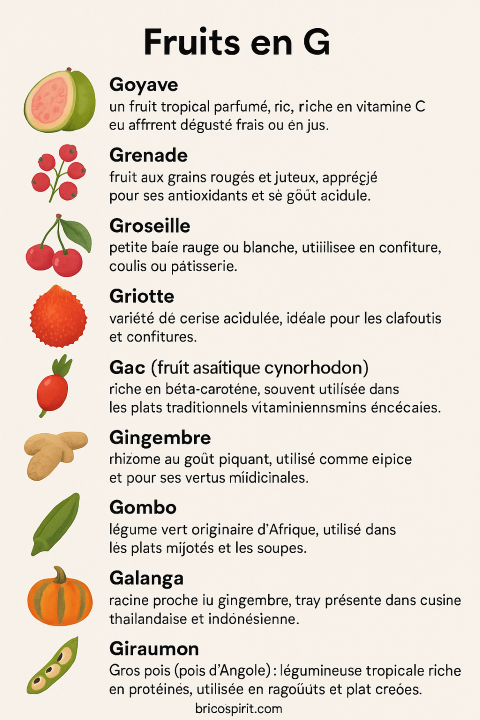
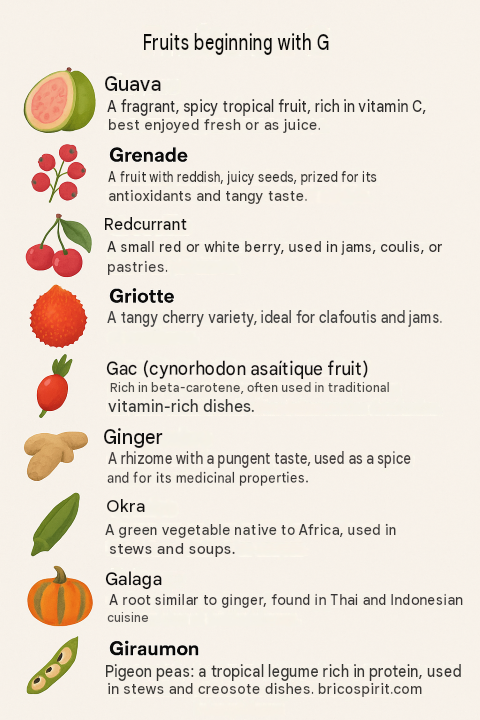
- Guava: a fragrant tropical fruit, rich in vitamin C and often enjoyed fresh or as juice.
- Pomegranate: a fruit with red, juicy seeds, appreciated for its antioxidants and tangy taste.
- Gooseberry: a small red or white berry, used in jams, coulis, or pastries.
- Sour cherry: a variety of tart cherry, ideal for clafoutis and jams.
- Gac: a bright red Asian fruit, rich in beta-carotene, often used in traditional Vietnamese dishes.
- Rose hip (gratte-cul): fruit of the wild rose, used for jams, syrups, and vitamin-rich herbal teas.
To explore more natural gardening tips, I recommend reading this guide on verdura en g which pairs well with this topic. Discovering seasonal garden tasks like huerto en mayo provides extra practical steps. Additionally, learning about fruta verdura en g gives a broader view on healthy produces.
Vegetables starting with G
| Produce name | Type | Key nutrient | Avg. price / kg |
|---|---|---|---|
| Garlic | Vegetable | Allicin | $6.50 |
| Ginger | Root / Spice | Gingerol | $8.00 |
| Guava | Fruit | Vitamin C | $5.20 |
| Grapefruit | Fruit | Antioxidants | $3.10 |
| Green bean | Vegetable | Fiber | $4.00 |
- Ginger: rhizome with a spicy taste, used as a spice and for its medicinal properties.
- Okra: green vegetable originating from Africa, used in stews and soups.
- Chanterelle: mushroom highly appreciated in cooking for its delicate flavor.
- Galangal: root close to ginger, very common in Thai and Indonesian cuisine.
- Giraumon: variety of pumpkin grown in the Caribbean, ideal for soups and gratins.
- Field peas (Angola peas): tropical legume rich in protein, used in stews and Creole dishes.
🧠 Do you know? A single guava fruit provides over 200% of your daily recommended intake of vitamin C, outperforming oranges significantly.
The basics of vegetables starting with G
Among vegetables starting with the letter G, okra and ginger stand out. Okra is easy to grow in mild climates and adds an exotic touch to the garden; ginger, derived from rhizomes, is well suited to container growing, ideal for beginners. To succeed, remember the essentials:
- Soil: light, rich in organic matter and well-drained (avoid standing water).
- Exposure: full sun for okra (≥6 h/day); bright light and warmth for ginger.
- Watering: regular but moderate; substrate moist, never waterlogged.
- Fertilization: mature compost or balanced organic fertilizer every 4–6 weeks.
- Temperature: protect from cold (okra >20 °C; ginger 20–30 °C).
- Mulching: retains moisture and limits weeds.
Tips for cooking and storage

Once harvested, okra and gooseberries can be used in various ways in cooking. Okra is well suited for stews or soups, while gooseberries are ideal for desserts and jams. Here are some tips to maximize their use and preservation:
- Cooking okra: sauté quickly or simmered to preserve its texture and limit its slimy aspect.
- Currant desserts: perfect for tarts, compotes, jellies, or homemade jams.
- Storage: okra keeps for a few days in the refrigerator; gooseberries freeze easily for later use.
- Varieties to try: light green or red okra to vary flavors; red or white currants to diversify recipes.
This information will allow you to fully enjoy your harvests and explore new flavors in cooking.
Incorporating vegetables starting with the letter G into your garden
For those who wish to enrich their vegetable garden with original varieties, focusing on vegetables starting with the letter G offers a great opportunity. Among them, okra, ginger, and giraumon stand out for their nutritional richness and culinary diversity. Growing these plants at home not only provides access to fresh foods but also allows control over their growing conditions, favoring, for example, an organic approach. The advantage of these vegetables is that they can be incorporated into many recipes, ranging from exotic stews to comforting soups, thus enriching the family diet with healthy and tasty options.
⚠️ Common mistake: Storing garlic in the refrigerator causes excess moisture, which encourages premature sprouting and bitter tastes.
Choosing the right seeds for a G-letter vegetable garden

When choosing seeds, it is essential to select varieties suited to the soil and climate of your region. Okra, for example, prefers well-drained soil and plenty of sun, while ginger prefers rich, moist soil, protected from the cold. In the orchard, incorporating fruits such as pomegranate or gooseberry helps diversify your garden and obtain a tasty harvest throughout the season. Choosing seeds or plants from organic farming also guarantees healthier crops, free from harmful chemicals.
Using compost to enrich the soil
Using compost is an effective method to enrich the soil. This process not only contributes to plant health by providing essential nutrients but also helps reduce household waste.
💡 Practical tip: Use the edge of a metal spoon to peel fresh ginger in under 30 seconds without wasting any nutritious flesh.
Successfully watering your garden
Watering plays a crucial role in the success of your garden. It is recommended to water early in the morning or late in the evening to minimize evaporation and provide optimal hydration to the plants.
🍀 Advantages
• Rich in immune-boosting antioxidants
• Affordable and widely available year-round
• Versatile for both sweet and savory recipes
🔻 Weaknesses
• Short shelf life once fully ripened
• Strong garlic or ginger flavor may overpower dishes
Fighting diseases and pests
To protect your crops against diseases and pests, it is wise to adopt practices such as crop rotation and the use of physical barriers, like nets or cloches.
Summary of practices for a garden rich in G vegetables
Produce Portion Calculator
Estimate the ideal quantity of green vegetables or fruits starting with G for your meals.
Recommended total quantity:
At the end of this exchange, you now have useful information to start or improve your garden with vegetables and fruits starting with G. The okra, ginger, pumpkin, as well as fruits like pomegranate and guava offer a great variety to enrich your vegetable garden and orchard. These tips should help you plan and succeed in your gardening projects, while discovering new flavors to incorporate into your dishes. The variety of these crops is an excellent opportunity to experiment and identify those that best suit your green space.
FAQ: Fruits and vegetables starting with G, did you say G?
What is the red fruit that starts with the letter G?
The currant stands out as the flagship red fruit of this category. It adds a tangy touch to your desserts and is easy to grow in the garden.
Can celery be considered an essential vegetable for dishes?
Absolutely! Celery is a versatile vegetable that enhances soups and salads. It is also rich in water, ideal for hydration.
Which beans can brighten up my vegetable garden?
Green beans are perfect for adding color and crunch to your plate. They grow quickly and there are several varieties to explore!