During the construction of a building, the installation of the wastewater drainage system often causes problems.
Sometimes, the installation is located at a level below the water flow. This position makes runoff more complicated. Fortunately, the lift pump can solve this issue.
For it to fulfill its roles, it requires proper maintenance. This article provides you with essential details on the subject. But first, it is important to recap the key points to know about the lift pump.
📋 Essential to remember: Personally, I consider cutting the main power supply before touching any lifting station essential, as automated float switches can trigger unexpected motor starts. In my maintenance experience, performing a thorough water rinse every 6 months extends pump lifespan by over 50%. Regular float cleaning prevents costly basement flooding incidents.
What you need to know about the lift pump
You can find many models of water pumps on the market. But the lift pump is among the most commonly used.
The equipment allows installation in the water to be pumped. For example, if you use it to drain the basement, it is therefore submerged in the liquid.
🛠️ My experience: Last October, my lifting station alarm went off because grease buildup trapped the float switch in the off position. After paying $180 for an emergency service call, I learned that flushing the tank with hot water and non-foaming degreaser twice a year prevents false alarm failures completely.
In most cases, lift pumps operate with an electric drive motor. But there are also devices with an electromechanical system.
Their main role relates to water drainage. Many use them to reduce the height of the water table. Others use them to draw water for use as toilet water or drinking water.
The pump is also very helpful for emptying a septic tank. If you want to empty your pool, change the water, or lower its level, it greatly facilitates these tasks.
By the way, if you plan to install a pond in your garden at a low cost, consider reading our article titled: Building a mini-pool in winter, why and how.
Back to our topic, the use of a lift pump is not limited to the examples previously mentioned. It is also used to treat domestic wastewater, regardless of the type of sanitation system used.
In the lifting station, kitchen water, washing machine water, toilet water, or bathroom water enters and submerges the equipment. When they reach a certain level, the pump starts. It sucks them in and evacuates them outside the station.
To dive deeper, I recommend looking into clog detection techniques which helps prevent line pressure issues. Understanding waterproof sealing methods ensures leak-free pipe connections. And for overall plumbing care, exploring affordable maintenance ideas brings valuable DIY tips.
What is the lifespan of a lifting pump?
Regardless of the model of your lifting pump, its average lifespan ranges between 8 to 10 years. This mainly depends on the quality of the equipment. To extend this period, it is recommended to maintain it regularly.
If you equip yourself with a quality model, it differs not only by its efficiency but especially by its low electricity consumption.
In case of lack of maintenance or simple negligence, its performance deteriorates until the equipment breaks down for good. In this context, it is inevitable to replace it.
This operation should not be taken lightly. You must make a request for authorization to the competent authority, or more precisely to the Public Non-Collective Sanitation Service or SPANC.
| Maintenance task | Recommended frequency | Key component checked | Estimated execution time |
|---|---|---|---|
| Float switch cleaning | Every 3 months | Level sensor floats | 15 minutes |
| Tank pressure washing | Every 6 months | Basin interior & walls | 30 minutes |
| Check valve inspection | Every 12 months | Non-return valve membrane | 20 minutes |
| Impeller & motor audit | Every 24 months | Turbine blades & seals | 45 minutes |
As for the location of the pump, you simply install it inside a lifting station.
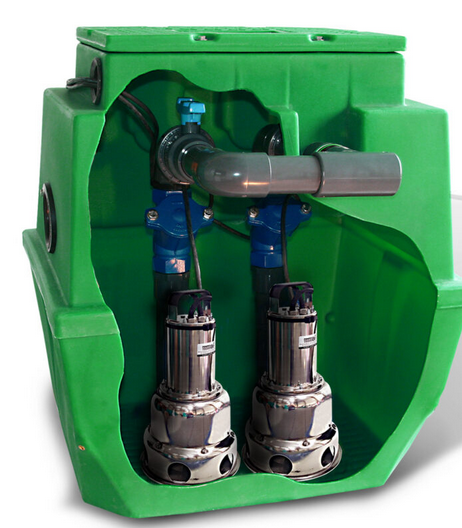
Also called lifting station, pumping station, discharge station or discharge pump station, it consists of one or several pumps and a sealed tank that is fixed to the ground and perfectly ventilated.
Sometimes the conduit of the lifting pump gets clogged due to solid waste inside. In this situation, there is no need to change the installation.
You just need to find ways to unclog it. By the way, we invite you to read our article: How to remove an object from a pipe.
💡 Do you know? Over 70% of lifting pump failures are caused by solid wipe blockages or grease accumulation rather than mechanical motor breakdown.
Who should maintain a lifting pump?
⚠️ Common mistake: Flushing wet wipes, sanitary items, or cooking fat into toilets connected to a lifting pump. Wipes do not dissolve and will wrap around the impeller shaft, seizing the motor and causing immediate basin overflow. Dispose of wipes in household trash bins only.
If one wonders: how to replace a bathroom sink yourself, this task may seem easy to accomplish. But when it comes to maintaining a lifting pump, it is better to hire a professional.
Whether it concerns its maintenance, installation, repair, or even its servicing, all these activities fall under the profession of a plumber.
With his skills and experience, he is able to take care of your equipment to improve its performance and ensure its watertightness.
In general, equipment maintenance costs between 100 to 200 euros. It is recommended to carry out this task two to four times a year depending on its use.
As for replacement costs, you should budget between 2000 to 5000 euros. These amounts include not only the price of the pump but also the cost of the work.
If you have a non-collective sanitation system, you are required to maintain it, according to the Water and Aquatic Environments Law or LEMA. Since the operation is purely technical, do not hesitate to entrust it to a specialist.
If you wonder who to contact for boiler maintenance in Bordeaux, there are many providers available. It is the same with the maintenance of a lifting pump. You can find multiple plumbers capable of performing this task.
What oil for a lifting pump?
Due to the success of the lifting pump, more and more manufacturers keep offering high-quality oils. With the infinite supply on the market, there is something for every need and every budget.
Oil plays a protective role for all kinds of lifting pumps. It is used to lubricate parts ensuring their curative and even preventive maintenance.
It guarantees the seal between the pump motor and its body. That’s not all, oil protects it from wear in dry or wet conditions.
To make the right choice, favor a non-polluting and also food-grade product. It is crucial to consider the equipment’s constraints before opting for a particular product.
Among the different types of oils for lifting pumps, mineral oils are among the most favored. Regardless of the model chosen, it is imperative to always follow the manufacturer’s recommendations.
How to know if a lifting pump is working?
The machine performs many tasks. It can efficiently drain a swimming pool or a septic tank. It also allows draining water from a clogged sewer or a flooded basement.
Even better, it contributes to the evacuation of domestic wastewater, helping you achieve a healthy environment and better health.
Since the lifting pump is used occasionally, it tends to become scaled over time. As it is installed in the collection system, it can easily clog and corrode.
Its lower part is constantly immersed in stagnant water. It is therefore inevitable that scaling forms in the motor, blocking it from turning. To ensure its restart, a complete overhaul must be carried out.
The first step is to check its operation. To do this, fill the well with water. Normally, the float switch should rise with the level.
When it is in the high position, the motor starts to run. The water then flows through the discharge pipe. If the pump refuses to operate, a diagnosis must then be made.
Before any intervention, don’t forget to cut the power. Unplug the electrical connections. Remember to bring the machine back to the surface.
Even if the turbine and the motor are mainly made of stainless steel, rust forms and spreads on the lower casing.
Try to turn the propeller with your hand. If you notice some blockage, scaling and rust are the cause of the problem. You just have to get rid of them.
Why clean the lifting pump?
💡 Practical tip: Pour 10 liters of warm water mixed with white vinegar into the tank every 3 months to dissolve limescale deposits on the float switches without damaging rubber seals.
This installation promises a better evacuation of wastewater, loaded water, and rainwater. To benefit from it for a long time, it is crucial to take care of it at regular intervals. Its maintenance helps to extend its lifespan.
If you neglect its inspection, some parts may start to deteriorate. Otherwise, rust develops slowly and progressively. To avoid possible breakdowns, do not hesitate to carry out frequent checks and maintenance.
Maintenance of the pump is also necessary to improve its performance. If you want to optimize its efficiency, try to clean and lubricate it properly. If possible, use quality products to achieve good results.
Which product to use for lifting pump maintenance?
🍀 Advantages
Prevents emergency basement sewage flooding and costly repairs.
Extends motor service life up to 10-12 years.
Eliminates foul odors originating from stagnant wastewater tanks.
🔻 Weaknesses
Requires handling unpleasant wastewater residual sludge.
Demands strict adherence to electrical safety procedures.
A Karcher or a high-pressure cleaner is widely used during its maintenance. To clarify, it is necessary to detail the cleaning steps.
Start by unplugging the machine. Clean its exterior part with water and a brush.
Then completely empty its tank. Use a brush to clean the float and the walls. Using a water jet saves you time.
Clean the filters and check their condition. If some are damaged, replace them promptly with quality spare parts.
The turbine can also be cleaned with a water jet. Check all connections. Monitor the sealing at the points where wires and cables pass through.
Now let’s talk about cleaning with clear water. To do this, fill the tank with clear water. Run your lifting pump through 2 cycles of filling and evacuation. Once done, you can start the pump and check its operation.
During holidays or long absences, it is recommended to drain the tank before leaving and upon returning.
Determine your ideal cleaning frequency based on household load.